Vietnam to Cambodia by Bus in 2026: Routes, Fares and Border-Crossing Essentials
This practical guide covers overland bus travel from Vietnam to Cambodia in 2026. It details the Ho Chi Minh City to Phnom Penh route, Moc Bai border procedures, Cambodia visa rules, fares, operators, and booking tips, plus alternative crossings from the Mekong Delta for a smoother trip.

Related reading
Keep exploring Vietnam
- 1
- 2
- 3
At a glance
- Best time
- Avoid mid-April (Khmer New Year) and Vietnamese holidays when buses fill up and schedules thin out.
- How long
- 6-8 hours by bus from Ho Chi Minh City to Phnom Penh, including the border stop.
- Budget
- US$18-30 one-way on the HCMC-Phnom Penh route.
- Getting there
- Buses depart from Mien Tay station and city-center limousine pickups in HCMC.
- Language
- Khmer and Vietnamese; English is limited at border offices.
- Currency
- US dollars are widely accepted in Cambodia; the official currency is the riel.
Ho Chi Minh City to Phnom Penh by bus
The bus from Ho Chi Minh City to Phnom Penh covers 230 km in 6-8 hours, and the border stop is the reason for the range. Direct departures run daily from roughly 06:00 to 22:00, leaving from Mien Tay station and from city-center limousine pickup points. If you are staying near the city center, the limousine pickups are more convenient than riding out to Mien Tay. The earliest buses are the most dependable; an afternoon departure can easily stretch toward the 8-hour mark when Bavet immigration is busy.
Fares fall in a predictable US$18-30 range. Kumho Samco and Mai Linh Express tend to sit near the top, while Phnom Penh Sorya Transport and Lien Hung offer the lower end. You can book through the operators' official websites or through Baolau, 12Go Asia, and Vexere, which show live availability. Buying in person at Mien Tay also works and usually matches the online price, but the 06:00 and 07:00 departures sell out first.
A 'direct' ticket means you have one booking, not one bus. At Moc Bai, everyone exits with luggage, walks 100-500 m through no-man's land, clears Cambodian immigration at Bavet, then boards an onward coach arranged by the operator. Allow 1-2 hours for the border procedure, and keep a printed copy of your Cambodia e-Visa; both exit and entry stamps are required. The Moc Bai/Bavet crossing is open 07:00-22:00, so the border stop itself is straightforward during daytime departures.
Schedule gaps appear around Khmer New Year in mid-April and during major Vietnamese holidays. Weekend mornings also bring peak queues at Moc Bai/Bavet, so early departures are worth booking in advance. If you choose a budget ticket, confirm at purchase whether it includes the transfer across the border or only drops you on the Vietnamese side.
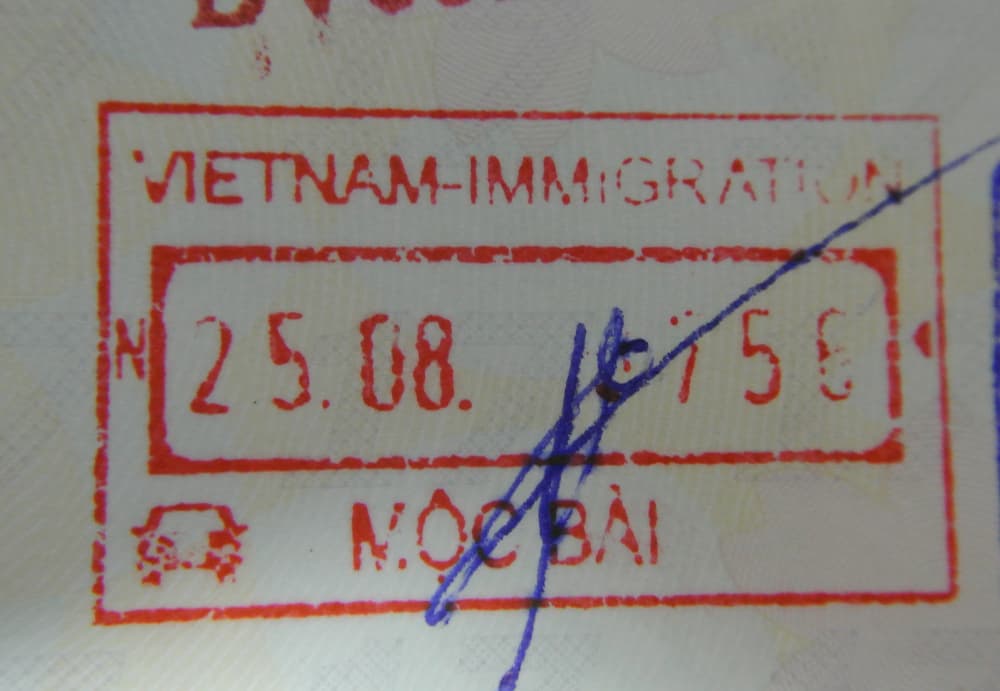
Border procedures at Moc Bai and Bavet
Not every bus from Vietnam enters through the Moc Bai-Bavet pair. If you're coming up from the Mekong Delta, the Tinh Bien (Vietnam)-Phnom Den (Cambodia) crossing handles coaches from Châu Đốc and Cần Thơ. There, the two border posts sit closer together, but the sequence is exactly the same: exit Vietnam on foot, cross the buffer strip, enter Cambodia on foot, then re-board. The same platforms that sell Vietnam train tickets, such as Baolau and 12Go Asia, also sell these bus connections; they may package the border transfer into a single through ticket, but the walking steps are unchanged.
Cambodia visas: e-Visa and visa on arrival
Cambodia's e-Visa, issued through evisa.gov.kh, is accepted at the Bavet and Tinh Bien land crossings, the two checkpoints most Ho Chi Minh City to Phnom Penh buses use. Eligibility depends on your passport, so check the list before you pay. If you qualify, the e-Visa processes online in about three business days. The e-Visa fee is set by the Cambodian government and is not necessarily the same as the visa-on-arrival fee; visa-on-arrival charges and exemptions can change, so confirm the current official amounts on evisa.gov.kh or with the Cambodian embassy rather than assuming they match. The border is open daily from around 07:00 to 22:00, so a morning departure leaves room for the process.

Mekong Delta crossings from Can Tho, Chau Doc and Ha Tien
From Can Tho, direct buses to Phnom Penh cross at Tinh Bien and take about 5 hours. The checkpoint is open daily from 07:00 to 22:00. For travelers already in the Mekong Delta, this route avoids the detour back to Ho Chi Minh City and the crowded Moc Bai/Bavet border on the main HCMC-Phnom Penh corridor.
Chau Doc is closer to the Cambodian border. Buses from Chau Doc to Phnom Penh use Tinh Bien, while hydrofoils provide a separate connection, running along the Bassac River to the capital. Cambodia's e-visa, available at evisa.gov.kh, is accepted at Tinh Bien. Carry a printed copy so you can get both the Vietnamese exit and Cambodian entry stamps.
Ha Tien is the place to aim for if your first Cambodian stop is Kep or Kampot. Buses from Ha Tien connect directly to both coastal towns, so you do not need to turn up in Phnom Penh first. The Ha Tien crossing is much less busy than Moc Bai, where queues commonly peak on weekend mornings. You still need the same entry requirements.
Whichever route you take, book a through-ticket that includes the border transfer. When the bus stops at Tinh Bien or Ha Tien, you exit Vietnam, walk to the Cambodian side, and reboard the same vehicle or a connecting one. Check current schedules on Baolau, 12Go Asia, or at the local bus station, and allow extra time around Khmer New Year in mid-April and Vietnamese public holidays because departures run less often. Confirm that the booking platform shows live availability, and if you are crossing on a weekend morning, arrive at the border early.
Booking tickets and planning around holidays
Most travelers book the Ho Chi Minh City to Phnom Penh bus without checking whether the ticket includes the border transfer, and that mistake usually surfaces at Moc Bai. A through ticket covers both sides of the crossing: your bus stops at the Vietnamese checkpoint, you exit Vietnam, walk 100 to 500 meters through no-man's land, clear Cambodian immigration at Bavet, then board a connecting coach. Budget 1 to 2 hours for the border stop. The full journey is 230 km and takes 6 to 8 hours, with buses running roughly 06:00 to 22:00 daily and typical fares of US$18 to 30.
Book through the operator's own site or through an aggregator with live availability. Kumho Samco, Mai Linh Express, Phnom Penh Sorya Transport, and Liên Hưng all sell tickets online; Baolau, 12Go Asia, and Vexere compare schedules across them and show whether a fare is a through service. In Ho Chi Minh City, you can buy same-day departures in person at Mien Tay station or at city-center agent offices. Some premium minivans offer border assistance, but you still have to pass both immigration posts in person. Before paying, check that the ticket is a through ticket with a border transfer. A ticket that only runs to Moc Bai leaves you to find a separate local bus on the Cambodian side on your own, and that is the classic way to get stranded between the two posts. The same logic applies to the Can Tho to Phnom Penh route via Tinh Bien, which takes about 5 hours.
Plan around the calendar as well. Cambodian Sangkran falls in mid-April, and schedules thin out during Khmer New Year and around Vietnamese public holidays, so book a few days ahead in those windows. Border queues peak on weekend mornings, when tour groups and cross-border shoppers arrive at Moc Bai and Bavet together. The checkpoints are open daily from 07:00 to 22:00, so an early weekday departure gets you through before the line forms.

Frequently asked questions
Most nationalities can use the Cambodia e-Visa from evisa.gov.kh, which is accepted at Bavet and Tinh Bien. Visa on Arrival is also available, but the fee depends on your nationality.
Most buses use the Moc Bai (Vietnam) to Bavet (Cambodia) crossing, open daily from about 07:00 to 22:00. You walk across the no-man's land and reboard a connecting coach.
Yes. You can buy tickets in person in Ho Chi Minh City for same-day departures from Mien Tay station or city-center operator offices.
Plan for 1-2 hours at the border. You need to exit Vietnam, walk through no-man's land, and clear Cambodian immigration before continuing to Phnom Penh.
Travel details change — opening hours, prices, and schedules can vary by season. Please verify current information on official websites before your visit.
Watch: related videos
Vietnam to Cambodia by Bus in 2026: Routes, Fares and Border-Crossing Essentials — Video by Khanh Hoang Minh 2 on Pexels · silent stock clip
Vietnam to Cambodia by Bus in 2026: Routes, Fares and Border-Crossing Essentials — Video by Media Dung on Pexels · silent stock clip
Sources
- evisa.gov.kh — Primary source
- 12go.asia — From research brief
- baolau.com — From research brief
- ppsoryatransport.com — From research brief
Loading reviews…
About the author
Lê Minh Đức
Routes & Itineraries Editor
Minh Đức plans Vietpeep's itineraries, transport guides, and practical tips with a surveyor's care for distances, timings, and connections. He believes a route is only as good as its smallest detail — the last ferry, the right train class, the turn travelers miss.
All articles by Minh ĐứcRelated posts

Northern Borderlands by Public Bus from Hanoi: 2026 Fares and Routes
This 2026 public bus guide covers routes from Hanoi to Lang Son, Cao Bang, Ha Giang, Lai Chau and Dien Bien Phu: departure stations, frequencies, travel times, fare ranges, online booking platforms, border-gate transfers and practical tips for independent travellers who aren't renting a motorbike.

Vietnam Rural Bus Travel in 2026: Routes, Fares, Tickets and Safety on Short-Hop Provincial Lines
This 2026 guide covers Vietnam's rural bus network: Ninh Binh–Cuc Phuong, Hoi An–My Son, and Dalat–Lak Lake routes with fares, cash-only ticketing, schedule checks, and safety advice. It explains why you still buy at the station, what to carry, and how to verify routes that changed in 2025–2026.

Overland Entry into Vietnam from Cambodia and Laos: Border Crossings, Costs, and Vietnam Travel Tips
This 2026 guide covers land border crossings into Vietnam from Cambodia and Laos, including the Moc Bai-Bavet, Ha Tien-Xa Xia, and Lao Bao-Densavanh gates. It explains e-visa rules, bus costs, crossing times, money handling, and practical Vietnam travel tips to avoid common delays.