Hang En Cave Trek & Camping: 2026 Guide to Permits, Tours, and Costs
This article gives international visitors a practical 2026 guide to trekking and camping inside Hang En Cave, including how to book a tour, current prices, permit requirements, what to pack, safety updates, and the best season to visit. All information is based on recent firsthand reports and official sources.

Trip plan
Day-by-day itinerary
Day 1
Jungle Trek to Hang En Cave
Meet your guide in Phong Nha, transfer to the trailhead, and trek 12 km through jungle and river valleys. Arrive at Hang En Cave in the afternoon, set up camp on the underground beach, and enjoy a hot meal prepared by the support team.
Related reading
Keep exploring Vietnam
- 1
- 2
- 3
At a glance
- Best time
- March-May (cool, stable weather)
- How long
- 2 days/1 night (minimum)
- Budget
- $330-400 USD per person (2026)
- Getting there
- Via Dong Hoi airport, 1 hour to Phong Nha
- Language
- English-speaking guides provided
- Currency
- Vietnamese Dong (VND), USD accepted for booking
Getting to Hang En Cave
The closest airport to Hang En Cave is Dong Hoi (VDH), located about 45 kilometers from Phong Nha town. Dong Hoi is served by several daily flights from both Hanoi and Ho Chi Minh City, with airlines such as Vietnam Airlines, Vietjet, and Bamboo Airways typically offering one-way fares from $35 to $80 USD depending on the season and how far in advance you book. Upon arrival at Dong Hoi airport, travelers can reach Phong Nha by taxi or pre-arranged shuttle; the journey takes roughly one hour and costs between $20 and $30 USD per vehicle. Some tour operators, such as Oxalis, can help arrange transfers if requested during booking.
Phong Nha town is the main base for all Hang En Cave expeditions. Most guided tours require guests to meet at the operator’s office in town, where final briefings and gear checks take place. From there, operators organize group transport—usually by minibus or van—to the trek’s official starting point at Ban Doong village or a designated trailhead, about 30–45 minutes from town. This transfer is included in the tour price and ensures all participants begin the trek together with their guides.
Independent access to Hang En Cave is not permitted; all logistics, including the initial transfer to the trail, are handled by licensed operators. For those arriving by train or bus, Dong Hoi railway station and the central bus station offer similar access to taxis and shuttles bound for Phong Nha. Advance coordination with your tour provider is recommended, especially during peak season (March to May), when local transport and accommodations can fill quickly.
When to Visit & Weather
Hang En Cave operates on a strict seasonal schedule, opening to visitors from February through August. The cave and its trekking routes are closed from September to January each year due to heavy rains and flooding risks, which can make river crossings dangerous and the cave inaccessible. Operators such as Oxalis and Phong Nha Adventure update their schedules annually based on weather forecasts and park regulations, so it’s essential to check for any last-minute closures before planning your trip.
For the most comfortable trekking conditions, March to May is widely considered the ideal window. During these months, daytime temperatures in Quang Binh province average 22–28°C (72–82°F), and rainfall is minimal, making river crossings safer and the jungle paths less muddy. Humidity levels are moderate, and the cave’s interior remains cool, which helps with overnight camping comfort. Guides report fewer leeches and insects during this period, and the stable weather means fewer cancellations.
June through August sees higher temperatures, often reaching 32°C (90°F) or more, and humidity spikes. While tours still operate, trekkers should prepare for sweatier days and more challenging climbs. The cave’s underground beach and cool chamber offer relief, but the trek in and out can be physically demanding. If you’re visiting in this period, bring lightweight clothing, extra hydration, and expect occasional afternoon showers.
Regardless of the month, all tours monitor weather conditions daily, and operators will cancel or reschedule trips if flooding or storms threaten safety. Booking early for the March–May window is recommended, as group sizes are capped at 12 and spots fill quickly during peak season.

Permits, Tours & Costs
Permits for Hang En Cave in 2026 are strictly controlled and only available through licensed tour operators, with Oxalis and Phong Nha Adventure being the primary providers. Independent trekking is not permitted, both for conservation reasons and visitor safety. Each group is limited to a maximum of 12 guests per guide, following new environmental quotas introduced this year to protect the cave ecosystem.
The cost for a two-day Hang En expedition ranges from $330 to $400 USD per person, depending on the operator and the season. This price includes the mandatory cave permit, all meals from the start to the end of the trek, camping equipment (tents, sleeping bags, mats), safety gear such as helmets and headlamps, and the services of English-speaking guides trained in first aid. Drinking water, sanitation facilities, and emergency satellite communication are also provided. There are no hidden fees, but it’s worth checking if tips for porters and guides are included or expected separately.
Advance booking is essential, particularly from March to May when demand peaks due to favorable weather. Operators recommend reserving at least one to two months ahead, as group slots fill quickly and walk-in bookings are not possible. Reservations can be made directly through the operators’ websites, with confirmation typically requiring a deposit. It’s also advisable to reconfirm details close to your departure, as weather or conservation projects can occasionally prompt last-minute schedule changes.
Trek & Camping Experience
The trek to Hang En Cave covers approximately 12 kilometers each way, cutting through dense jungle, crossing several rivers, and ascending steep limestone slopes. Most guided tours set a moderate pace, with frequent breaks to cool off and refuel. Expect to wade through knee-deep streams and scramble over rocky terrain, especially during the final approach to the cave entrance. The route typically takes five to six hours, depending on weather and group fitness. Good hiking shoes, quick-dry clothing, and a waterproof bag for electronics are essential.
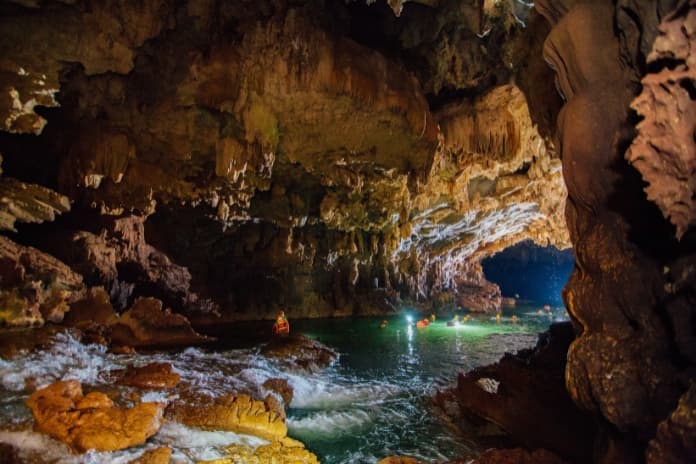
Camping inside Hang En is mandatory, as the return trek cannot be completed in a single day. Tour operators provide all camping gear, including tents, sleeping mats, and eco-friendly lighting that illuminates the vast cavern without disturbing wildlife. The campsite sits on a sandy underground beach, with towering limestone walls and a natural skylight that lets in filtered sunlight by day and the sound of swallows at dusk. Meals—usually a mix of Vietnamese dishes and Western staples—are prepared on-site by the support team. Drinking water is filtered from local springs, and basic sanitation facilities (portable toilets and handwashing stations) are set up to minimize environmental impact.
There is no cellular signal along the trail or inside the cave, so travelers should let family know they’ll be offline for at least 24 hours. For emergencies, guides carry satellite communication devices and are trained in first aid. Most groups spend one night in the cave before retracing the route back to the park entrance the following day.

Safety & Practical Tips
Hang En Cave expeditions in 2026 are led exclusively by guides trained in first aid and equipped with updated cave rescue protocols, reflecting improvements made in 2025. These guides conduct regular safety briefings before and during the trek, and carry medical kits for emergencies. The cave’s remote location and unpredictable weather mean that flooding risk is taken seriously: operators monitor river levels and rainfall daily, and tours are canceled or rescheduled if conditions are unsafe. This policy is enforced throughout the trekking season, from February to August, with no exceptions during heavy rains.
Travel insurance that explicitly covers adventure activities—including trekking, river crossings, and caving—is strongly recommended for all participants. Most operators require proof of insurance upon booking or check-in. For international visitors, it’s wise to confirm that your policy includes emergency evacuation and medical coverage, as cellular signal is limited in the area; tour providers supply satellite communication devices for emergencies.
Packing for Hang En Cave should prioritize both comfort and safety. Lightweight, moisture-wicking clothing is best for the humid jungle trek. Sturdy, closed-toe hiking shoes with good grip are essential for river crossings and steep climbs. Insect repellent is a must, as the route passes through dense vegetation, and a waterproof bag will protect your gear during unexpected rain or water crossings. Operators provide camping gear, meals, drinking water, and sanitation facilities, but personal essentials and medications should be brought along. Environmental protocols require trekkers to pack out all waste and follow ranger instructions to minimize impact on the cave ecosystem.
Booking & Entry Updates for 2026
Hang En Cave has introduced a strict visitor quota for 2026, limiting each tour group to a maximum of 12 guests. This measure is designed to minimize human impact on the cave’s ecosystem and ensure a safer, more manageable experience for both visitors and guides. Tour operators such as Oxalis and Phong Nha Adventure are required to adhere to these limits, so booking well in advance is now more important than ever, especially during peak months from March to May.
In response to increased visitation and conservation needs, ranger patrols within Phong Nha-Ke Bang National Park have been expanded for 2026. These patrols monitor trekking routes and campsites, ensuring compliance with park regulations and providing immediate assistance if needed. All trekkers now participate in a mandatory environmental education briefing before entering the cave, covering topics like waste management, respecting wildlife, and minimizing disturbance to sensitive cave features.
Given the dynamic nature of park regulations and the region’s susceptibility to weather-related closures, travelers should always check for the latest entry rules and updates directly with their chosen tour operator or the official Phong Nha-Ke Bang National Park website before finalizing any bookings. Temporary closures can occur due to heavy rainfall, conservation projects, or safety reviews, and operators will provide the most current information. These new protocols reflect ongoing efforts to balance adventure tourism with the long-term preservation of Hang En Cave’s unique environment.

Frequently asked questions
No, independent access is not allowed; all visitors must join a licensed guided tour.
Participants should be physically fit for a 24 km round-trip trek with river crossings; minimum age is usually 16 (confirm with operator).
Tours are canceled or rescheduled if flooding or heavy rain makes the trek unsafe; check with your operator before arrival.
Travel details change — opening hours, prices, and schedules can vary by season. Please verify current information on official websites before your visit.
Sources
- phongnhakebang.vn — Primary source
- oxalisadventure.com — From research brief
- vietnomad.com — From research brief
- wanderingwheatleys.com — From research brief
- phongnhaadventure.com — From research brief
Loading reviews…
About the author
Võ Hoài Nam
Nature & Adventure Editor
Hoài Nam edits Vietpeep's national parks, trekking, and adventure coverage from an environmental perspective. He keeps trail conditions, permits, wildlife rules, and low-impact travel choices front and center, so readers can plan a trip that respects the landscape.
All articles by Hoài NamRelated posts
Phong Nha Cave Tours Compared: Son Doong, Hang En, Tu Lan, Paradise and Dark Cave in 2026
A practical 2026 comparison of Phong Nha's main commercial cave tours: Son Doong, Hang En, Tu Lan, Paradise, and Dark Cave. It covers prices, durations, permits, difficulty, the best season, weather cancellations, and how far ahead to book, so you can choose the right cave without relying on outdated rates.

Phong Nha Beyond the Caves: Farmstay Hopping and Hidden Waterfalls — Son Doong vs Hang En 2026 Tour Comparison
For Phong Nha Beyond the Caves: Farmstay Hopping and Hidden Waterfalls, this practical 2026 guide compares the Son Doong and Hang En cave expeditions in Phong Nha-Kẻ Bàng National Park. It covers US$3,000 vs US$450–500 tour prices, permits, fitness, age limits, and the February–August dry season so you can book the right Oxalis trek.

Pu Si Lung Trek in 2026: Permits, Guides, Costs, and Fitness Realities
A 2026 logistics brief for trekking Pu Si Lung (3,076m) in Lai Chau, covering mandatory permits and guides, realistic difficulty, weather windows, transport, and current costs. Useful for independent hikers planning around border-zone rules and operator-only access.