Mỹ Sơn Sanctuary in 2026: Champa Ruins, Entry Fees and Temple Guide
This guide covers the Champa temple ruins at Mỹ Sơn: 2026 entry fees, shuttle costs, temple groups A–E, dress code, etiquette, weather and transport from Hội An and Đà Nẵng. Use it to plan a respectful half-day visit and understand what survived from this UNESCO site.

Related reading
Keep exploring Vietnam
- 1
- 2
- 3
At a glance
- Best time
- February–April dry season, early morning
- How long
- Half day from Hội An; 2–3 hours on site
- Budget
- Entry 150,000 VND plus 15,000 VND shuttle each way
- Getting there
- 50 km from Hội An, 70 km from Đà Nẵng by motorbike, taxi or tour
- Language
- Vietnamese
- Currency
- Vietnamese đồng (VND)
Understanding Mỹ Sơn's Champa History
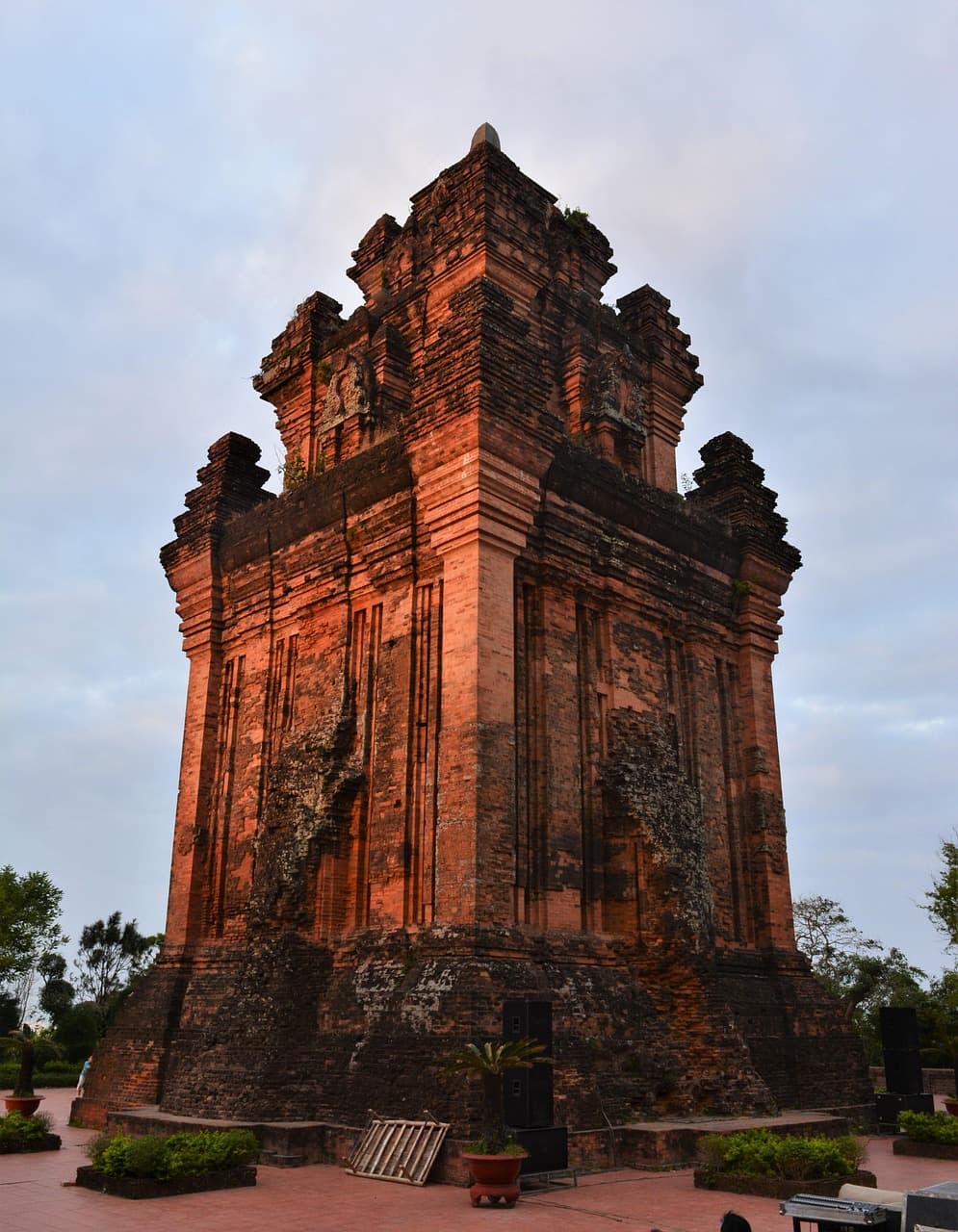
The first temples at Mỹ Sơn were raised in the 4th century, when the Champa kingdom ruled over what is now central Vietnam. This Hindu-influenced state predated Vietnamese control of the region by centuries, and its kings built a series of red-brick towers here over a span of nearly 900 years, finishing the last structures in the 13th century. The towers were not palaces or tombs but active sanctuaries dedicated to Shiva, the Hindu god of destruction and regeneration.
Over later centuries, the Champa kingdom declined, and Mỹ Sơn was gradually abandoned. Jungle reclaimed the valley, and the site faded from use. Much later, 20th-century wartime bombing reduced many of the brick towers to rubble and left craters still visible among the ruins. What remains today is a partial complex—groups A, B, C, D, and E—where intact carvings of dancers and deities sit beside piles of collapsed brick.
Mỹ Sơn now holds UNESCO World Heritage status and is considered the most important remaining complex of Champa temples in Vietnam. The site received UNESCO World Heritage status for its outstanding testimony to the Champa civilization. It is far smaller than Angkor Wat, occupying a compact valley ringed by forested hills. The jungle crowds close to the towers, and the quiet between tour group arrivals lets you hear birds and insects instead of traffic.
For first-time visitors, this scale is the key to understanding Mỹ Sơn. You are not walking through a reconstructed tourist site but through the genuine, damaged remains of a kingdom that disappeared. The red-brick walls, some still bearing carved lintels and false doors, make the Champa period tangible. Standing inside a roofless tower with roots gripping the brickwork, the distance between the 4th century and 2026 feels short.
Getting There from Hội An and Đà Nẵng
Mỹ Sơn Sanctuary sits about 50 km southwest of Hội An and 70 km from Đà Nẵng—roughly 60 to 90 minutes by road depending on traffic. For an independent visit, a self-driven motorbike is the cheapest option, though you'll need confidence on Vietnamese highways and an international driving permit. Metered taxis or private car hires are easier; many hotels and homestays in Hội An can arrange a car and driver for a fixed round-trip fare. There is no reliable public bus service from either city, so 'independent' generally means renting wheels or booking private transport.
Organized tours from Hội An and Đà Nẵng handle all logistics. Half-day tours typically include hotel pickup and an English-speaking guide; the 150,000 VND adult entry fee is sometimes collected separately, so ask when booking. Because the site opens at 6:30 AM, a 7:00 AM departure from Hội An puts you at the gate before 8:00 AM, before the heat builds and before the large tour coaches arrive around 9:00 AM. From Đà Nẵng, add an extra 30 minutes of driving.
Once at the gate, you'll choose between walking the shaded 1.5 km path to the main ruins or taking the shuttle cart for 15,000 VND each way (30,000 VND round trip). The walk is flat and pleasant in the dry season; the cart saves energy for exploring the temple groups. The walk is shaded but the temple groups themselves are exposed to full sun, so the early start also gives you cooler light for photos. Motorbike riders can park near the gate, then continue on foot or by shuttle.
If you're riding your own motorbike in the rainy season (September to November), the final approach road and the walking path can get slippery, so allow extra time and consider the shuttle rather than the walk. Bring water and insect repellent—there are few vendors inside the sanctuary itself.

Temple Groups and What to See
The 150,000 VND adult entry fee (2026) includes a printed site map that splits the sanctuary into five lettered clusters: A, B, C, D, and E. A sensible loop starts with Groups B and C, which reward an early stop before the sun climbs. Here, sandstone lintels and pilasters still show apsara dancers, kneeling deities, and Hindu motifs such as Shiva with his trident. The carvings are most legible in the first two hours after the 6:30 AM opening, before low morning light flattens into glare.
From B and C, the path leads to Group A, the ritual core of Mỹ Sơn. The centerpiece is the large Kalan, the main tower-sanctuary dedicated to Shiva. Built of fired brick without visible mortar, it remains the tallest and most complete structure on site. Inside the inner chamber, a stone yoni-linga still receives offerings from local devotees; remove your shoes before stepping onto the threshold. Viewing is strictly from ground level and designated paths—do not climb on any brickwork, no matter how stable it looks. Guardrails and rope lines mark the allowed perimeter, and rangers do issue warnings.
Continue east to Group D, where the ruins shift from temple to monastic life. The remains of a monastery complex include low foundation walls, drainage channels, and distinctive curved roof tiles scattered among the grass. The terracotta tiles are easy to miss, but the site information board points them out. Group E, the last signed cluster, has the least standing architecture, but the loop still passes through it before circling back to the shuttle stop. Allow 60 to 90 minutes to walk the full route without rushing; the ground is uneven, so wear closed shoes rather than sandals.
Entry Fees and Practical Costs
As of early 2026, an adult entry ticket to Mỹ Sơn Sanctuary costs 150,000 VND (about $6 at an exchange rate of roughly 25,000 VND per US dollar). Children under 6 enter free. The single ticket covers access to all open temple groups labeled A through E, including the main Kalan tower in Group A, the carved stone dancers in Groups B and C, and the monastery remains in Group D. Keep the ticket with you; it may be checked at the entrance to the main cluster.
A shuttle cart runs from the ticket gate to the main temple area and costs 15,000 VND per person for each one-way ride. The route covers 1.5 km of mostly shaded road, so walking is a free and pleasant alternative, especially in the early morning or late afternoon. If you walk, you pass Group D on a short side path before reaching the central Groups B and C. The cart is most useful if you arrive after 10:00 AM or during the wet season, when the path can be muddy.
Vendors inside the sanctuary grounds are few, so budget for outside expenses before you go. You may find a small drink stand near the entrance, but once you pass the gate, food and water options are unreliable. Bring at least one liter of water per person and insect repellent, as the jungle setting has mosquitoes year-round. A hat and sunscreen are practical for the exposed sections between temple groups. Bring cash for the shuttle cart and any drinks, as card readers are not guaranteed.
If you ride the shuttle both ways, your total on-site cost for one adult is 180,000 VND: the 150,000 VND entry ticket plus 30,000 VND for the two cart rides. This total excludes all transport to Mỹ Sơn itself, whether you come by motorbike, taxi, or tour from Hội An or Da Nang. Budget travelers can keep the on-site cost to the bare 150,000 VND by walking the full 1.5 km in each direction, but factor in water and snacks if you do not want to rely on the limited on-site vendors.
Etiquette and Dress Code at a Sacred Site
Several of Mỹ Sơn Sanctuary's brick towers still serve as places of worship for local Chăm communities, especially during the Kate festival in October, so treat the site as an active shrine rather than a static ruin. Dress as if you were visiting a working pagoda. Cover shoulders and knees, even on hot mornings, with a light long-sleeved shirt and loose trousers or a long skirt. Many Vietnamese visitors arrive in such clothing because they may stop to light incense, and shorts, tank tops, or crop tops stand out as disrespectful. A scarf tied around the waist is not enough; bring a proper shirt.
Before stepping into any temple tower or sanctuary, remove your shoes. The thresholds are often sandy and can get hot, so slip-on sandals beat lace-up boots. If you wear boots, you'll spend several minutes unlacing at each doorway; a small plastic bag in your daypack makes it easy to carry footwear while walking between groups. Once inside, do not climb on the ancient brickwork. The 4th-to-13th-century bricks are friable, and a careless handhold can break off a carved surface—or send you tumbling. Many towers have low walls and steep steps; stay on marked paths. Refrain from using flash photography in the inner chambers, where altars and linga remain. A phone's night mode or a high ISO setting works well, and keep your camera strap around your neck to avoid accidental drops.
Loud conversations are prohibited throughout the site. The valley amplifies voices, so even a normal-volume chat between two groups can carry across three temple clusters. Keep group discussions to a murmur and switch phones to silent. Drones are banned without advance permission from the site management board; rangers may confiscate equipment on the spot. None of these rules are arbitrary—they protect both the sacred character of Mỹ Sơn and the fragile brickwork for future visitors.
When to Visit: Weather and Crowds
Mỹ Sơn Sanctuary’s ticket office opens at 6:30 AM, and arriving at opening time is the single most effective way to avoid both the midday heat and the large tour groups that begin to cluster around the main temple groups by 9:00 AM. The dry season from February to April brings the most comfortable walking conditions: daytime temperatures around 28–32°C (82–90°F), low humidity, and firm, dry paths between the brick towers. This is the window to target if you want to linger over the carved dancers and Shiva altars without sweating through your shirt.
From September to November, the rainy season turns parts of the site muddy and slippery, particularly the unpaved trails between Groups A through D and the shaded 1.5 km path from the entrance. That doesn't mean you cannot visit—there are fewer tourists and the jungle smells sharp after rain—but you'll need proper footwear and patience, and some inner chambers may be closed or roped off during heavy downpours. Between December and January, the weather is a toss-up: cool fronts can make mornings pleasant, but residual moisture and occasional showers linger into early dry season.
Plan for at least two to three hours on site. The clusters labeled A, B, C, D, and E are spread over a valley floor, and even with the 15,000 VND shuttle cart from the gate to the main ruins, moving between groups on foot takes time. Rushing through in 45 minutes means missing the fine carvings in Group B and C and the quieter monastery remains in Group D.
An opening-time start also has a photographic advantage. Until about 8:30 AM, low-angle light rakes across the red-brick reliefs, making chisel marks and facial details in the sandstone lintels readable. By 11:00 AM, the sun is overhead and flattens the texture, so if you care about photos of the carvings or just want to sit in the shade near the main Kalan without a tour leader's flag in frame, go early. Bring water, insect repellent, and a hat; there are few vendors inside the sanctuary.
Frequently asked questions
Yes, for heritage travelers. Its intimate scale and quiet jungle setting make it distinct from larger temple complexes like Angkor Wat, and the surviving Cham carvings are significant.
Cover your shoulders and knees. Remove shoes before entering any temple tower or sanctuary, as the site is still used for prayer.
No. Drone use is prohibited throughout the sanctuary.
Plan at least two hours inside the site to see Groups A–E, plus time to reach the gate and walk or take the shuttle to the main ruins.
Travel details change — opening hours, prices, and schedules can vary by season. Please verify current information on official websites before your visit.
Sources
- wanderlush.com — Primary source
- travelfish.org — From research brief
- vietnamtourism.gov.vn — From research brief
- lonelyplanet.com — From research brief
Loading reviews…
About the author
Trần Thị Diệu Hằng
Culture & Coast Editor
Diệu Hằng edits Vietpeep's culture, heritage, and coastal coverage with a preference for clear, unhurried prose. She looks for the details that give a place its pace — temple bells, fish-drying racks, the quiet of an island morning — and cuts adjectives until they surface.
All articles by Thị Diệu HằngRelated posts

Hanoi Travel Guide for Indians: Costs, Sights, and Entry Rules 2026
This practical Hanoi travel guide for Indians covers 2026 entry rules, airport transfers, sight fees and opening hours, food prices, daily budgets, and safety tips. It gives first-time visitors the exact costs and logistics—from the 45,000 VND airport bus to bia hơi at 8,000–12,000 VND—so you can plan without guesswork.
My Son Sanctuary 2026: Entry Fee Rises to 250,000 VND and Daily Visitor Cap of 5,000
From October 1, 2026, international visitors to My Son Sanctuary will pay 250,000 VND, up from 150,000 VND, and daily visits are limited to 5,000 with timed entry slots. This guide explains the new rules, how to book via my-son.vn, exemptions, and what remains uncertain about combo tickets.

Halong Bay 2026: A Vietnam Travel Guide to Overnight Cruises, Fees, and Hanoi Transfers
This Halong Bay 2026 guide covers the two-day overnight cruise route from Hanoi, including shuttle and seaplane transfers, 2026 entry fees, day and overnight cruise price ranges, Sung Sot Cave hours, and safety tips for typhoon season. It helps international visitors plan a licensed cruise without overpaying or getting caught in holiday crowds.