Phong Nha or Ninh Binh in 2026: how to choose between Vietnam's two cave regions
This 2026 comparison helps you choose between Phong Nha's expedition caves and Ninh Binh's boat-accessed karst. It covers UNESCO status, cave permits, seasonal windows, safety rules, and the fee uncertainty after 2025 revisions, with practical guidance for international visitors deciding which region fits their travel style.
Related reading
Keep exploring Vietnam
- 1
- 2
- 3
At a glance
- Best time
- Phong Nha from January to April; Ninh Binh from February to April and September to November.
- How long
- For a Phong Nha expedition cave, plan a multi-day block; Ninh Binh works as a slower Hanoi-accessible stop.
- Budget
- Fees changed after 2025 revisions; confirm 2026 prices at official ticket counters and operator sites.
- Getting there
- Phong Nha sits near Dong Hoi in central Vietnam; Ninh Binh is the Hanoi-accessible option to the south.
- Language
- Vietnamese; English is common at licensed tour operators and official ticket booths.
- Currency
- Vietnamese dong (VND).
Phong Nha vs Ninh Binh: which cave region fits your 2026 trip?
Phong Nha-Ke Bang National Park, a UNESCO site since 2003, is the base for the expedition caves Son Doong, Hang En, and Tu Lan. Trang An Landscape Complex, inscribed in 2014, is the main reason travelers choose Ninh Binh. Vietnam's 90-day e-visa covers both, but the two are separate regions, so plan each as its own leg. Base the decision on activity type: choose Phong Nha for guided underground treks and cave camps, and Ninh Binh for karst scenery and boat-accessed grottoes.
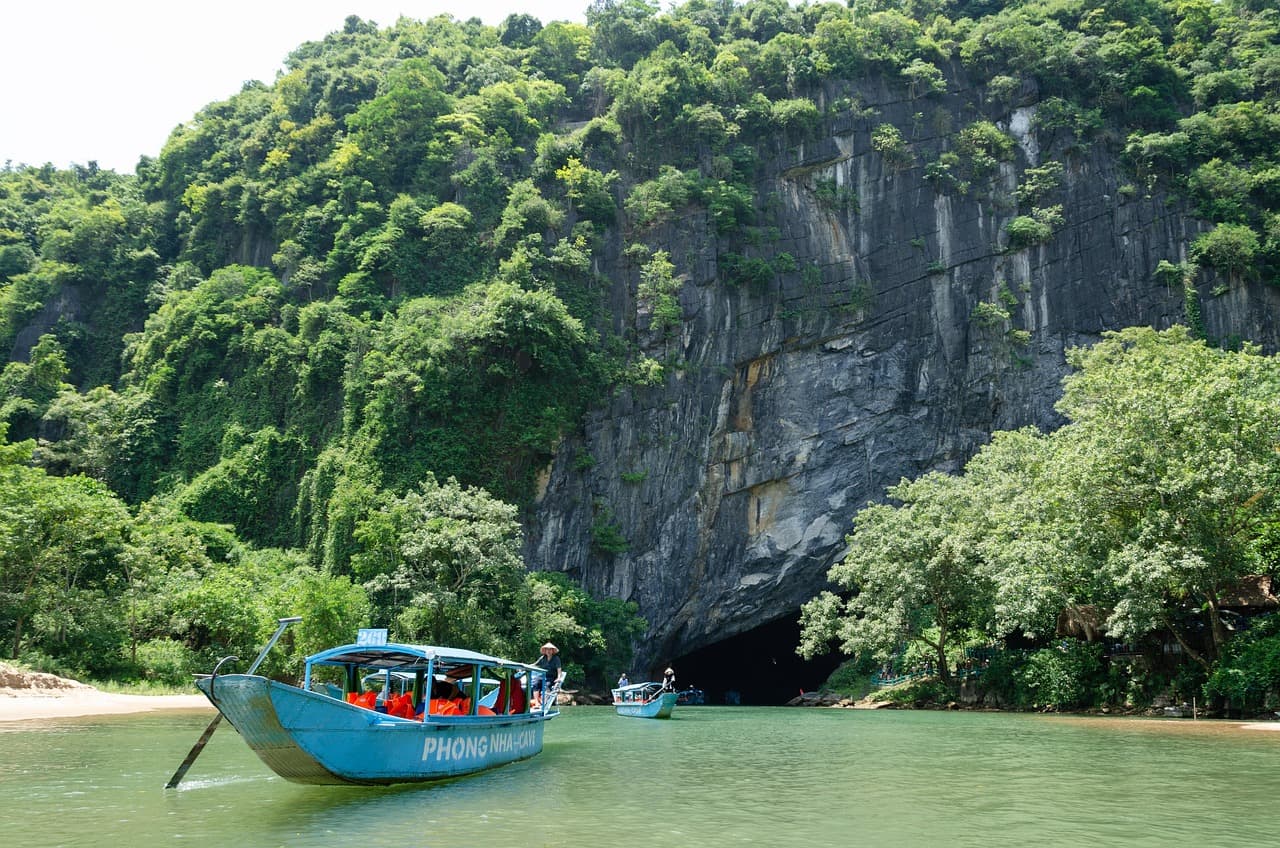
In Phong Nha, expedition caves are accessible only through licensed operators. These operators arrange the park permit, provide helmets, and lead small groups through Son Doong, Hang En, and Tu Lan. For an easier day, Phong Nha Cave, Paradise Cave, and Dark Cave have official ticket gates and marked walkways. The best trekking window is January to April; flood warnings cover September to November.
Ninh Binh works better if you want to sit in a boat rather than hike in a cave. Trang An's boat routes pass through grottoes, and the site requires no separate cave permit. Buy tickets only at the official boat-station booth. Best months are February to April and September to November; July is hot and humid. When the boat slips under a cave ceiling, stay seated and keep your phone in a waterproof bag.
Finally, budget reality: entrance fees at Phong Nha and Trang An changed after 2025 revisions, so confirm current prices at ticket counters. Keep a ticket copy with you in Ninh Binh, and don't try self-guided hiking in Phong Nha's restricted zones. With limited time, commit to one region rather than splitting days.
Phong Nha cave tours: licensed expeditions and ticket-gate caves
Phong Nha-Ke Bang National Park, a UNESCO site since 2003, splits its caves into two distinct categories: permit-controlled expedition caves and regular caves with simple ticket gates. The expedition caves (Son Doong, Hang En, and Tu Lan) can only be entered through licensed tour operators who arrange the park permit for you. You cannot buy a ticket at the gate or arrange these trips independently. Oxalis Adventure, the only operator licensed for Son Doong expeditions, runs departures through the dry season, which runs roughly January to August. Before you book transport to Phong Nha, check with the operator whether any Son Doong permits remain for the 2026 dry season. Hang En and Tu Lan have a wider permit supply, but they also sit inside restricted forest areas, so booking through a licensed operator is mandatory.
The regular caves are more straightforward. Phong Nha Cave, Paradise Cave, and Dark Cave each have official ticket gates with published entrance fees. Phong Nha Cave is entered by boat from the visitor center, while Paradise Cave involves a walk up a hillside and a boardwalk inside the cavern. Dark Cave adds a zipline and mud bath, which makes it popular but also means it closes temporarily after heavy rain. If your planned visit date follows a storm, confirm with the ticket gate or the Phong Nha-Ke Bang official website that Dark Cave has reopened.
Do not hike or explore restricted cave and forest areas in Phong Nha on your own. The park boundary includes zones where self-guided entry is illegal, and the flood risk between September and November makes unaided trips genuinely dangerous. Stick to marked trails and the official cave entrances. For the expedition caves, the licensed operators include safety briefings, helmets, and guides who know the flood conditions. If you are visiting between September and November, check daily weather forecasts and the park's flood warnings before going anywhere near a cave entrance.
Entrance fees at Phong Nha's ticket gates changed after the 2025 revisions, so confirm current prices at the counter or on the official website before your trip. The January to April window offers the driest conditions for both the trekking caves and the boat ride into Phong Nha Cave.

Ninh Binh boat routes: seeing karst scenery from the water
Trang An, a UNESCO site since 2014, uses official boat-route tickets rather than cave permits for its karst scenery. In Phong Nha, expedition caves such as Hang En and Tu Lan require a licensed operator to arrange park permits; in Trang An you buy a ticket only at the official boat-station booth and join a boat on a fixed route. Street touts outside the station are not part of that official system.
Follow the rower's signal once you board. Stay seated as the boat passes under low grotto ceilings, keep phones and cameras in a waterproof bag, and hold onto your printed or digital ticket for the full route. The boat passes through several cave passages before returning to the dock.
Rowers give informal commentary, often mixing Vietnamese with gestures, not a scripted natural-history narration. Travelers who want ecology and geology context should book a licensed day guide for Trang An or add Cuc Phuong National Park to the trip. Cuc Phuong offers forest walking and a closer look at the same limestone landscape.
Plan the boat ride for February to April or September to November; July is hot and humid. Phong Nha's main trekking window runs January to April, so if you are choosing between the two regions, the spring months work for both. Entrance fees at Trang An and Phong Nha changed after the 2025 revisions, so confirm the current fee at the ticket counter before boarding.
Best time to visit Phong Nha and Ninh Binh in 2026
Best time to visit Phong Nha and Ninh Binh in 2026
January to April is the season to book Phong Nha cave treks. The dry karst trails in Phong Nha-Ke Bang National Park are passable, and the expedition camps run full schedules. Ninh Binh matches a different rhythm: February to April and September to November are the windows for Trang An boat rides and Tam Coc scenery. If you can only take one trip, pick your dates from these windows rather than from a generic Vietnam itinerary.
For Phong Nha, the January to April window matters because the park is weather-driven. Phong Nha weather turns wet from September to November, and the national park can issue flood warnings during those months. Dark Cave may close for days after heavy rainfall, and tours to Hang En and Tu Lan depend on river levels. Plan a buffer of two or three spare days if Dark Cave is essential. Still, do not book a Son Doong expedition without confirmed permits; licensed operators such as Oxalis handle the required park permits and update availability for the dry season.
Ninh Binh has a longer usable season, but July sits at the hot and humid end of it. Long boat rides through Trang An's low grottoes become less comfortable in that heat. February to April offers cooler air and clearer light for the karst views; September to November does the same after the monsoon eases. If you travel in those windows, buy tickets only at the official boat-station booth, and keep a printed or digital copy for the route checkpoints.
Fee revisions in 2025 mean 2026 prices at Phong Nha ticket gates and Trang An boat station may differ from older posts. Confirm current entrance fees at the counter and recheck flood alerts before you leave. The rest of the planning is straightforward: pack for cave mud, wear a life jacket on the Phong Nha boat routes, and stay seated when Ninh Binh boats pass under low ceilings.

Safety rules and practical guidance in both parks
The life jacket rule applies on every boat in Phong Nha and Trang An, and it is not optional. In Phong Nha, ticket staff and boat crews check that each passenger has a jacket fastened before the boat leaves the dock. Trang An rowboats carry jackets too. Don't wait for a reminder: put yours on at the dock. The jacket keeps you afloat in the dark, narrow passages where the boats pass close to rock.
Phong Nha has a second non-negotiable rule: do not leave the marked trails or try to reach cave entrances by yourself. The karst forest hides sinkholes and unmarked passages, and several zones are closed for conservation. For expedition caves such as Son Doong, Hang En, and Tu Lan, the only legal way in is with a licensed operator. That operator handles the park permit and gives you a flood and safety briefing before the trip. The flood risk is concentrated from September to November, so check conditions with your hotel before any trek.
In Trang An, stay seated while the boat passes below low cave ceilings. The route glides through several separate grottoes, and the seated rule applies for the whole trip. The rock comes close overhead, and shifting your weight can tip the narrow hull. Keep phones and cameras in waterproof bags, and hold onto your printed or digital ticket until the route ends.
Buy tickets only from official booths in both regions. In Phong Nha that means the national park ticket counter or the operator's office; in Trang An it is the boat-station booth, not the people selling tickets on the access road. Entrance fees at both sites changed after 2025 revisions, so confirm the current price on the booth display before you pay. For a Phong Nha expedition cave, ask your operator to show that the permit is included in the tour price and that you will receive a flood and safety briefing. Following these rules removes almost all the real risk.
2026 costs: what is confirmed and what is not
No confirmed 2026 entrance fee list exists at Phong Nha or Trang An ticket counters. Fees changed repeatedly after 2025 revisions, so any price you read online from earlier this year may already be outdated. The reliable move is to check 2026-dated official park pages and operator websites a day before you go, then confirm at the counter. You will not find one unified admission system across the two regions: Phong Nha and Ninh Binh sell access differently.
In Phong Nha, regular caves like Phong Nha, Paradise, and Dark Cave have official ticket gates with set entrance fees. Expedition caves in Phong Nha-Ke Bang National Park, including Son Doong, Hang En, and Tu Lan, cost far more because licensed operators arrange permits, safety staff, and logistics. These are not optional extras: you cannot enter expedition caves without an operator. For 2026, confirm both availability and price on the operator's own site, and ask whether any Son Doong permits remain for the dry season.
Ninh Binh works differently. Trang An sells boat-route tickets, not cave-by-cave admission, and no separate cave permit is required. Buy tickets only from the official boat-station booth, not from street touts. Exact 2026 prices are unconfirmed here too. If you want natural-history context beyond the rower's informal commentary, set aside an optional cost for a licensed day guide. That is a separate expense on top of the boat ticket.
Both regions sit under Vietnam's 90-day e-visa policy, so visa cost and validity do not differ. What differs is the payment structure: Phong Nha charges per cave or per expedition, Ninh Binh bundles access into boat routes. Use only 2026-dated official pages and operator websites when comparing, not older price posts from 2023 or 2024. Hours and prices change, so confirm on the official website before you set out.

How to decide between Phong Nha and Ninh Binh
Phong Nha's expedition caves, Son Doong, Hang En and Tu Lan, are permit-controlled and enterable only through licensed operators. Ninh Binh's Trang An grottoes are reached by boat tickets sold at the official boat station, with no separate cave permit. Between these two Vietnam cave regions, the final filter is physical ambition and trip length, not entry rules.
Choose Phong Nha if the appeal is jungle trekking, overnight cave camps, and a permit-controlled expedition into those wild caves. You will walk through forest, wade streams, and sleep inside a cave at a campsite set up by your guide. Phong Nha also has Phong Nha Cave, Paradise Cave and Dark Cave, which you can enter on a day ticket if you do not want to commit to a multi-day expedition. Choose Ninh Binh if you prefer a slower trip with karst peaks and grottoes reached by boat rather than long underground treks. In Trang An you sit in a rowed boat while the pilot handles the paddling, and the only gear you need is a waterproof bag for your phone.
Season is the tie-breaker. Phong Nha is at its best from January to April, when dry karst trails make cave trekking practical. Ninh Binh has two useful windows, February to April and September to November. The autumn window is the sharpest difference: September to November is also when Phong Nha carries flood warnings for its cave routes, so if your trip falls in those months, Ninh Binh is the safer bet. July in Ninh Binh is hot and humid, which makes the spring and autumn windows more comfortable.
Visa policy will not decide it. Both destinations accept visitors under Vietnam's 90-day e-visa, so entry rules are identical. The fees are less stable: entrance prices at Phong Nha and Trang An changed after 2025 revisions, so confirm the current rate at the ticket counter before planning your daily budget.
Frequently asked questions
No. Son Doong, Hang En, and Tu Lan are expedition caves open only through licensed operators who arrange the park permit. For 2026, ask the operator whether any dry-season permits remain before you finalize plans.
No. Trang An runs on official boat-route tickets bought at the boat-station booth, not on a cave permit. Stay seated when passing low grotto ceilings and keep your ticket copy with you.
July is the hottest and most humid month for Ninh Binh. The better windows are February to April and September to November.
Travel details change — opening hours, prices, and schedules can vary by season. Please verify current information on official websites before your visit.
Watch: related videos
Phong Nha or Ninh Binh in 2026: how to choose between Vietnam's two cave regions — Video by GIANG VU on Pexels · silent stock clip
Phong Nha or Ninh Binh in 2026: how to choose between Vietnam's two cave regions — Video by Glowplug Media on Pexels · silent stock clip
Sources
- whc.unesco.org — Primary source
- whc.unesco.org — From research brief
- phongnhakebang.vn — From research brief
- travelfish.org — From research brief
- oxalisadventure.com — From research brief
Loading reviews…
About the author
Võ Hoài Nam
Nature & Adventure Editor
Hoài Nam edits Vietpeep's national parks, trekking, and adventure coverage from an environmental perspective. He keeps trail conditions, permits, wildlife rules, and low-impact travel choices front and center, so readers can plan a trip that respects the landscape.
All articles by Hoài NamRelated posts

Ninh Binh Overcrowding September 2026: Vietnam Travel News and Smarter Alternatives
Vietnam travel news for September 2026: Ninh Binh's National Day holiday crowds overwhelmed Trang An and Tam Coc, with two-hour boat queues and car parks full by 8 AM. This guide tells you how to time visits, where to go instead, and why Phu Quy island stayed calm. Useful for international travelers avoiding the worst lines.

Hue–Phong Nha Heritage Train: 2026 Vietnam Travel News and Booking Guide
This 2026 Vietnam Travel News update covers the new heritage train between Hue and Phong Nha: route via Dong Hoi, expected travel time, fare range, booking channels, seasonal risks, and what to see at Phong Nha–Ke Bang. It helps international visitors plan tickets and transfers without guessing.

Hanoi, Ninh Binh and Lan Ha Bay: 7-Day Vietnam Itinerary on a Budget (2026 Route and Costs)
This 7-day Vietnam itinerary links Hanoi, Ninh Binh, and Cat Ba's Lan Ha Bay with buses, trains, and ferries. It gives 2026 budget costs, e-visa steps, travel times, and seasonal warnings, plus a day-by-day plan for independent travelers who want a cheap loop through northern Vietnam.