Sapa’s Muong Hoa Valley in Autumn: Off-the-Path Trekking Guide 2026
This 2026 guide details how to trek Sapa’s quieter Muong Hoa Valley in autumn, covering route logistics, eco-fees, transport, weather, fitness, and how to arrange local guides and village homestays. It’s ideal for hikers seeking authentic experiences beyond Sapa’s busiest trails.

Trip plan
Day-by-day itinerary
Day 1
Arrival in Sapa and Transfer to Lao Chai
Arrive in Sapa from Hanoi by minibus or limo. After lunch, take a shared taxi or motorbike to Lao Chai village, pay the eco-fee, and settle into a local homestay. Explore the village and surrounding rice terraces in the late afternoon.
Related reading
Keep exploring Vietnam
- 1
- 2
- 3
At a glance
- Best time
- September–November (autumn)
- How long
- 2–4 days recommended for a full trek
- Budget
- From USD 25/day (excluding transport)
- Getting there
- Minibus or limo from Hanoi to Sapa, then taxi/motorbike to trailhead
- Language
- Vietnamese, Hmong, Dao; limited English in remote villages
- Currency
- Vietnamese Dong (VND)
Why Trek Muong Hoa Valley in Autumn?
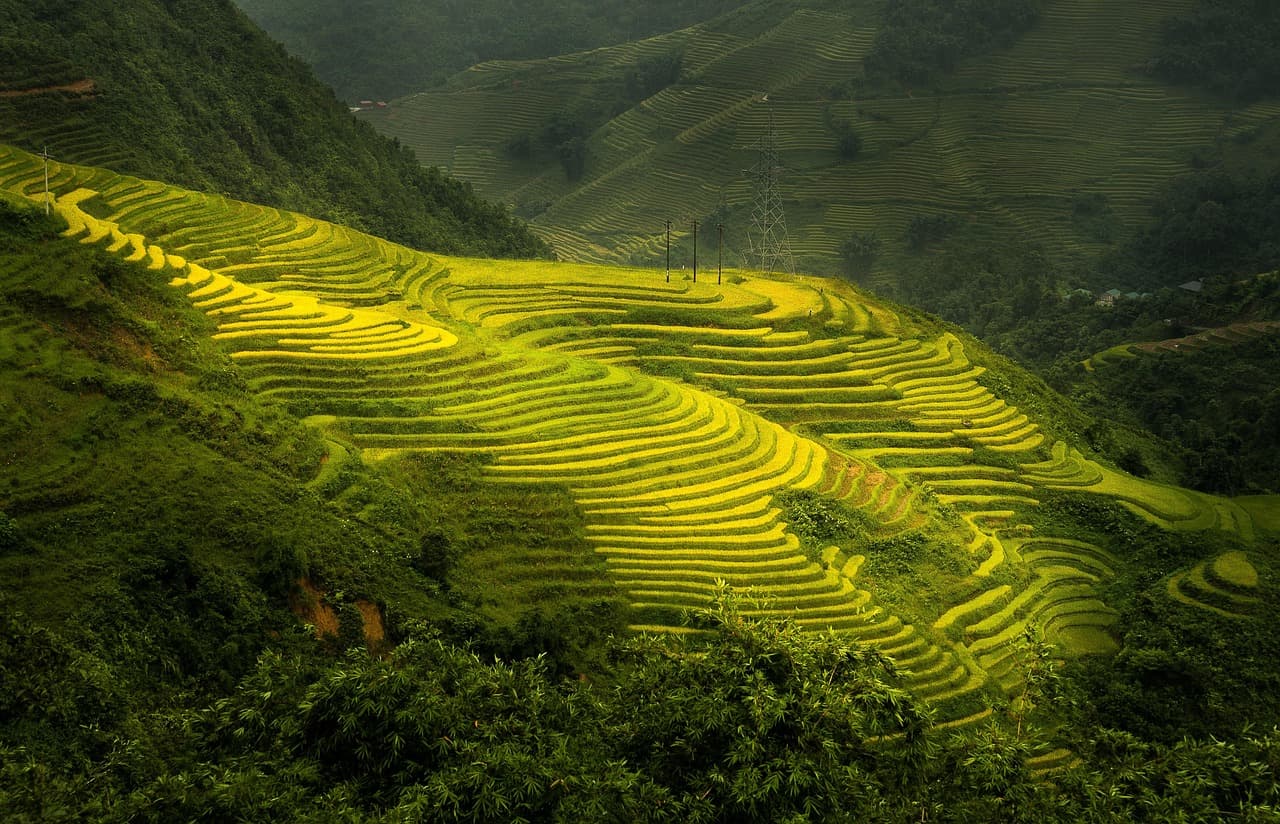
September to November marks the peak trekking season in Muong Hoa Valley, when the iconic rice terraces shift to a deep gold and the weather settles into a cool, stable pattern. Daytime temperatures hover between 12 and 22°C, making long hikes comfortable and reducing the risk of heat exhaustion common in Sapa’s summer months. Rainfall drops off sharply after August, so trails are generally drier, though mornings can still be misty—adding a soft, ethereal quality to the valley’s scenery before the sun burns through the fog by midday.
Compared to the busy Fansipan and Cat Cat trails, Muong Hoa Valley remains relatively quiet in autumn, even during the harvest. Most trekkers stick to the main Sapa town routes, so those venturing southeast into the valley find fewer crowds and a more authentic sense of rural life. The golden terraces, carved into the hillsides by generations of Hmong and Dao farmers, are at their most photogenic just before and during the rice harvest (usually late September through October). Early mornings often reveal a patchwork of sunlight and mist, ideal for photography and quiet contemplation before the day’s trekkers set out.
This combination of vivid landscapes, mild weather, and a slower pace makes autumn the preferred season for hikers seeking both comfort and immersion. Trails are challenging enough to satisfy experienced walkers but accessible to anyone with reasonable fitness, and the valley’s villages are especially welcoming during this season, when local families are busy with the harvest and homestays offer a window into everyday life.
Getting There and Trail Access
Getting to the Muong Hoa Valley from Hanoi is straightforward in 2026 thanks to frequent minibus and limousine services. These vehicles depart from My Dinh or Gia Lam stations in Hanoi, with journeys taking 6 to 7 hours depending on traffic and weather. Tickets cost between VND 350,000 and 600,000 (approximately USD 14–24) one way, with limousines offering more legroom and onboard WiFi. Advance booking is recommended, especially on weekends and during the autumn trekking season, when demand spikes.
Upon arrival in Sapa town, most trekkers transfer to local trailheads by shared taxi or motorbike taxi. Shared taxis to Lao Chai or Ta Van—the two main starting points for Muong Hoa Valley treks—cost VND 80,000 to 120,000 per car, with the ride taking 20–30 minutes over winding mountain roads. Motorbike taxis (xe ôm) are slightly cheaper and can be arranged at Sapa’s central square, but are best suited for solo travelers with minimal luggage.
The main entry checkpoint for the Muong Hoa Valley is at Lao Chai village, where all hikers pay a mandatory eco-fee of VND 120,000 (about USD 5) in cash. Keep your ticket, as random checks are possible further along the trail. If you plan to start your trek from Ta Van or another village, confirm with your driver or guide about the nearest checkpoint to avoid backtracking. Early morning departures from Sapa are advisable to maximize daylight and avoid crowds at the checkpoint.

Trek Logistics and Difficulty
Trekkers tackling the Muong Hoa Valley in autumn 2026 should plan for daily distances between 10 and 18 kilometers, with elevation gains ranging from 300 to 600 meters. Most routes wind through terraced rice fields, bamboo groves, and small villages, with the terrain shifting from packed earth to rocky stretches and muddy patches—especially after rainfall. The majority of hikers spend five to seven hours on the trail each day, with frequent stops to navigate stone steps, narrow footbridges, and occasional stream crossings.
Sturdy, waterproof hiking boots are strongly advised, as some sections become slippery or deeply rutted during the rice harvest. While the trails do not require technical climbing skills, agility is important for handling steep descents, uneven paths, and balancing on simple log bridges. Trekking poles can be helpful, particularly on longer descents or if the weather turns wet.
Hikers should be comfortable with continuous walking, basic ascents and descents, and carrying a daypack with water, snacks, and layers for changing temperatures. The valley sits at an altitude of 900 to 1,200 meters, so altitude sickness is rare, but the combination of distance and terrain means a reasonable level of fitness is necessary. Trail conditions can change quickly due to landslides or local rice harvest activities, so check with your guide or homestay host for the latest updates before setting out each day.
Guides, Permits, and Homestays
International hikers entering Muong Hoa Valley for trekking must pay an eco-fee of VND 120,000 (about USD 5) at the main checkpoint in Lao Chai village. This fee covers access to the valley’s network of trails and is valid for day hikes; no additional permits are needed for single-day treks. Payment is straightforward—cash is preferred, and receipts are issued at the checkpoint, which is open daily from 7:00 to 18:00.
For those planning to stay overnight in remote villages such as Ta Van, Giang Ta Chai, or Ban Ho, registration is required. Your homestay host will handle this paperwork, typically needing your passport details and entry stamp. This process ensures compliance with local regulations and supports community-based tourism. Homestays in these villages range from VND 250,000 to 500,000 per night (USD 10–20), including simple meals and bedding. Facilities are basic, with limited English spoken, so communication may rely on your guide or translation apps.
Hiring a local Hmong or Dao guide is strongly recommended, especially for off-the-map routes or deeper cultural experiences. Guides charge VND 400,000–600,000 per day (USD 16–24), with prices varying by route complexity and language skills. You can arrange guides through Sapa-based trekking collectives, online platforms, or directly at village homestays. Guides not only help with navigation and translation but also provide insight into village life, rice cultivation, and autumn traditions. Advance booking is advisable during peak season (September–November), as demand rises with the golden rice harvest.

Weather, Packing, and Safety
Autumn in the Muong Hoa Valley brings mild daytime temperatures between 12 and 22°C, but mornings often start with dense fog and a chill that lingers until late morning. Rainfall drops off compared to the summer months, but brief showers are still possible, and trails can remain muddy or slippery for hours afterward. Trekkers should expect some sections with slick clay and uneven stone steps, especially near stream crossings or shaded terraces.
Packing for these conditions means layering is essential. A lightweight, moisture-wicking base layer, a fleece or insulated jacket, and a waterproof shell will cover most temperature swings. Quick-drying trekking pants and a spare pair of socks are useful for muddy stretches. A compact rain jacket or poncho is necessary, even on clear mornings, as weather can shift quickly in the valley. Early starts or late arrivals—common when covering 10–18 km per day—make a headlamp with fresh batteries indispensable. Sturdy, grippy hiking boots are strongly recommended due to the valley’s mix of rocky paths and slick rice paddy edges.
Trail safety can be unpredictable in autumn. Landslides occasionally block minor routes after heavy rain, and rice harvests may temporarily reroute or obscure village paths. Before setting out each morning, check with your guide or homestay host for the latest updates on route conditions and village accessibility. Some remote areas have limited mobile coverage, so don’t rely solely on navigation apps; download offline maps and carry a paper backup if possible.
Village Experiences and Cultural Etiquette
In the remote villages of the Muong Hoa Valley, homestays typically offer simple wooden houses with shared bathrooms, thin mattresses, and basic hot showers. English is often limited, especially in smaller villages like Giang Ta Chai or Su Pan, so communication relies on gestures, translation apps, or the help of your guide. Meals are usually home-cooked and communal, featuring local rice, seasonal vegetables, and sometimes pork or chicken from the host family’s own farm. Power outages are not uncommon, and Wi-Fi is rare—bring a flashlight and expect to disconnect for the night.
Respectful interaction is essential. Always ask permission before photographing people, homes, or ceremonies; a smile and the phrase “Xin chào, tôi có thể chụp ảnh không?” (Hello, may I take a photo?) goes a long way. In some villages, elders or hosts may politely decline, especially during family gatherings or rituals. It’s customary to remove your shoes before entering a home and to accept tea if offered, even if you only take a sip.
Supporting local families directly makes a difference. Many villagers sell hand-embroidered textiles, silver jewelry, or herbal remedies—purchasing these at fair prices (expect VND 60,000–200,000 for small items) helps sustain traditional crafts. Consider eating meals at your homestay or local kitchens rather than bringing packaged food from Sapa. Cash is essential, as card payments are not accepted. A little patience and genuine curiosity are usually met with warmth and hospitality, even if conversation is limited.

Frequently asked questions
Guides are not mandatory, but hiring a local Hmong or Dao guide is highly recommended for off-path routes, language help, and cultural context.
No ATMs in remote villages; bring enough cash from Sapa. Small shops may sell snacks and water, but selection is limited.
Solo trekking is possible on main trails, but conditions can change quickly; always inform your host or guide of your route and check for updates.
Travel details change — opening hours, prices, and schedules can vary by season. Please verify current information on official websites before your visit.
Sources
- nomadasaurus.com — Primary source
- trekkingwithlocalsapa.com — From research brief
- wanderingwheatleys.com — From research brief
- sapa-trekking-homestay.com — From research brief
- vietnamcoracle.com — From research brief
Loading reviews…
About the author
Võ Hoài Nam
Nature & Adventure Editor
Hoài Nam edits Vietpeep's national parks, trekking, and adventure coverage from an environmental perspective. He keeps trail conditions, permits, wildlife rules, and low-impact travel choices front and center, so readers can plan a trip that respects the landscape.
All articles by Hoài NamRelated posts

Sapa Trekking Without a Guide: 3 Self-Guided Routes for 2026
Independent trekkers get three no-guide Sapa routes from Sapa town through Muong Hoa Valley: Y Linh Ho–Lao Chai–Ta Van, Cat Cat–Sin Chai, and Ta Phin–Ma Tra. Includes 2026 entrance fees, homestay and meal costs, permit registration, fitness needs, weather windows, and a ready-to-use three-day walking plan.

Sapa trekking to Ban Ho village: 2-day Tay homestay route and costs for 2026
This 2026 guide covers the 2-day Sapa trekking route to Ban Ho, a Tay village in Muong Hoa Valley. It explains the path through Y Linh Ho, Lao Chai, Ta Van, and Giang Ta Chai, guide rates, homestay costs, transport from Hanoi, seasons, difficulty, and practical village etiquette.
Sapa trekking difficulty: route grades, guide costs and fitness for 2026
Sapa trekking is rarely about altitude: Sapa town sits at about 1,600 m and village treks stay between 1,200 m and 1,800 m. Heat, mud and steep clay descents are what make routes hard. This guide grades valley and remote routes, 2026 guide costs, permits, weather by month and a two-day plan.