Sapa trekking difficulty: route grades, guide costs and fitness for 2026
Sapa trekking is rarely about altitude: Sapa town sits at about 1,600 m and village treks stay between 1,200 m and 1,800 m. Heat, mud and steep clay descents are what make routes hard. This guide grades valley and remote routes, 2026 guide costs, permits, weather by month and a two-day plan.
Trip plan
Day-by-day itinerary
Day 1
Muong Hoa valley: Y Linh Ho, Lao Chai and Ta Van
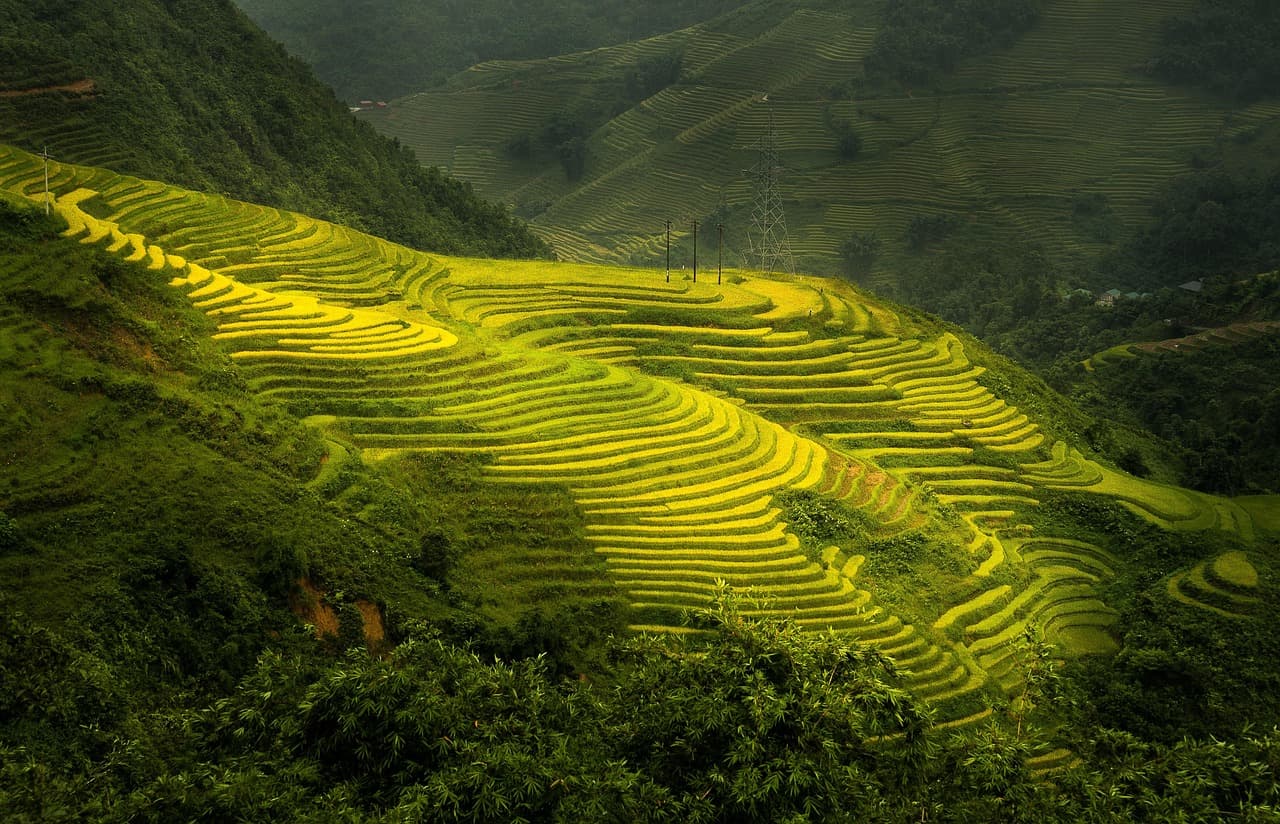
Walk out of Sapa town, which sits at about 1,600 m, and drop into the Muong Hoa valley through Y Linh Ho, then on to Lao Chai and Ta Van. Expect 8 to 15 km with 300 to 700 m of elevation gain and 3 to 6 hours of walking, depending on where you start and whether you take a motorbike transfer. The descent is steep clay and terrace steps, so start early and keep the last hour in daylight. Sleep in a homestay in Ta Van; the guide or homestay handles your overnight registration.
Related reading
Keep exploring Vietnam
- 1
- 2
- 3
At a glance
- Best time
- April to May for clearer skies, September to October for rice harvest views; June to August brings heavy rain and landslides, November to March is cold and foggy
- How long
- 3 to 6 hours of walking on standard valley routes; two-day group treks are the common overnight format
- Budget
- Guides 600,000 to 1,500,000 VND per day; two-day group treks USD 60 to 150 per person
- Getting there
- Sleeper bus or limousine from Hanoi, 5 to 6 hours
- Language
- Vietnamese; local Hmong and Dao guides lead most valley treks
- Currency
- Vietnamese dong (VND); some trek operators quote in US dollars
How hard is sapa trekking? Altitude, mud and the fitness you need
## How hard is sapa trekking? Altitude, mud and the fitness you need
Sapa town sits at about 1,600 m, and most village treks run between 1,200 m and 1,800 m. True altitude sickness is rare on standard routes. The thin air is not what stops people here.
Heat, humidity and steep muddy descents are. November to March is cold and foggy, and December to February temperatures can approach 0°C, so the worst conditions usually come from wet-season mud rather than cold or elevation. Trail surfaces are slippery clay, steep terraces and irregular steps, and they punish weak knees and poor footwear. Break in grippy shoes before you fly, carry a rain shell, and pack knee support if descending hurts.
Grade a sapa trekking route by distance and elevation gain, not by the name Sapa. Standard Muong Hoa valley routes to Y Linh Ho, Lao Chai and Ta Van cover 8 to 15 km with 300 to 700 m of elevation gain and 3 to 6 hours of walking. Remote routes toward Ban Ho, Sin Chai, Thanh Phu or Nam Cang involve longer transfers, fewer services, sharper descents and possible river crossings. The same trail feels different in April and in July, so check the month before you judge the difficulty.
If you can walk 4 to 6 hours with a daypack at home, the easy to moderate valley routes are within reach. Train with 5 to 10 km hill walks and stairs in the 4 to 6 weeks before arrival. Fitness shortens the day; it does not make clay less slippery.
Sapa trekking routes in the Muong Hoa valley: Y Linh Ho, Lao Chai and Ta Van
Sapa trekking routes in the Muong Hoa valley: Y Linh Ho, Lao Chai and Ta Van
The standard Muong Hoa valley routes are the easiest way to judge Sapa trekking difficulty. They cover 8 to 15 km with 300 to 700 m of elevation gain and 3 to 6 hours of walking, which puts them in the easy to moderate range.
The classic villages on this route are Y Linh Ho, Lao Chai and Ta Van. You can walk from Sapa town down into the valley, pass terraced rice fields, and finish in Ta Van, where many homestays sit. There is no general trekking permit for the main valley, so you can set out without paperwork. Guides are not legally mandatory here, but local Hmong and Dao guides are strongly recommended for navigation, homestay access and responsible village visits. Homestay overnight registration is handled by the guide or the homestay, so you do not register yourself.
2026 guide costs run about 600,000 to 1,500,000 VND per day depending on group size and route. Two-day group treks commonly cost USD 60 to 150 per person. That fee usually covers a guide, some meals, and homestay arrangements, though you should confirm what is included before booking. If you can comfortably walk 4 to 6 hours with a daypack, these routes are within reach.
These routes are not technical, but they are not flat. Slippery clay, steep terraces and irregular steps punish weak knees and poor footwear. Bring broken-in grippy shoes, a rain shell, cash because ATMs are scarce in villages, and knee support if descending hurts. Treat this route as your benchmark: if Y Linh Ho, Lao Chai and Ta Van feel hard, the remote routes toward Ban Ho, Sin Chai, Thanh Phu or Nam Cang will be much harder.

Remote sapa trekking routes: Ban Ho, Sin Chai, Thanh Phu and Nam Cang
Remote trekking routes: Ban Ho, Sin Chai, Thanh Phu and Nam Cang
Ban Ho, Sin Chai, Thanh Phu and Nam Cang sit at the moderate to hard end of the Sapa trekking grade. The standard Muong Hoa valley walks to Y Linh Ho, Lao Chai and Ta Van cover 8 to 15 km with 300 to 700 m of elevation gain and 3 to 6 hours of walking. The remote villages trade that predictability for longer transfers to the trailhead, fewer services between stops, sharper descents and possible river crossings. Sapa town sits at about 1,600 m and most village treks run between 1,200 m and 1,800 m, so altitude is not what makes these days hard. Distance, mud and footing are the limiting factors.
Navigation gets harder first. Paths split across terraces, bridges wash out, and signage is thin. Guides are not legally mandatory on the main valley trails, but here a local Hmong or Dao guide earns the fee by knowing which homestays are taking guests and how to handle the overnight registration, which the guide or homestay arranges. Guide costs in 2026 run about 600,000 to 1,500,000 VND per day depending on group size and route, and two-day group treks commonly cost USD 60 to 150 per person.
Trails that enter Hoang Lien National Park or border areas require entry fees or permits, usually arranged by a licensed operator, so a Sapa trekking tour that crosses that boundary normally has the paperwork built into the price. Exact 2026 Hoang Lien park fees are unconfirmed, so ask the operator for the current figure. Carry cash, because ATMs are scarce in the villages.
Post-typhoon trail repairs are still unconfirmed for 2026, so ask locally which sections are open before you commit, and treat 2023 or 2024 price lists as outdated. Pack broken-in grippy shoes, a rain shell and knee support if descents hurt. Hanoi to Sapa by sleeper bus or limousine takes 5 to 6 hours, and 2026 fares vary by operator.
Permits, guides and sapa trekking tour costs in 2026
## Permits, guides and sapa trekking tour costs in 2026
A guide in Sapa costs about 600,000 to 1,500,000 VND per day in 2026, and the rate depends on group size and route. Two-day group treks commonly run USD 60 to 150 per person. Confirm what sits inside those numbers before you compare quotes. Transport back to Sapa town, village entry fees, drinks and the return transfer are sometimes billed separately, and the difference between two quotes is often a missing inclusion rather than a cheaper guide.
You do not need a general trekking permit for the main Muong Hoa valley, and guides are not legally mandatory on those trails. Local Hmong and Dao guides still help with navigation and homestay access, and they arrange village visits with families who expect visitors. Hoang Lien National Park trails and routes near the border work differently: they require entry fees or permits, which a licensed operator normally arranges for you. Homestay overnight registration is handled by the guide or the homestay, not by you.
The gap is the fee itself. The exact 2026 Hoang Lien National Park fee is not confirmed, partly because trail repairs and post-typhoon closures have shifted what is open. Ask your operator for the current figure in writing, with the permit cost itemised separately from the guiding fee, before you pay a deposit. If an operator will not put the fee in writing, that tells you enough.
Treat 2023 and 2024 price lists as outdated when you compare quotes for a sapa trekking tour. Get two or three written quotes for the same itinerary, then check whether the Hanoi transfer is included: a sleeper bus or limousine takes 5 to 6 hours and fares vary by operator.
Sapa trekking weather month by month
## Sapa trekking weather month by month
Sapa town sits at about 1,600 m, and most village treks run between 1,200 m and 1,800 m, so true altitude sickness is rare on standard routes. Weather shifts the difficulty more than height does. The same Muong Hoa valley walk to Y Linh Ho, Lao Chai and Ta Van, 8 to 15 km with 300 to 700 m of elevation gain and 3 to 6 hours of walking, plays differently in February fog than in April sun.
November to March is cold and foggy, and December to February temperatures can approach 0°C in Sapa. The dry cold keeps trails firmer underfoot, but cloud often sits in the valley all day. Pack insulation, a rain shell, grippy shoes you have broken in, and cash, since ATMs are scarce in villages.
April to May brings clearer skies and firmer trails, which is when the long valley views usually open. June to August brings heavy rain, landslides and mud, so budget extra hours for the same route; a walk that takes 3 to 6 hours in spring can run longer once the clay turns slick. Remote routes toward Ban Ho or Sin Chai, with their longer transfers and sharper descents, are a poor fit for the June to August mud. September and October offer rice harvest views with changeable conditions, warm and green but prone to rain arriving with little warning.
Fog and rain can hide the valley views that make the walk worthwhile, so plan a spare day. Check the forecast each morning before committing to a route, and keep a lower, shorter option in reserve. Spare days add cost: 2026 guide rates run about 600,000 to 1,500,000 VND per day depending on group size and route, while two-day group treks commonly cost USD 60 to 150 per person.
Fitness, footwear and packing before you book
A practical sapa trekking benchmark is simple: train with 5 to 10 km hill walks and stairs in the 4 to 6 weeks before arrival. Flat, paved training walks do not test what these trails ask for. The target is to walk 4 to 6 hours with a daypack and finish tired rather than wrecked. If four hours with a loaded pack leaves you unable to stand up straight the next morning, the harder routes are not the ones to book.
Bring broken-in grippy shoes, a rain shell, cash because ATMs are scarce in villages, and knee support if descending hurts. Slippery clay, steep terraces and irregular steps punish weak knees and poor footwear. Fitness shortens the day; it does not make clay less slippery.
If you book a guide, 2026 rates run about 600,000 to 1,500,000 VND per day depending on group size and route, and two-day group treks commonly cost USD 60 to 150 per person. Hanoi to Sapa by sleeper bus or limousine takes 5 to 6 hours, and 2026 fares vary by operator. Confirm what your quote includes before you pay a deposit.

Getting to Sapa and practical logistics
Hanoi to Sapa by sleeper bus or limousine takes 5 to 6 hours, and 2026 fares vary by operator, so compare what the price includes before you pay a deposit. Ask about the Hanoi pickup point, the departure time, and where the bus drops you in Sapa town. Some operators finish at a central office rather than your hotel.
Once you arrive, sort out money in town. ATMs are scarce in villages, and card payment is not reliable on the trail, so carry enough Vietnamese dong in cash for homestay extras, drinks, snacks, tips and any village purchases. Two-day group treks commonly cost USD 60 to 150 per person, and 2026 guide costs run about 600,000 to 1,500,000 VND per day depending on group size and route, so budget for the guide separately from your own spending. Homestay overnight registration is handled by your guide or the homestay, not by you.
Sapa town is the practical base for gear. Its sapa trekking hotels and gear shops sit close together in the centre, and a rain shell or a replacement pair of grippy shoes is easier to buy in town than in the villages. Buy and break in your footwear before you travel: slippery clay, steep terraces and irregular steps punish weak knees and poor footwear. Village souvenir shops sell textiles and crafts, not technical kit, so do not count on replacing anything once you leave town.
Ask questions when you book. Guide licensing enforcement in Sapa and Hoang Lien National Park fee changes are both open questions for 2026, along with post-typhoon trail repairs. Guides are not legally mandatory on the main Muong Hoa valley trails, but park trails and border-area routes need entry fees or permits, usually arranged by a licensed operator, so check what your sapa trekking tour includes. Treat 2023 and 2024 price lists as outdated and confirm current fees with your operator before you commit.
Frequently asked questions
No general trekking permit is required for the main Muong Hoa valley routes. Trails inside Hoang Lien National Park and border-area routes need entry fees or permits, usually arranged by a licensed operator. The exact 2026 park fee is not confirmed, so ask your operator for the current amount before paying.
Guides are not legally mandatory on the main valley trails. Local Hmong and Dao guides are strongly recommended for navigation, homestay access and responsible village visits. On remote routes toward Ban Ho, Sin Chai, Thanh Phu or Nam Cang, a guide is worth the cost because services are fewer and some trails cross park or border areas.
It is rare on standard routes. Sapa town sits at about 1,600 m and most village treks run between 1,200 m and 1,800 m. Heat, humidity and steep muddy descents cause more problems for trekkers than the altitude does.
No. The routes are not technical, but slippery clay, steep terraces and irregular steps are hard on knees and on smooth-soled shoes. Bring broken-in grippy footwear and knee support if descents already hurt at home.
Travel details change — opening hours, prices, and schedules can vary by season. Please verify current information on official websites before your visit.
Watch: related videos
Sapa trekking difficulty: route grades, guide costs and fitness for 2026 — Video by Ahmet Yüksek ✪ on Pexels · silent stock clip
Sapa trekking difficulty: route grades, guide costs and fitness for 2026 — Video by Ahmet Yüksek ✪ on Pexels · silent stock clip
Sources
- vietnamcoracle.com — Primary source
- thecommonwanderer.com — From research brief
- sapasisters.com — From research brief
- sapaochau.org — From research brief
- vietnam.travel — From research brief
Loading reviews…
About the author
Võ Hoài Nam
Nature & Adventure Editor
Hoài Nam edits Vietpeep's national parks, trekking, and adventure coverage from an environmental perspective. He keeps trail conditions, permits, wildlife rules, and low-impact travel choices front and center, so readers can plan a trip that respects the landscape.
All articles by Hoài NamRelated posts

Sapa trekking to Ban Ho village: 2-day Tay homestay route and costs for 2026
This 2026 guide covers the 2-day Sapa trekking route to Ban Ho, a Tay village in Muong Hoa Valley. It explains the path through Y Linh Ho, Lao Chai, Ta Van, and Giang Ta Chai, guide rates, homestay costs, transport from Hanoi, seasons, difficulty, and practical village etiquette.

Sapa Trekking Without a Guide: 3 Self-Guided Routes for 2026
Independent trekkers get three no-guide Sapa routes from Sapa town through Muong Hoa Valley: Y Linh Ho–Lao Chai–Ta Van, Cat Cat–Sin Chai, and Ta Phin–Ma Tra. Includes 2026 entrance fees, homestay and meal costs, permit registration, fitness needs, weather windows, and a ready-to-use three-day walking plan.

Y Ty Trekking Guide: 3-Day Cloud Trail Route, Costs and Border Permits in Lao Cai 2026
A practical 2026 guide for hikers planning Y Ty in Lao Cai province. It covers the 3-day trek from Sapa or Lao Cai, trail difficulty, border permit status, guide costs, weather windows, homestay options, and a realistic daily budget for this quieter alternative to Sapa.