Trekking Pu Luong’s Hidden Valleys: An Independent 2026 Guide
This independent 2026 guide covers self-guided and locally guided treks through Pu Luong Nature Reserve’s rice terraces and rainforest: transport from Hanoi, seasonal timing, permit and guide rules, costs, homestays, and safety. It helps hikers avoid outdated blog information and plan a reliable trip with current fees and local contacts.
Related reading
Keep exploring Vietnam
- 1
- 2
- 3
At a glance
- Best time
- September–November for golden rice; February–April for cool green with fewer tourists
- How long
- 2–4 days typical; day treks from Mai Chau are possible
- Budget
- Independent trek about 1,200,000–2,500,000 VND/day including guide, food, homestay; packages $50–$120/day
- Getting there
- Hanoi to Mai Chau by bus 3.5 hrs, then xe om or local transfer 35–45 min
- Language
- Vietnamese; some homestay hosts in Ban Hang and Ban Don speak basic English
- Currency
- Vietnamese dong (VND); cash only, no ATMs in the reserve
Getting to Pu Luong from Hanoi
An express bus from Hanoi's My Dinh or Giap Bat station to Mai Chau costs 120,000–180,000 VND and takes about 3.5 hours. Buses leave regularly in the morning and early afternoon, but times shift between operators, so confirm the 2026 schedule with the bus company or your accommodation before heading to the station. Most buses drop passengers in Mai Chau town, a compact place where guesthouses and food stalls are easy to find on foot.
From Mai Chau, take a xe om (motorbike taxi) for the 35–45 minute ride up into the reserve, typically ending near Ban Hang village where the main trailheads begin. You'll need to negotiate; aim for 150,000–250,000 VND before getting on. The road is paved but climbs steeply in sections, and a driver can carry a large backpack between his legs. If you arrive after dark, stay overnight in Mai Chau and arrange the xe om for the next morning.
During the peak trekking season from September to November, direct tourist vans run from Hanoi's Old Quarter all the way to Pu Luong homestays. These vans are bookable through the homestay itself or a travel desk in the Old Quarter, and they typically leave in the morning, arriving at Ban Hang or Ban Don by early afternoon. They remove the transfer hassle compared to the bus-plus-xe-om chain, though they cost more and only operate when there is enough demand. Book at least a day ahead and confirm the pickup point.
Combining Pu Luong with Mai Chau is a practical backup: spend one night in Mai Chau after the bus from Hanoi, then leave for the reserve the next morning with a pre-arranged xe om or private transfer. This also gives you a buffer if your bus is late. Whatever option you choose, confirm 2026 schedules and fares directly with the operator or your homestay; several travel blogs written before 2025 still list bus departure times and route numbers that no longer match.
When to Visit Pu Luong
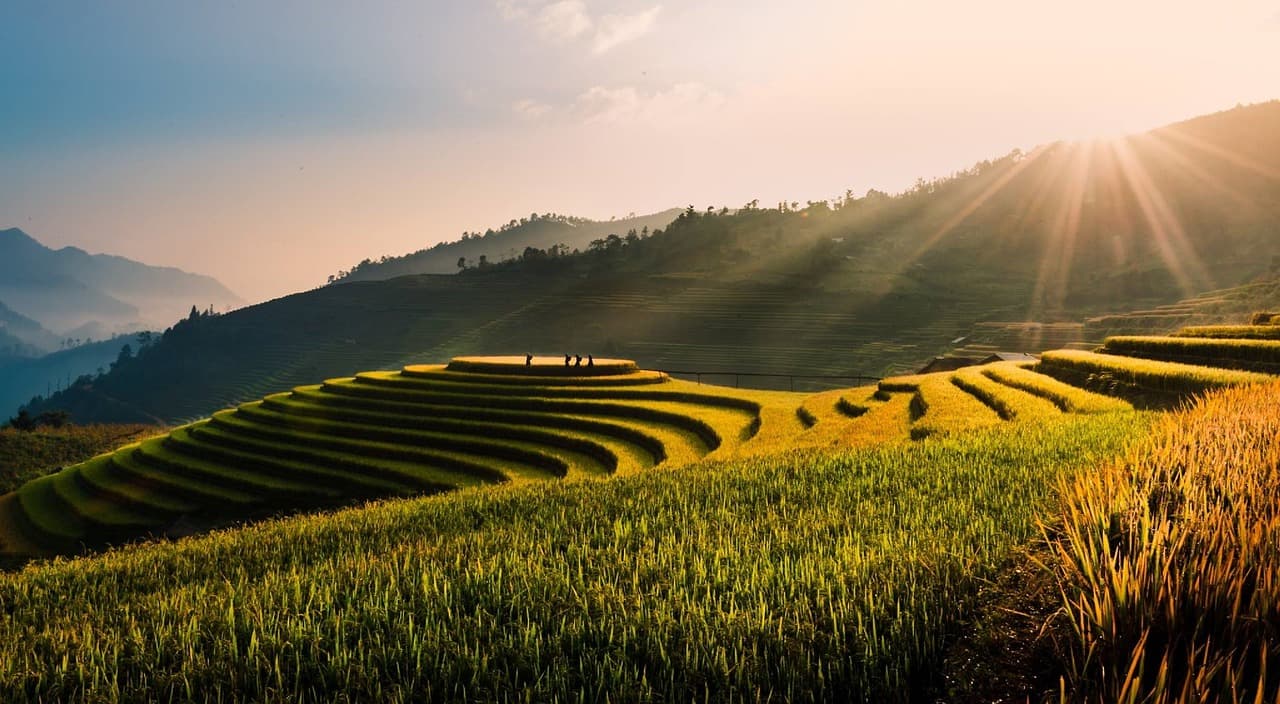
From late September through early November, the rice terraces around Ban Hang and Ban Don turn golden and the trails dry out—this is the best window for photography in 2026. The exact week of peak color shifts with the harvest, so confirm with a homestay before you book. Rainfall drops off sharply after mid-September, trail mud firms up, and visibility across the limestone ridges is the clearest of the year. This is also peak demand: homestays in Ban Hang, Ban Don, and Ban Nua fill quickly, so book 2–4 weeks ahead, especially for weekends and the harvest period.
February to April is the quiet alternative. The valleys are cool and green, with fewer trekkers on the main loop between Ban Hang and Kho Muong, and you can often get a room without a reservation. The trade-off is morning dew: stone steps and bamboo bridges can be slick until around 9:00, so start after a leisurely breakfast and carry a trekking pole for early descents. Visibility is still good on clear days, though the rice terraces are young and green rather than golden.
Avoid July and August entirely. Heavy rain turns the limestone trails into slick, muddy chutes, streams rise fast after downpours, and leeches appear on overgrown sections. Many homestays in the reserve close or cut services during this stretch, so food and guide availability are unpredictable. If you must visit, stick to the concrete road through Ban Hang and do not attempt river crossings.
December and January are dry but cool, and the rice has already been harvested, leaving the terraces brown and stubbly. It is still hikeable—crowds thin out again and the weather holds—but the scenery is less photogenic. Before fixing any 2026 dates, message a Ban Hang or Ban Don homestay directly and ask when they expect to cut the rice; a one-week shift can mean the difference between gold terraces and bare mud.

Permits, Fees and 2026 Rules
As of early 2026, Pu Luong Nature Reserve does not require a formal trekking permit for the main valley trails, but every visitor pays a checkpoint entrance fee of 40,000–80,000 VND per person, collected in cash at the access points near Ban Hang, Ban Don, and the main road junctions. Carry small notes: ticket collectors rarely have change for 100,000 VND or 200,000 VND bills, and the exact amount varies by entry point and season.
The legal situation changes if you plan to trek deeper into the core zone beyond the well-trodden terraces. Local regulation requires a certified guide for longer routes into the protected rainforest and remote ethnic villages. Arrange your guide at the park HQ near Ban Hang, where staff can match you with a licensed local, or ask your homestay host in Ban Hang, Ban Don, or Ban Nua to book one. Through homestays, guide rates typically run 400,000–700,000 VND per day including lunch, but confirm whether the reserve entrance fee is folded into that price or paid separately at the checkpoint.
If you prefer a package, full-board trekking tours from Mai Chau or Hanoi cost roughly $50–$120 per day depending on group size, meals, and transport. Independent hikers don't have to buy the whole package: you can hire a certified local guide only for the days you enter the core zone and walk the easier terrace loops on your own. That keeps costs flexible without skirting the local rule.
These fees and guide policies were last formally updated in 2025, and both can shift without much notice in 2026. A 15-minute call or message to the reserve office or your homestay a few days before departure will confirm current checkpoint charges and whether core-zone access rules have changed, particularly for routes beyond Ban Nua.
Trekking Routes and What to Do
The classic three-day traverse from Ban Hang to Ban Hieu covers 12–16 km per day and links Ban Hang → Kho Muong → Ban Don → Ban Hieu, with homestay beds in each village. The route follows a network of footpaths through rice terraces, bamboo forest, and limestone outcrops. In September–November the terraces turn gold, making the Ban Hang–Kho Muong section the most photogenic. Most trekkers start at Ban Hang because it has the most homestays and the easiest access to the reserve’s entrance point near park HQ.
For a shorter outing, the day loop from Ban Hang runs 6–8 km in a rough circle through upper rice terraces and dense bamboo, then descends to the river. The loop passes several wooden water wheels—still used to lift water into irrigation channels—and returns to the village by late afternoon. The path is obvious for the first half, but you’ll need to watch for faded trail markers after the bamboo section; carrying offline maps on an app like Maps.me or Organic Maps helps.
Kho Muong sits inside a steep limestone valley, reached by a climb that gains roughly 300 m of elevation from the Ban Hang side. The village has a short cave you can enter without specialist gear, but the least-marked section between Kho Muong and Ban Don is where a local guide earns the fee (about 400,000–700,000 VND/day). From Ban Don, the route to Ban Hieu follows a ridgeline before dropping into the valley; from Ban Hieu, walk about one hour to Hieu Waterfall, where you can swim in the pool below the falls. In rainy months (July–August), check water volume and current safety with your homestay before swimming.
Trail junctions throughout the reserve are rarely signposted, and side paths can dead-end at farm plots or river crossings. For anything beyond simple village-to-village walking, hire a local guide or at minimum use a GPX track from a 2026 source. Homestay owners in Ban Hang, Ban Don, and Ban Nua can arrange guide-only days for the specific sections you need.

Where to Stay and Eat
Family rooms in Ban Hang and Ban Don homestays currently run 150,000–300,000 VND per person per night, including a basic breakfast; dorm beds cluster at the lower end of that range. Ban Nua and Ban Hieu have similar pricing, though Hieu's riverside stilt houses often sell out on weekends from September to November. Most homestays offer shared bathrooms, thin mattresses on wooden floors, and mosquito nets. Some have Wi-Fi and hot water, but neither is reliable in remote villages—carry a power bank and expect cold showers. Book directly with the family or through platforms like Agoda and Booking, then cross-check recent 2026 reviews because availability and prices fluctuate widely from month to month.
Dinner at homestays costs 80,000–150,000 VND per person for a Thai-style shared spread: sticky rice, grilled pork, bamboo shoots, and whatever herbs the family pulls from the garden. Meals are communal, usually served on the floor or low tables, and seconds are normal. Breakfast, typically rice or eggs with tea, is included in the room rate. If you have dietary restrictions, tell the host at check-in, not at mealtime. There are no restaurants or shops inside the core zone, so carry snacks, water purification, and any medication you need before leaving Mai Chau.
Some homestays in Ban Hang and Ban Nua operate more like small guesthouses, with private rooms and generator-backed power, while Ban Don and Ban Hieu remain closer to traditional stilt-house stays. Ask before booking whether the family speaks English; if not, arrange a guide or use a translation app for check-in and meal conversations. Payment is almost always in cash, and the nearest ATM is in Mai Chau—bring enough Vietnamese dong to cover your room, dinners, and a tip for the cook. For longer stays, negotiate a half-board rate directly with the owner; this often works out cheaper than paying for each dinner separately, but do not expect written menus or set meal times.
Safety and Practical Tips
Pu Luong's trails are cut into steep hillsides, and loose limestone underfoot makes a walking pole useful even on a dry February afternoon. Grippy boots with ankle support are not optional: stream crossings can be slick, and dense bamboo sections hide uneven rocks. Trekking poles with carbide tips grip limestone better than rubber-tipped poles on wet descents. Pack water purification tablets or a filter rather than relying on stream water, which is not safe untreated. A 30–40 liter daypack, quick-dry clothes, and a rain shell cover most conditions from September to April; add a whistle, headlamp, and spare batteries because bamboo canopy can make sections dark by mid-afternoon.
There are no ATMs or clinics inside the reserve, so carry enough cash in small denominations for homestays, guides, food, and emergency transport. The nearest hospital is the district hospital in Mai Chau, about 45 minutes by motorbike; ask your homestay to arrange a driver rather than attempting to walk out with a sprain or fracture. A basic first-aid kit should include antiseptic, bandages, blister plasters, oral rehydration salts, and any personal medication. If you trek February–April or after rain, add leech repellent and a small container of salt — leeches are common on wet trails. Homestays and village shops do not stock medical supplies beyond simple bandages, so bring everything you might need.
The two biggest risks are slipping on wet rocks and getting lost on unmarked side trails. Several paths branch off without signs, and mobile signal is patchy outside village centers, so download offline maps in both Vietnamese and English before you leave Hanoi. A paper map or compass is a cheap backup if your phone battery dies. Stay on the main paths between Ban Hang, Ban Don, and Ban Nua if you hike independently; side trails into the core zone can dead-end at cliffs or stream crossings. Tell your homestay host your intended route and expected return time before setting out. Hiring a local guide for at least the trickier sections is strongly recommended — ask at your homestay or the park office near Ban Hang. Guides know which crossings are passable and can call for help if needed.

Costs: Sample Independent Budget
A self-guided day trek from a Ban Hang homestay costs 340,000–630,000 VND once you're inside Pu Luong Nature Reserve. That figure covers the 40,000–80,000 VND entrance fee, a basic private room or dorm bed at a family-run homestay (150,000–300,000 VND), and three local meals totaling 150,000–250,000 VND — often banana-leaf sticky rice, grilled river fish, and stir-fried morning glory. You can hike the marked loop around the rice terraces and bamboo forest on your own for that amount.
Hiring a guide through the homestay adds 400,000–700,000 VND per day, including a packed lunch. That brings a guided day trek to 740,000–1,330,000 VND. Guides in Ban Hang, Ban Don, and Ban Nua know the unmarked side trails and stream crossings, and the extra cost is the most reliable way to avoid getting lost after rain or in the core zone. Book the evening before; some families need a few hours to arrange a guide.
Getting to the reserve independently adds transport. A return express bus from Hanoi to Mai Chau runs 240,000–360,000 VND, and the xe om transfer from Mai Chau into Pu Luong and back costs another 300,000–500,000 VND round trip. Allow 600,000–900,000 VND total for the Hanoi–Pu Luong return journey if you're not taking a direct tourist van from the Old Quarter in peak season.
If you would rather not plan each leg, full-board trek packages from Hanoi sell for $50–$120 per day and typically bundle transport, guide, meals, and homestay. They are convenient but lock you into set itineraries and group departures. Whatever you choose, carry cash: there are no ATMs in the reserve, and many homestays do not accept cards. Entrance fees and guide policies were last formally updated in 2025, so confirm with the reserve office before setting out in 2026.
Frequently asked questions
No formal trekking permit is required, but the reserve charges an entrance fee of about 40,000–80,000 VND per person. Longer treks into the core zone require a certified local guide, which you arrange at the park HQ near Ban Hang or through a homestay. Confirm the 2026 rules before you go.
Shorter village-to-village trails are possible without a guide, but any route into the core zone requires a certified guide under local rules. Even on day hikes, a guide is strongly recommended because many side trails are unmarked and slippery.
Late September to early November usually offers ripe golden rice terraces, but the exact harvest timing varies each year. Check with a Ban Hang or Ban Don homestay before fixing your dates.
No. Bring enough cash from Hanoi or Mai Chau to cover homestays, food, guide fees, and the entrance fee. The nearest ATM is in Mai Chau, about 45 minutes away.
Travel details change — opening hours, prices, and schedules can vary by season. Please verify current information on official websites before your visit.
Watch: related videos
Trekking Pu Luong’s Hidden Valleys: An Independent 2026 Guide — Video by Nguyen Ngoc Tien on Pexels
Trekking Pu Luong’s Hidden Valleys: An Independent 2026 Guide — Video by Hanh on Pexels
Sources
- vietnamcoracle.com — Primary source
- rustycompass.com — From research brief
- puluongeco.com — From research brief
- thanhhoatourism.vn — From research brief
Loading reviews…
About the author
Võ Hoài Nam
Nature & Adventure Editor
Hoài Nam edits Vietpeep's national parks, trekking, and adventure coverage from an environmental perspective. He keeps trail conditions, permits, wildlife rules, and low-impact travel choices front and center, so readers can plan a trip that respects the landscape.
All articles by Hoài NamRelated posts
Pu Luong Trekking Costs and Logistics: What International Hikers Need to Know in 2026
This article breaks down the real costs, logistics, and practicalities of trekking in Pu Luong Nature Reserve for international visitors in 2026. It covers transport from Hanoi, guide and permit rules, accommodation options, fitness needs, and essential tips for a smooth and responsible trek.

Pu Luong Homestay Trek: 3-Day Village Circuit with Guide Costs and Logistics
This article details a practical 3-day trekking itinerary through Pu Luong Nature Reserve, focusing on village homestays, route difficulty, guide prices, and logistics for 2026. It’s ideal for hikers seeking authentic rural experiences, moderate trails, and clear planning advice for a guided trek.

Sapa Remote Trekking: Hidden Villages and Off-the-Beaten-Path Trails (2026 Guide)
This guide details Sapa’s lesser-known trekking routes for 2026, covering remote villages like Sin Chai, Seo My Ty, and Nam Cang. It includes up-to-date info on guide requirements, transport, costs, accommodation, weather, and practical tips for experienced trekkers seeking authentic adventure beyond the tourist crowds.