Vietnam Trains: Hanoi to Hue by Public Overnight Sleeper in 2026
Vietnam trains link Hanoi and Hue with a direct public overnight sleeper that takes 13 to 15 hours and costs from 500,000 VND. This guide explains 2026 fares, booking on the official dsvn.vn site, and how Tet affects tickets.

Related reading
Keep exploring Vietnam
- 1
- 2
- 3
At a glance
- Best time
- Book 30 to 60 days ahead for Tet on 17 February 2026; check for floods in October to November.
- How long
- 13 to 15 hours overnight
- Budget
- Hard sleeper 500,000 to 900,000 VND; soft sleeper 750,000 to 1,400,000 VND
- Getting there
- SE trains from Ga Hanoi to Ga Hue
- Language
- Vietnamese
- Currency
- Vietnamese dong (VND)
Vietnam trains from Hanoi to Hue: the overnight route
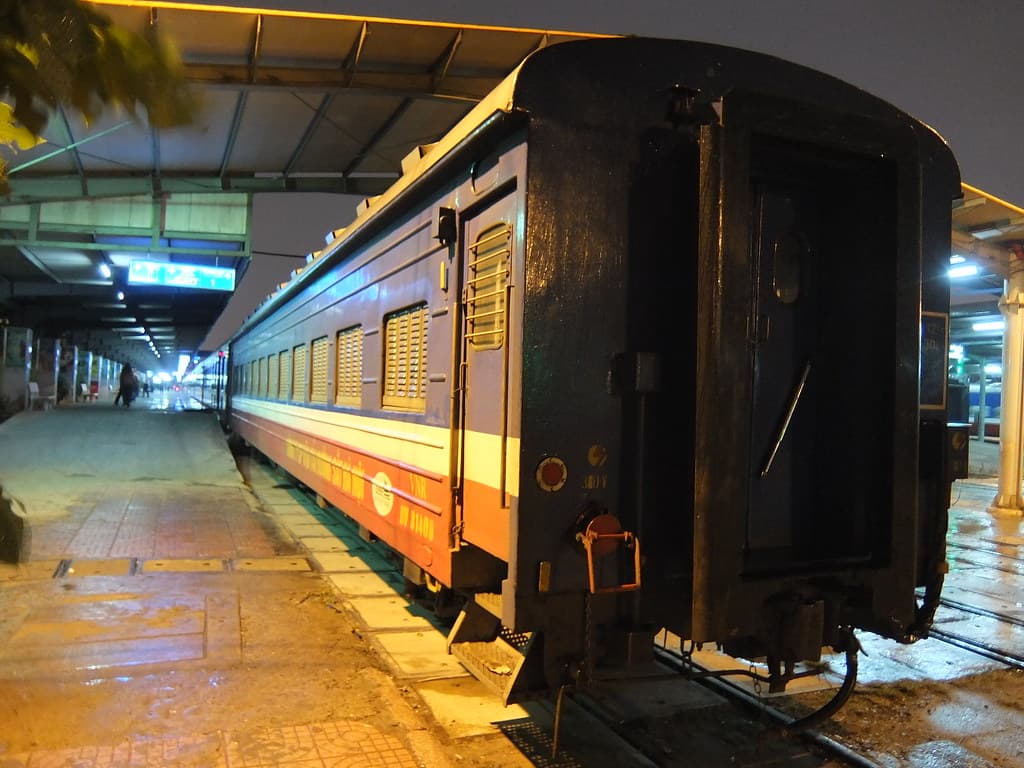
For Vietnam trains on the North-South line, the direct overnight run from Hanoi to Hue leaves Ga Hanoi between 19:00 and 22:00 and arrives at Ga Hue 13 to 15 hours later, between 07:00 and 11:30. This is a public service, not a tourist train, and it runs nightly. Evening departures mean you can spend most of your last day in Hanoi, then sleep through the trip. You arrive in Hue with the morning ahead of you and no change of trains in between.
The trains to look for are SE1, SE3, and SE19. These are standard Vietnam trains, which means the carriages and onboard services follow the national railway system rather than a private operator. Train codes can change after Vietnam Railways updates the 2026 timetable, so check the current schedule for your exact date before booking. A quick search on the official portal or a booking site will show which trains run.
Book through Vietnam Railways official portal dsvn.vn, or use Baolau and 12Go Asia if you want an agent that handles international cards. Passport details are needed for the reservation, and your e-ticket will show the car and berth number. A four-berth soft sleeper costs 750,000 to 1,400,000 VND, a six-berth hard sleeper costs 500,000 to 900,000 VND, and a soft seat costs 600,000 to 800,000 VND. Prices rise around Tet, which falls on 17 February 2026, so book 30 to 60 days in advance for that period.
Arrive at Ga Hanoi 45 minutes before departure; the platform can be announced late and may change at the last minute. Your e-ticket gives the car number, so find that car on the platform before boarding. In the sleeper, luggage fits under the lower berth, and the air conditioning runs cold enough that layers, water, snacks, and toilet paper are worth packing. Rain from October to November can delay trains in central Vietnam, so keep some buffer in your schedule.
Fares and classes: sleeping on Vietnam trains
On the 13 to 15 hour overnight run from Hanoi to Hue, Vietnam trains offer three fare classes that determine how you sleep. A four-berth air-conditioned soft sleeper costs 750,000 to 1,400,000 VND per person. A six-berth hard sleeper costs 500,000 to 900,000 VND. A soft seat costs 600,000 to 800,000 VND. Prices in each class swing with train quality and demand, so check the fare for your exact date before booking.
The four-berth soft sleeper includes air conditioning and a compartment you can close, and the lower berth gives you space to tuck a suitcase underneath. At 750,000 to 1,400,000 VND, this is the option travelers pick when they want a full night's sleep before arriving in Hue.
The six-berth hard sleeper is the cheapest way to sleep horizontally. It costs 500,000 to 900,000 VND and gives you a bunk in a compartment with six berths. Soft seats cost 600,000 to 800,000 VND, a workable choice for budget travelers who can sleep sitting up. If you cannot sleep upright, pay extra for a berth, because 13 to 15 hours in a chair is a long evening.
Tet pushes all these fares to the upper end of the ranges. In 2026 Tet falls on 17 February, so book 30 to 60 days ahead if you plan to travel during that period. Compare live fares on dsvn.vn, Baolau, or 12Go Asia, all of which need your passport details to issue the ticket.
Booking with the official Vietnam trains website and resellers
Booking Vietnam trains from Hanoi to Hue starts with dsvn.vn, the official Vietnam Railways portal. The site lists the departures on the Hanoi-Hue run, and its fares are the reference point. International cards do not always clear on dsvn.vn, especially those issued outside Vietnam. When payment fails, Baolau and 12Go Asia are the two practical fallbacks. Both sell the same public trains, accept international cards, and provide support in English. Booking through a reseller gives you the same train, the same car, and the same berth as the official channel does, so you give up nothing in comfort.
Passport details are mandatory for every traveler on all three channels. Enter the full name and passport number exactly as they appear on the document you will carry. The e-ticket that follows shows the car and berth number, so you know where to walk once the train pulls in. Save the e-ticket to your phone as a PDF or screenshot; you will not need to exchange it for a paper ticket at Ga Hanoi.
Station counters at Ga Hanoi and Ga Hue can issue same-day tickets, but they rarely help when your chosen date is sold out. The busiest period is Tet, which starts on 17 February 2026, and for that week you should book 30 to 60 days ahead. Plan to reach the station 45 minutes before departure, because the platform can change at the last minute and the train leaves at the scheduled time.
Fares shift by date. A soft sleeper runs from 750,000 to 1,400,000 VND, a hard sleeper from 500,000 to 900,000 VND, and a soft seat from 600,000 to 800,000 VND. Prices climb around Tet and other holidays, and departures from Hanoi leave between 19:00 and 22:00, arriving Hue between 07:00 and 11:30. Before you pay, check the exact date on dsvn.vn, Baolau, or 12Go Asia, because availability and fares change as the departure date gets closer.
Packing for an overnight ride on Vietnam trains
On the overnight Vietnam trains from Hanoi to Hue, the air conditioning runs cold all night, so pack a layer you can sleep in or pull on at 5 a.m. A hoodie or light fleece works; the carriage temperature has no off switch. You also want water, snacks, and your own toilet paper. The onboard kitchen sells noodles and tea, but the toilet roll runs out fast, and the taps are not potable. Fill a reusable bottle at your hotel or at the station before you board.
Keep your bag compact because luggage fits under the lower berth. A backpack or duffel that can slide into that space beats a hard-shell suitcase, which tends to block the aisle or end up stacked by the door. In a shared cabin with four or six berths, less clutter on the floor makes it easier to move around and set up for the night. Leave bulky extras with your hotel in Hanoi if you are flying home from Hue.
Arrive at Ga Hanoi 45 minutes before departure. Platforms can be changed at the last minute, so check the board and listen for announcements. Before boarding, write your car number from the e-ticket somewhere obvious, like the notes app on your phone, and confirm it against the paper number on the carriage. The train is long and you do not want to walk eight cars in the dark.
Vietnam trains are a practical, budget way to cover the route between Hanoi and Hue, but the overnight cabin rewards a little preparation. A small pack, a warm top, and the habit of checking your car number early will handle the main annoyances of this 13 to 15 hour trip.
When to ride: Tet, flood season, and timing
Tet 2026 falls on 17 February, and for Vietnam trains on the Hanoi-Hue line that date marks the start of the year's busiest travel period. Fares jump and sleeper berths sell out, so book 30 to 60 days ahead if you plan to travel around Tet. The official Vietnam Railways portal dsvn.vn and resellers such as Baolau and 12Go Asia all show the same seasonal calendar: higher prices and limited availability from about a week before until after the holiday.
The second schedule disruptor is autumn weather. Central Vietnam sees flooding from October to November, and the line between Hanoi and Hue runs through that region. Flooding can delay or cancel services. Before buying tickets for those months, check the forecast and service alerts on dsvn.vn. If you have flexibility, shifting your date by two or three days avoids most weather-related problems.
Overnight trains depart Hanoi between 19:00 and 22:00 and arrive in Hue between 07:00 and 11:30. That arrival window sets your first morning: many hotels in Hue hold luggage if you arrive before check-in, but not all allow early access. If you have an onward bus or tour, book it to leave after that window, and confirm the timing with the operator.
If your travel date sits near Tet or inside the flood season, verify the 2026 timetable on the official Vietnam Railways site before you commit. Train numbers and departure times change with the seasonal schedule, and platforms at Hanoi station can change at the last minute. Arrive 45 minutes before departure, keep your passport and e-ticket handy, and the two main disruptions become manageable.

Practical tips for a smooth Hanoi to Hue train trip
Before you queue at Ga Hanoi, open dsvn.vn and confirm your train number and departure time. Vietnam trains on the North-South line to Hue depart between 19:00 and 22:00 and take 13 to 15 hours, but the exact service and platform can shift at short notice. The official portal is the only place to verify the schedule you booked, so check it the same afternoon. Plan to arrive at the station 45 minutes before departure, and remember that the station counter rarely has seats on sold-out dates.
Keep your passport and e-ticket in two places: a screenshot on your phone and a printed copy. Your passport details are tied to the booking, and the conductor on Vietnam trains will ask to see both before you board. The e-ticket also lists your car and berth number, which is useful because the car indicator on the platform is not always easy to read. The printed copy helps when your phone battery is low after a day in Hanoi.
If dsvn.vn rejects your international card, book through Baolau or 12Go Asia instead. These resellers sell tickets for Vietnam trains to foreigners and issue the same e-ticket as the official site. You will still travel on the regular public SE train. Compare the total price on the reseller page with the estimate on dsvn.vn before you pay.
Treat the 2026 fares published online as a starting point. A four-berth soft sleeper costs 750,000 to 1,400,000 VND, a six-berth hard sleeper 500,000 to 900,000 VND, and a soft seat 600,000 to 800,000 VND. The price moves with demand and rises sharply around Tet, which falls on 17 February 2026. Confirm the live price for your exact travel date, and book 30 to 60 days ahead if that date falls in the holiday window. Flood season in central Vietnam runs from October to November, so allow a buffer if you need to catch a connection in Hue the same morning.
Frequently asked questions
Not always. dsvn.vn is the official portal, but non-Vietnamese cards can fail. Baolau and 12Go Asia accept international cards, and each booking needs passport details.
Book 30 to 60 days in advance. Tet falls on 17 February 2026, prices rise sharply, and trains can sell out.
Reach the station 45 minutes before departure. Platforms can change at the last minute, so give yourself time to find your car number.
Central Vietnam can flood from October to November, which sometimes delays trains. Check the weather and route status before travelling.
Travel details change — opening hours, prices, and schedules can vary by season. Please verify current information on official websites before your visit.
Watch: related videos
Vietnam Trains: Hanoi to Hue by Public Overnight Sleeper in 2026 — Video by Nivedh P on Pexels · silent stock clip
Sources
- seat61.com — Primary source
- baolau.com — From research brief
- 12go.asia — From research brief
- dsvn.vn — From research brief
Loading reviews…
About the author
Lê Minh Đức
Routes & Itineraries Editor
Minh Đức plans Vietpeep's itineraries, transport guides, and practical tips with a surveyor's care for distances, timings, and connections. He believes a route is only as good as its smallest detail — the last ferry, the right train class, the turn travelers miss.
All articles by Minh ĐứcRelated posts

Vietnam Trains in 2026: Real Passenger Reviews of Sleeper Classes, Routes, and Booking
Practical, passenger-led review of Vietnam's railway network in 2026: overnight routes, seat and sleeper classes, fares, booking channels, and station tips. International visitors get concrete numbers for Hanoi to Hue, the Hai Van Pass, Da Nang to Nha Trang, and Nha Trang to Saigon segments, plus mistakes to avoid before Tet.

Hanoi to Phong Nha by Vietnam Trains: 2026 Fares, Schedules, and Transfers
This 2026 guide covers Vietnam trains from Hanoi to Dong Hoi, the rail gateway to Phong Nha. It details overnight and day schedules, fares by cabin class, booking through the official site and agents, and Dong Hoi station transfers, with tips on delays, documents, and sleeper comfort.

Vietnam Trains Passenger Reviews 2026: Sleeper Comfort, Delays, and Booking Tips
This 2026 review of Vietnam trains compares passenger feedback on sleeper classes, food, toilets, and punctuality across key routes. It covers typical fares from hard seat to 2-berth, booking through official and agent channels, and packing for overnight trips.