Vietnam Trains vs Buses vs Flights: 2026 Route Costs, Times, and Booking Guide
Vietnam trains vs buses vs flights: this 2026 route-by-route comparison covers Hanoi-Da Nang, Da Nang-Nha Trang, and Hanoi-Ho Chi Minh City fares, travel times, booking channels, and luggage rules. Use it to choose between the Reunification Express, sleeper buses, and budget airlines before you book.

Related reading
Keep exploring Vietnam
- 1
- 2
- 3
At a glance
- Best time
- Avoid Tet (late mid-February 2026) unless booked 60 days ahead
- How long
- 1h20 flight to 36h bus depending on route
- Budget
- $15 bus ticket to $120 flight ticket per leg
- Getting there
- Train: dsvn.vn; bus: Baolau/12Go; flight: VietJet/Bamboo
- Language
- Vietnamese; English in tourist services
- Currency
- Vietnamese dong (VND); cards in cities
Route-by-Route Vietnam Trains, Buses, and Flights at a Glance
Vietnam trains, buses, and flights between Hanoi and Da Nang offer different balances of time and cost; exact figures depend on the operator, season, and booking date. Soft sleeper berths have under-bed bins for luggage, and budget airline baggage fees can turn a cheap base fare into a more expensive total. Those three options set the pattern for the other two main north-south corridors.
The Da Nang to Nha Trang leg offers a similar choice, with trains, buses, and flights each having different time and cost profiles. Buses are often the cheapest option, but travel times are long; flights save time but add airport transfers and baggage fees. Book train tickets at dsvn.vn and buses through Baolau or 12Go Asia.
Hanoi to Ho Chi Minh City is the classic test of whether you want a sleeper train, a sleeper bus, or a flight. Trains and sleeper buses take at least a full day or more, while flights take a few hours. Prices vary by provider and booking time; factor in baggage fees and meals. The train can be a comfortable choice for those who enjoy overnight travel and want to avoid airport procedures.
Fares fluctuate by season and booking date, and holiday periods such as Tet can push prices up. Train tickets go on sale on the official dsvn.vn website, flights sell on airline websites, and buses are listed on Baolau or 12Go Asia. A rough decision rule: for short distances, train or bus; for medium distances, weigh train against flight based on your budget and schedule; for long distances, flying saves time unless you want the sleeper experience. Always verify current schedules and fares on official sites before paying.
Vietnam Trains: Reunification Express, Sleeper Cabins, and Booking
Vietnam trains tickets open at dsvn.vn 60 days before departure, though some shorter regional routes appear only 30 days ahead. Select English on the site, enter your route and date, and choose a soft sleeper berth. For Tet 2026, which falls in late mid-February, berths sell out fast, so book the day your travel date appears. The site is the official Vietnam trains booking channel and issues e-tickets you can show on your phone. Skip resellers for the Reunification Express; dsvn.vn has the same inventory and no added fee.
Soft sleeper cabins have under-bed storage bins for luggage. Toilet cleanliness varies between carriages, even on the same train. Bring tissues and hand sanitizer because soap and paper are often missing. Carry a small roll of toilet paper on every Vietnam trains trip; even clean toilets run out by mid-journey. No high-speed rail operates in Vietnam in 2026; the Reunification Express is the standard service. It runs slower than a plane but steadier than a sleeper bus, with regular stops at provincial stations. When boarding, check the carriage number on your e-ticket and walk to the correct coach before the doors close.
Heading south between Da Nang and Hue, sit on the right-hand side for the sea view. This stretch is part of the longer Hanoi to Da Nang run, so if you book that full journey, confirm your assigned side and change it at the station before departure. If you cannot change before boarding, ask the conductor after Da Nang; an empty right-hand side seat often opens up. For any Vietnam trains journey in 2026, recheck departure times on dsvn.vn the day before, as schedules can shift around Tet and the rainy season.

Buses vs Flights: When Each Option Beats Vietnam Trains
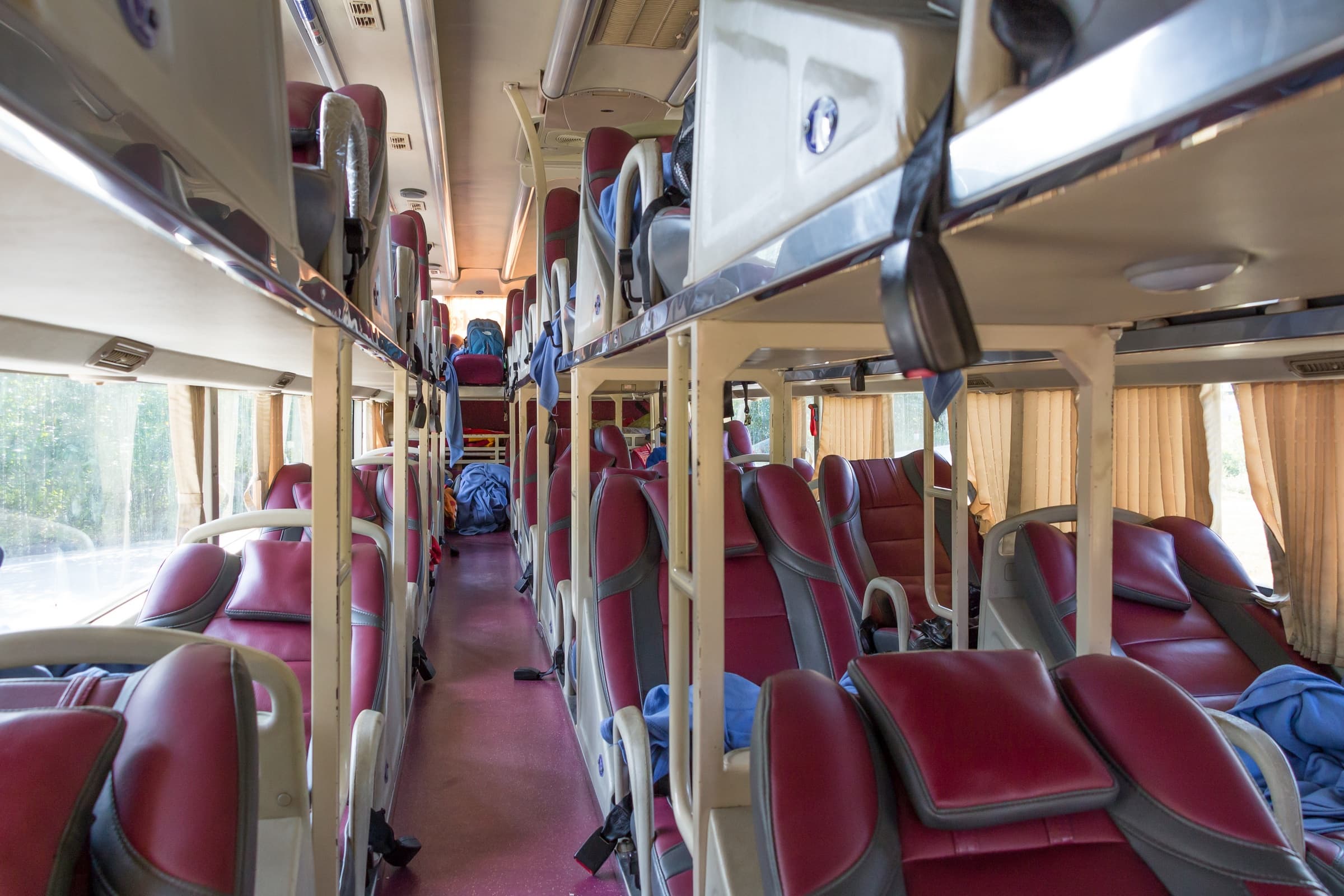
Sleeper buses can be significantly cheaper than trains on many routes, but they trade away legroom and comfort. Berths are tight, and safety records vary by operator. Budget travelers often choose buses for the low bottom price, but it's worth considering whether the savings are worth the trade-offs. Confirm current fares and travel times with bus operators or booking platforms.
Budget airlines often advertise low base fares, but checked baggage adds extra costs that can make the total price comparable to a train. Carry-on limits are enforced at the gate. If you can pack light, flying is a time-saver; if you need to check a bag, compare the all-in price with the train and bus options on official websites.
For the full north-south run, flying saves a huge amount of time compared with trains or sleeper buses. Factors such as meals, accommodation, and comfort on long trips can also affect the overall value. If you have limited time, flying is usually the best choice. Check current times and prices on official websites.
Booking Vietnam Trains, Buses, and Flights in 2026
Train tickets on the official Vietnam trains website, dsvn.vn, go on sale in advance, with the booking window opening on a schedule set by the operator. For peak travel periods like Tet, buy as soon as sales open. The site shows live seat maps for soft sleepers, allowing you to choose a berth. Book direct at dsvn.vn to avoid third-party markups.
Buses are easier to book late. Baolau and 12Go Asia list many sleeper bus operators with English confirmation and accept international cards. Filter by 'sleeper bus' and check the operator's rating before paying, because standards vary. For Tet, book bus seats as far ahead as possible, especially on popular routes.
Flights are often cheapest when booked directly through airline websites, which let you add checked bags during checkout. Many base fares exclude bags, and paying at the airport costs more. Compare the total price including baggage, not just the headline fare, before you commit.
Practical Tips: Luggage, Seat Choice, and Safety
On Vietnam trains, soft sleeper berths have under-bed bins that fit a standard 24-inch suitcase; keep your passport, phone, and cash in a small daypack on the mattress. Lock the compartment door from inside on overnight legs. Reddit and Quora threads about Vietnam trains consistently mention this two-part rule: bulky bag under the bunk, valuables on your body or under your pillow.
For the Da Nang-Hue coastal run, sit on the right-hand side when heading south to catch the sea views. After leaving Da Nang station heading south, the track hugs the coastline before Lang Co. Choose a daytime departure for this segment if you want the view. Toilet cleanliness on Vietnam trains varies by carriage and how recently the crew cleaned. Carry tissues and hand sanitizer because soap and paper are not always restocked.
On buses, avoid overnight drivers if you are nervous about speed; some drivers push hard on Highway 1 after dark. Choose daytime runs instead, especially on the 15-hour Hanoi-Da Nang or 10-hour Da Nang-Nha Trang routes. Daytime buses let you see the road, request a slower pace, and spot rest stops before you need them. Book daytime buses through Baolau or 12Go Asia, where you can see seat maps before paying.
Budget airline luggage fees add $10-25 to the base fare, so weigh your bags before booking. VietJet and Bamboo Airways both charge for checked bags beyond the cabin allowance. Buy the luggage allowance during online check-in or booking, not at the airport, where the price is higher. If you fly with only a small backpack that fits under the seat, you avoid the fee entirely. For Vietnam trains booking, dsvn.vn sells e-tickets 60 days ahead; confirm current schedules before you commit.
Decision Tree: Choosing Between Vietnam Trains, Buses, and Flights
As a general rule, for short distances, train or bus works well, with buses often cheaper. For medium distances, trains can offer scenic routes and central stations, while flights save time when you're in a hurry. On longer routes, flying is the time-saver but the bus is the budget fallback. Exact times and fares vary, so check current information.
Use the same rule on longer routes: if you prioritize speed, fly; if you value scenery, central stations, or the sleeper experience, the train may be worth the extra time. On any route, the bus can be the cheapest option but takes the longest. Check current times and fares before deciding.

Frequently asked questions
Book as soon as sales open on the official dsvn.vn website; during Tet holiday periods, tickets sell out quickly, so check the site for the exact opening date.
Sit on the right-hand side heading north from Da Nang to Hue, or on the left-hand side heading south from Hue to Da Nang.
No; checked baggage is usually an extra cost unless your fare includes it. Compare the total price on the airline's website.
Travel details change — opening hours, prices, and schedules can vary by season. Please verify current information on official websites before your visit.
Watch: related videos
Vietnam Trains vs Buses vs Flights: 2026 Route Costs, Times, and Booking Guide — Video by Tường Chopper on Pexels · silent stock clip
Vietnam Trains vs Buses vs Flights: 2026 Route Costs, Times, and Booking Guide — Video by Toàn BDS on Pexels · silent stock clip
Sources
- seat61.com — Primary source
- vietnamcoracle.com — From research brief
- 12go.asia — From research brief
- dsvn.vn — From research brief
- travelfish.org — From research brief
Loading reviews…
About the author
Lê Minh Đức
Routes & Itineraries Editor
Minh Đức plans Vietpeep's itineraries, transport guides, and practical tips with a surveyor's care for distances, timings, and connections. He believes a route is only as good as its smallest detail — the last ferry, the right train class, the turn travelers miss.
All articles by Minh ĐứcRelated posts

Sleeper Buses for Adventure Routes: Vietnam’s Remote Regions by Night Coach (2026 Guide)
Vietnam’s sleeper buses aren’t just for city-to-city travel—they’re a practical way to reach remote destinations like Sapa, Ha Giang, and Dalat. This 2026 guide focuses on using sleeper buses for adventurous routes, including what to expect in comfort, safety, booking, and real-world tips for international visitors.

Vietnam Trains in 2026: Seat 61-Style Guide to Booking, Riding, and Comfort
This article gives international travelers a practical, Seat 61-inspired guide to riding Vietnam’s trains in 2026. Learn how to book tickets, pick the best seats, understand fares, and maximize comfort on routes like Hanoi–Hue–Saigon, with up-to-date details on schedules, pricing, and insider tips for a smooth rail journey.

Vietnam for Indian Families: 2026 Guide to Kid-Friendly Destinations, Costs, and Entry Rules
This 2026 guide helps Indian families plan a Vietnam trip, covering visa rules, the best time to visit, direct flights, family-friendly attractions with prices and hours, typical daily costs, and practical tips for traveling with children. It’s designed for parents seeking reliable, up-to-date travel information.