A Local’s Guide to the Ha Giang Loop: Self-Drive Adventure in Vietnam’s Far North (2026 Edition)
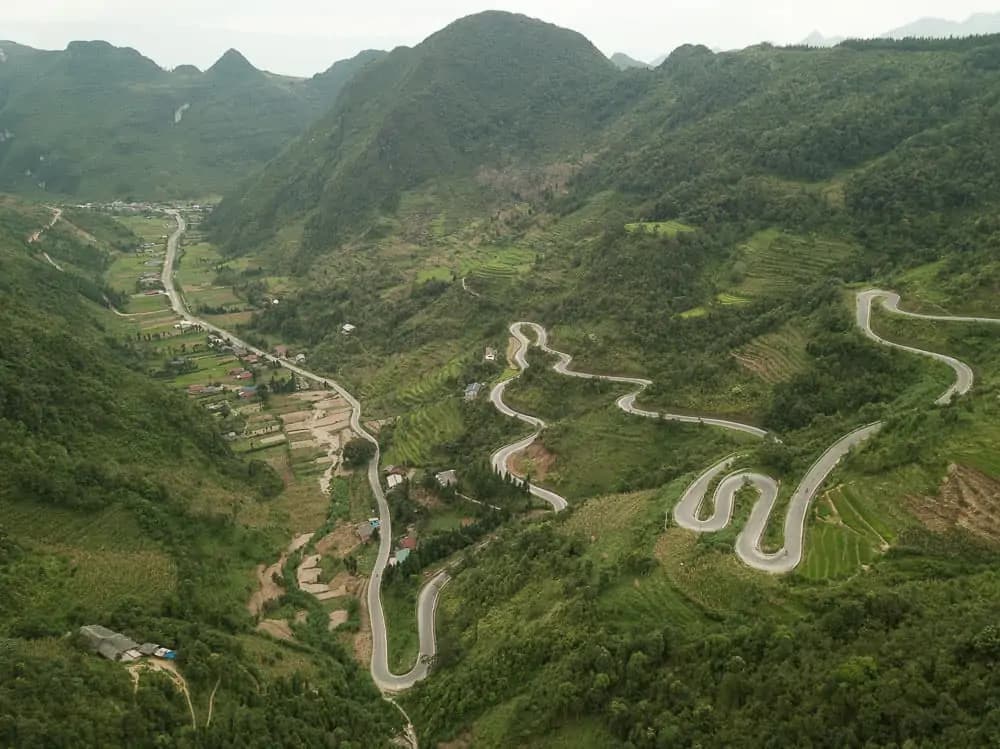
The Ha Giang Loop is a 350–400 km circuit in Vietnam’s far north, offering dramatic mountain scenery, ethnic minority culture, and challenging roads. This 2026 guide provides up-to-date advice for international visitors planning a self-drive motorbike or car trip, covering route options, permits, safety, accommodation, and cultural etiquette.

Trip plan
Day-by-day itinerary
Day 1
Ha Giang City to Quan Ba
Start early from Ha Giang City, collect your permit, and ride north to Quan Ba (about 60 km). Highlights include the Heaven’s Gate viewpoint and the Twin Mountains. Overnight in Quan Ba.
Related reading
Keep exploring Vietnam
- 1Best time to visit Ha Giang: weather, roads, and scenic routes
Link from 'When to Visit' section for detailed weather and timing advice.
- 2Homestay Experiences in Ha Giang: Staying with Local Families on the Loop
Link from 'Where to Stay and Eat' section for more on accommodation and local culture.
- 3A Practical 4-Day Ha Giang Loop Motorbike Itinerary (2026 Update)
Link from 'Getting There and Around' section for sample itineraries and route planning.
At a glance
- Best time
- March–May, September–November
- How long
- 4–5 days recommended
- Budget
- From 1,000,000 VND/day (motorbike, fuel, meals, homestay)
- Getting there
- Overnight bus from Hanoi to Ha Giang City
- Language
- Vietnamese; limited English
- Currency
- Vietnamese Dong (VND)
Getting there and around
Ha Giang City is the main gateway to the loop, reachable by overnight bus from Hanoi (7 to 8 hours, 350,000 to 500,000 VND). The bus runs overnight and takes 7 to 8 hours, with fares between 350,000 and 500,000 VND. It is the route into the city where the loop begins. The bus covers the journey to Ha Giang City first; you arrange the motorbike, the car with a driver, or the guide once you are there.
Most travelers rent a motorbike in Ha Giang City. Shops there offer semi-automatic or automatic bikes at 250,000 to 400,000 VND per day. The rate is daily, so the rental cost follows the number of days you ride. Both semi-automatic and automatic bikes are available in the city, and the daily price sits in the 250,000 to 400,000 VND range.
Car rental with a driver is available for those without riding experience. It covers the loop for travelers who do not ride. International driving permits (IDP) are required for self-driving, and police checks are frequent in 2026. You get an IDP before you travel, so self-drivers arrange the permit at home rather than in Ha Giang City.
For riders not confident on mountain roads, hiring a local guide or an Easy Rider is recommended. That advice matters most where the riding gets technical, and it is the alternative to sitting on a bike you are unsure of. Car rental with a driver and a guide or Easy Rider both take the riding out of your hands.

Permits, safety, and practicalities
Foreigners must obtain a Ha Giang travel permit before riding the loop. It costs 250,000 VND from the Ha Giang Immigration Office or from most hostels, and it is valid for 30 days, which covers the loop with time to spare. The hostel desk is the easier errand if you are leaving Ha Giang City the next morning. Sort the permit before you set off rather than planning to collect it further along the route.
Carry your passport, permit, and IDP at all times. Keep the three in one place, on the bike and off it, so a stop for fuel or a night in a guesthouse does not leave one behind. The permit does not replace the IDP, and the IDP does not replace your passport.
Road conditions on the loop have improved, but landslides and closures are possible, especially after heavy rain. A stretch that was open a week ago can be shut when you reach it, so check local updates before departure. In Ha Giang City that means asking before you load the bike; further along it means asking at the last town you pass through. Treat the day's route as provisional until you have that information.
ATMs are limited outside Ha Giang City, so bring enough cash for remote areas. Work out how many days you will be away from the city and draw the money before you leave, because the route will not reliably provide a second chance at a machine. Cash covers everything between towns. Mobile signal is unreliable in the valleys. Download offline maps before departure and note emergency contacts somewhere you can read without a signal.
Where to stay and eat
Accommodation on the loop splits into two price tiers. Ethnic minority homestays charge 200,000 to 400,000 VND per night, and that rate includes meals. Boutique guesthouses in Dong Van and Meo Vac charge 500,000 to 1,000,000 VND per night. The homestays sit in villages along the route; the guesthouses sit in Dong Van and Meo Vac, where the markets and the small restaurants are. The choice usually follows from where you plan to stop.
Book ahead for weekends and holidays. Dong Van and Meo Vac take most of the bookings, so reserve those nights first. Homestays are smaller than guesthouses, so availability there is tighter. Both towns are on the loop, so stopping in either does not take you off the route.
The food is simple. Local markets and small restaurants serve rice, noodles, grilled meats, and seasonal vegetables. Vegetarian options are available but limited. In a village, the homestay is usually the nearest place to eat; in Dong Van and Meo Vac you choose between the market and the small restaurants.
The homestay rate covers meals, which matters in a village where restaurants are few. A guesthouse night in Dong Van or Meo Vac costs more and puts you in a town with a market and small restaurants. Two homestay nights at the top of the range cost less than one guesthouse night at the top of its range, and the meals come with them. Both tiers are quoted per night, so the numbers compare directly.

Cultural etiquette
The Ha Giang Loop passes through areas home to Hmong, Tay, and other ethnic groups. Most of the etiquette that comes up on a ride applies in the villages along the route, not in the towns where you stop for fuel and food. Dress modestly, ask before photographing people, and do not enter homes uninvited. Those three habits cover the situations you are most likely to run into.
Photographing people takes a moment of patience, not a debate. Ask first, and take a refusal as the answer. Pointing at your camera and waiting for a nod works where shared words do not. The same goes for houses: an invitation is what gets you inside, and an open door on its own is not one. Staying outside the doorway keeps the decision with the household.
English is not widely spoken outside main towns, so plan for that before you leave the larger stops. Basic Vietnamese phrases or translation apps are useful. A greeting and a thank you carry more of a conversation than a long sentence you cannot pronounce. The pattern runs with the etiquette above: the further you ride from the main towns, the less English you will hear and the more the village customs matter.
Respect local customs and avoid public displays of affection. A greeting, a request before the camera comes out, and a covered shoulder take seconds each. Applied through a day of riding, those are not a separate set of rules to memorize. They are the same few decisions made again at each stop.

When to Visit
The best months are March to May and September to November, when weather is dry and clear. On a self-drive trip you set your own riding days, so these two windows carry most of the planning weight: dry, clear weather is the condition you want when the route and the pace are yours to decide.
June to August brings heavy rain and potential landslides, making travel riskier. Both arrive in the same months. Rain cuts visibility and makes the surface under your wheels less predictable, and a landslide can close a section of the route rather than slow you down. Riders who take on June to August accept that the road ahead may be impassable.
Winter, December to February, can be cold, especially at higher elevations, but sees fewer visitors. The cold follows the elevation: the higher the road, the colder the ride. Fewer visitors is the trade for that cold, and these are the quietest months of the year.
Which window suits you depends on what you want from the trip. March to May and September to November are dry and clear. December to February is cold at higher elevations with fewer visitors. June to August brings heavy rain and potential landslides, and landslides can block a section of the road. If dry, clear riding is the priority, aim for March to May or September to November. If quieter roads matter more than warm ones, December to February is the trade you are making. If your dates fall in June to August, expect the rain and the landslide risk that comes with it.
Budgeting, fuel, and riding checks
A four-day rental at the lower end of the 250,000 to 400,000 VND daily range costs 1 million VND. Add the 250,000 VND permit, two homestay nights at 200,000 VND each, and one guesthouse night at 500,000 VND, and the base total is 2.15 million VND. The homestay rate includes meals, so food spending starts with the guesthouse night and any market meals you add. The base total does not include fuel or extra market meals, so carry a cash buffer.
Fuel is not part of those figures. Fill the tank in Ha Giang City and top up at every station you pass in a town, because the villages between stops may not have one. Before you accept a rental, check the brakes, tires, lights, and horn, and photograph any existing damage. A helmet should come with the bike; if it does not fit or has a broken strap, ask for another. Police checks are frequent in 2026, so keep the permit, IDP, and passport together and accessible, not buried in a bag.
Start riding at first light and plan to be off the road before dark. Mountain roads slow a route that looks short on a map, and rain or landslides can stop it. Ask about closures at the last town you pass through, and treat the day's route as provisional. If you ride in a group, agree on a meeting point for each stop and wait at junctions. A guide or Easy Rider removes the riding for anyone unsure of a technical section.
At homestays, the rate includes meals, so eat what the household serves or ask where else to eat; in a village there may be no alternative. Remove shoes if the floor is matted, and do not touch altar items or household shrines. Ask before photographing people, and take a refusal as final. A translation app with downloaded Vietnamese phrases helps for greetings and food questions, and short exchanges work better than long sentences.

Frequently asked questions
Yes, all foreigners must obtain a Ha Giang travel permit (250,000 VND, valid for 30 days) available at the Ha Giang Immigration Office or most hostels.
You need an International Driving Permit (IDP) valid for motorbikes. Police checks are frequent in 2026, and fines for unlicensed riders are enforced.
Roads have improved but remain challenging, especially for inexperienced riders. Landslides and sharp curves are common. Consider hiring a guide or Easy Rider if unsure.
ATMs are limited outside Ha Giang City and card acceptance is rare. Bring enough cash for the entire journey.
Travel details change — opening hours, prices, and schedules can vary by season. Please verify current information on official websites before your visit.
Sources
- backpackerswanderlust.com — Primary source
- nomadasaurus.com — From research brief
- hiddenhoian.com — From research brief
- thewanderingquinn.com — From research brief
- vietnam.travel — From research brief
Loading reviews…
About the author
Phạm Quốc Bảo
Cities & Events Editor
Quốc Bảo covers Vietnam's cities and their calendars — street life, night markets, festivals, and the people who keep traditions running. He edits with an ear for what actually happens on the ground rather than what the brochures promise.
All articles by Quốc BảoRelated posts
Ha Giang Loop 2026: Vietnam Travel Tips for Permits, Easy Rider Costs, and Self-Drive Rules
This Ha Giang Loop 2026 guide gives first-timers the practical Vietnam travel tips they need: border permits, Hanoi-to-Ha Giang transport, 3-day costs, self-drive versus easy rider, police checks, and seasonal timing. It uses one set of prices and dates so you can budget and book without conflicting numbers.

Ha Giang Loop Easy Rider vs Self-Drive: 2026 Costs, Legality and How to Choose
This practical guide compares Ha Giang Loop Easy Rider and self-drive options for 2026: rental and package costs, licensing and fine risk, riding difficulty, mountain weather, and a simple decision framework. Use it before booking to avoid impound fines, insurance gaps, and wasted money on the wrong motorbike choice.

A Practical Guide to Vietnam’s Ha Giang Loop: Riding the Northern Highlands
The Ha Giang Loop is a 300-400 km motorbike route through Vietnam’s remote northern mountains, offering dramatic scenery, ethnic minority culture, and challenging roads. This guide explains route options, permits, rentals, safety, and practical tips for international visitors.