Ha Giang Loop Safety in 2026: Gear, Emergency Protocols, and Rider Fitness
A practical safety briefing for international riders planning the 300–350 km Ha Giang Loop in 2026. Covers licence and police checks, safety gear rental prices in VND and USD, route hazards, emergency contacts and hospitals, rider fitness requirements, and easy-rider alternatives. Useful for anyone deciding between self-riding and a guided tour.

Related reading
Keep exploring Vietnam
- 1
- 2
- 3
At a glance
- Best time
- Ride in daylight; avoid rainy periods when landslides are common; check live condition groups.
- How long
- 300–350 km loop, typically 3–4 days.
- Budget
- Fuel ~25,000–28,000 VND/litre; gear rental from 50,000 VND/day for helmet to 250,000 VND/day for full bundle; easy-rider 700,000–1,200,000 VND/day.
- Getting there
- Loop starts in Ha Giang City; nearest trauma care at Ha Giang General Hospital.
- Language
- Vietnamese; some English at homestays and tour operators.
- Currency
- Vietnamese dong (VND); USD equivalents in source.
Licences, documents and 2026 police checks
Police checkpoints on the Ha Giang Loop have been a regular sight since January 2026, with temporary stops appearing most weekends and public holidays along QL4C between Ha Giang City, Yen Minh, and Dong Van. Officers ask for two documents before you ride: a valid motorcycle licence with an International Driving Permit (IDP) issued under the 1968 Vienna Convention, and the rental bike's registration card (blue card). Vietnam does not accept 1949-convention IDPs, so check which version your home country issues. If you are caught without the correct permit, the fine is up to 3,000,000 VND (about $120), and the bike may be impounded until you produce one. Several rental shops still tell tourists "no licence needed"; that claim is false and has led to fines at checkpoints since enforcement tightened.
Before starting the loop, keep photocopies of your passport, visa, driving licence, and travel insurance in a waterproof bag, and store digital copies on your phone. Share your live location with someone at home or your homestay host, especially on the Ma Pi Leng pass where mobile signal drops. Your embassy's latest travel advisory for Ha Giang province should be checked no more than a week before departure, as checkpoint locations and road closures shift with weather and local holidays.
Safety gear: required and recommended, with 2026 prices
A full-face helmet rents for 50,000–100,000 VND ($2–4) per day along the Ha Giang Loop in 2026, but check the shell for cracks and make sure the visor snaps shut before you leave the shop. Half-shell or bicycle helmets don't protect your jaw in a slide, which is why full-face protection is non-negotiable on these roads. For the rest of your body, most homestays and rental shops bundle a padded jacket and gloves for 150,000–250,000 VND ($6–10) per day, often with knee pads thrown in.
Mountain weather shifts quickly between Ha Giang City and Dong Van, so carry a rain suit and a warm mid-layer even when the valley looks clear. Before each day's ride, run a five-minute inspection: squeeze the tyres for pressure and tread, test both brakes, honk the horn, and flip on the headlight and indicators. If anything feels soft, loose, or dead, walk back to the rental counter before you climb the Ma Pi Leng pass.
Prices do vary by homestay and season — some places include gear with an easy-rider tour for 700,000–1,200,000 VND per day, while others charge separately. Confirm the exact gear list and rental fee in writing with your homestay before booking, and photograph any existing damage to avoid disputes when you return the bike.

Route hazards and road conditions
The Ha Giang Loop is a 300–350 km circuit through Ha Giang province's limestone peaks, typically ridden over 3–4 days. Paved sections have expanded in recent years, but the route still includes long stretches of unpaved, potholed mountain road, and landslides remain common after rain. In 2026, exact roadworks are unpredictable: some switchbacks near Yen Minh and Dong Van have been resurfaced, while sections around Meo Vac can wash out overnight. Always check current conditions on the Facebook group 'Ha Giang Loop Riders' before setting off—local riders post recent photos of slides and grader work.
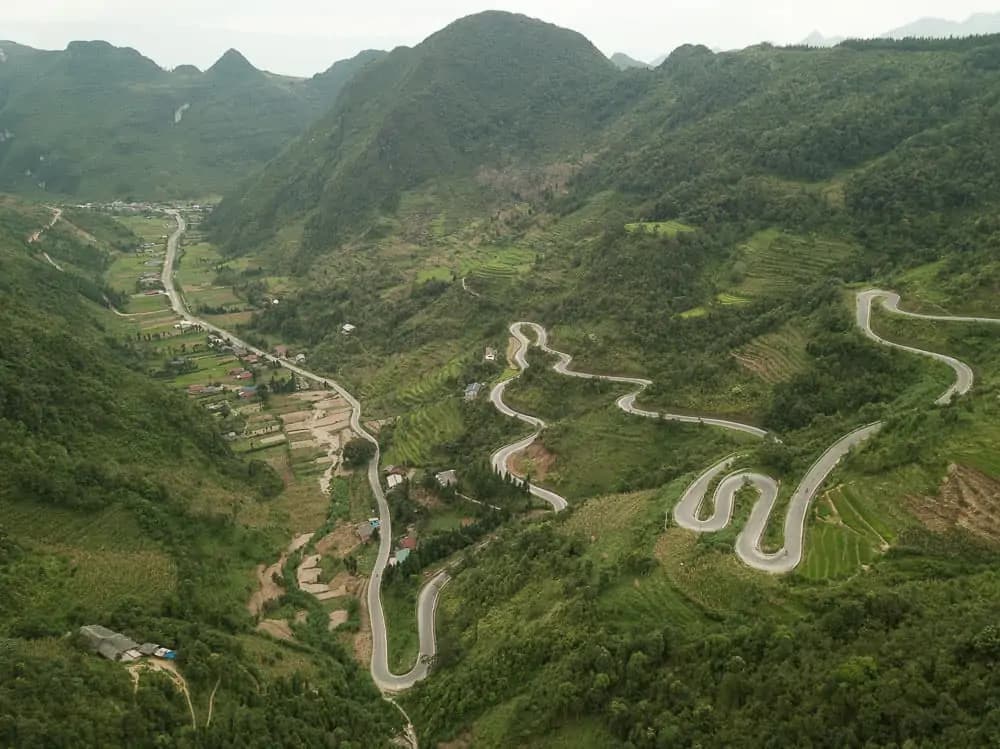
The most serious hazard is Ma Pi Leng pass. Its cliffside road drops steeply into the Nho Que River valley, with narrow lanes and limited guardrails. Do not ride this section after dark; fog, dust, and unlit corners make even experienced riders misjudge hairpins. If rain starts, pull over in Dong Van or Meo Vac and wait it out. Even on dry days, allow extra time for slow-moving trucks and livestock on blind corners. Carry a headlamp and a charged phone, but don't rely on mobile signal through the pass—download offline maps before leaving Ha Giang City.
Emergency protocols and medical care
On the Ha Giang Loop, ambulance response can be slower than you'd expect: the nearest trauma centre is Ha Giang General Hospital in Ha Giang City, and from remote passes like Ma Pi Leng the transfer often takes over 2 hours. For a serious crash, call 115 for an ambulance; police are 113 and fire is 114. Smaller clinics in Dong Van and Meo Vac can handle cuts, bruises, and basic stabilisation, but they lack trauma facilities. Evacuation insurance is strongly advised — a road rescue or helicopter transfer from the loop is not something you want to pay for out of pocket, and many standard travel policies exclude motorbike riding unless you have a valid IDP and a licence recognised in Vietnam.
If you come off your bike, move yourself and the bike off the road first, then signal oncoming traffic — locals often stop to help. Keep your homestay's address saved on your phone and give it to the 115 dispatcher, as GPS pins tend to drift in the limestone valleys. Have a photocopy of your passport and insurance documents with you, not just on your phone. For minor mechanical damage rather than medical issues, local mechanics along the loop can usually patch a tyre, adjust brakes, or replace a lever for about $10–20, payable in cash. Many homestays in Dong Van and Meo Vac have a mechanic they call, but ask the price before work starts.

Rider fitness and self-assessment
Plan on 5–7 hours in the saddle each day on the Ha Giang Loop, much of it over winding, potholed mountain tarmac and short unpaved patches, especially the 3–4 day, 300–350 km circuit around Ma Pi Leng. If you cannot sustain that pace for three consecutive days—or if the thought of low-speed hairpins with drop-offs makes your throttle hand shake—do not self-ride.
Bike control matters more than cardiovascular fitness. Most rentals are 110–150cc semi-automatic or manual motorbikes weighing 100+ kg, and riding with a pillion doubles the demands. Before you go, practise low-speed U-turns, figure-eights, and emergency braking on gravel or wet pavement. If you lack off-road or manual-shift experience, join an easy-rider tour instead; drivers cost about 700,000–1,200,000 VND ($28–48) per day including bike, fuel, gear, and guide.
Fatigue causes more crashes than any single road hazard on this loop. After two nights of poor sleep, day three is when riders misjudge corners and potholes. Take a rest day in Dong Van or Meo Vac if your reactions slow; a rest day costs less than a hospital visit.
Easy-rider tours as a safer alternative
As of 2026, an easy-rider day on the Ha Giang Loop typically costs 700,000–1,200,000 VND ($28–48) and includes the motorbike, fuel, a full-face helmet, an armoured jacket, gloves, and a local guide who rides the bike for you. That compares with about 25,000–28,000 VND per litre ($1–1.12) for petrol if you self-ride, and separate rental fees for safety gear that can reach 150,000–250,000 VND per day ($6–10) for a helmet-and-armour bundle. The guided price covers what usually adds up to more when paid separately, but it also buys hard local knowledge of which switchbacks still have loose gravel after rain and where temporary police checkpoints sit.
Since January 2026, Ha Giang police have stepped up licence checks on the popular three-to-four-day loop, fining riders without a valid IDP up to 3,000,000 VND ($120). As a passenger on an easy-rider tour, you don't need a licence at all, and you avoid both the fine and the risk of misjudging a hairpin on Ma Pi Leng. That's the core appeal if you lack recent manual or off-road experience.
Before handing over cash, confirm exactly what the price covers: ask to see the bike, helmet, and jacket in person, check tyre tread and brake pads, and get written confirmation of fuel, accommodation, meals, and emergency support. Some operators list "gear included" but issue thin open-face helmets or cracked visors. A reputable guide should also carry a basic toolkit and know the local ambulance number (115) and the nearest clinic in Dong Van or Meo Vac.

Frequently asked questions
Yes. Police have increased checks since January 2026 and issue fines up to 3,000,000 VND (~$120) for drivers without a valid IDP, despite some rental shops claiming no licence is needed.
Police 113, fire 114, ambulance 115. The nearest major hospital is Ha Giang General Hospital in Ha Giang City; Dong Van and Meo Vac have smaller clinics. Serious accidents may require 2+ hours to reach trauma care, so evacuation insurance is strongly advised.
Not recommended. The route demands 5–7 hours daily on winding, potholed mountain roads and handling a heavy bike with a pillion. If you lack off-road or manual bike experience, book an easy-rider tour instead.
A full-face helmet rents for about 50,000–100,000 VND/day ($2–4). An armoured jacket and gloves bundle costs roughly 150,000–250,000 VND/day ($6–10). Confirm final prices with your homestay because rates vary.
Travel details change — opening hours, prices, and schedules can vary by season. Please verify current information on official websites before your visit.
Sources
- vietnamcoracle.com — Primary source
- travelfish.org — From research brief
- thebroke-backpacker.com — From research brief
- vietnam.travel — From research brief
- rustycompass.com — From research brief
Loading reviews…
About the author
Đặng Nhật Linh
Travel News & Money Editor
Nhật Linh curates Vietpeep's travel news and money guides — visa changes, transport updates, seasonal events, and how far your money goes. She writes for travelers who want current, practical answers without the fluff.
All articles by Nhật LinhRelated posts
Ha Giang Loop 2026: Vietnam Travel Tips for Permits, Easy Rider Costs, and Self-Drive Rules
This Ha Giang Loop 2026 guide gives first-timers the practical Vietnam travel tips they need: border permits, Hanoi-to-Ha Giang transport, 3-day costs, self-drive versus easy rider, police checks, and seasonal timing. It uses one set of prices and dates so you can budget and book without conflicting numbers.
Ha Giang Loop Easy Rider vs Self-Drive: 2026 Costs, Legality and How to Choose
This practical guide compares Ha Giang Loop Easy Rider and self-drive options for 2026: rental and package costs, licensing and fine risk, riding difficulty, mountain weather, and a simple decision framework. Use it before booking to avoid impound fines, insurance gaps, and wasted money on the wrong motorbike choice.

Ha Giang Loop Practical Guide 2026: Costs, Permits, and Safety for International Travelers
Planning to ride the Ha Giang Loop in 2026? This guide covers essential details for international visitors, including when to go, how to get there, permit requirements, typical costs, and up-to-date safety tips. Get clear answers on what to expect, how to prepare, and what’s changed for 2026.