Sapa trekking to Ban Ho and Thanh Phu: 2-day rice-harvest route, costs and homestays
A two-day sapa trekking route from Sapa through Su Pan and Ban Ho to Thanh Phu, timed for the September and October rice harvest. Covers 2026 guide and homestay prices, Hanoi transport, altitude, trail conditions, fitness needs, permits and village etiquette, with a day-by-day plan.

Trip plan
Day-by-day itinerary
Day 1
Sapa to Su Pan to Ban Ho
Leave Sapa in the morning and walk toward Su Pan, where the steep descents begin. Continue to Ban Ho at about 800 m and sleep in a Hmong or Dao homestay. Expect 4 to 6 hours of walking, and mud on the trail if it has rained recently. Book the homestay ahead for September and October, when harvest-season demand is highest.
Related reading
Keep exploring Vietnam
- 1
- 2
- 3
At a glance
- Best time
- Late August to October for the rice harvest; September and October have the best mix of dry trails and golden rice
- How long
- 2 days, 18 to 24 km, 4 to 6 hours of walking per day
- Budget
- Homestay 150,000 to 350,000 VND per night; meals 80,000 to 150,000 VND; 2-day guided tour 1,800,000 to 3,200,000 VND per person
- Getting there
- Sleeper bus from Hanoi 300,000 to 500,000 VND; limousine 400,000 to 700,000 VND; or train to Lao Cai plus shuttle
- Language
- Vietnamese; confirm your guide's English when you book
- Currency
- Vietnamese dong (VND); bring cash for homestays, meals and guides
Why this sapa trekking route skips Muong Hoa Valley
Muong Hoa Valley absorbs most of the day treks out of Sapa, which is the main reason this Sapa trekking route heads south instead. It runs Sapa to Su Pan to Ban Ho to Thanh Phu and back to Sapa, 18 to 24 km over 2 days. The night in Ban Ho is the pivot: it turns a single long push into two moderate days.
The grade is easy to moderate. There are no technical sections, but the descents into the valleys are steep, the route crosses rivers, and trails turn muddy after rain. September and October bring the best mix of dry trails and golden rice, though typhoon and landslide alerts are worth checking the week you travel. July and August are wet, and November to February turns cool to cold.
Walking runs 4 to 6 hours per day, which suits anyone with basic fitness. Ban Ho sits at about 800 m, well below Sapa at about 1,600 m, so sleeping there breaks the route into a downhill first day and a climb back on the second. Thanh Phu sits at about 1,000 m on the return leg. Both villages are outside the main Muong Hoa day-trip circuit that most Sapa trekking tours follow, so the crowds stay thinner and you walk through working rice terraces.
Getting to Sapa from Hanoi
Sleeper buses from Hanoi cost 300,000 to 500,000 VND and are the cheapest way to reach Sapa. They run overnight, so you step off in town in the morning, in time to start the descent on Day 1 of the trek. Book through your hotel or a local operator, and confirm the pickup point in Hanoi before you pay a deposit. If you want to start the route rested, arrive the day before Day 1; an overnight bus can leave you tired.
Limousines cost 400,000 to 700,000 VND and run a faster, smaller-vehicle service than the buses. Fewer seats means fewer pickups and drop-offs, which shortens the trip. If you want a full evening in Sapa before you start walking, that time difference is the main reason to pay the higher fare.
The third option is the train to Lao Cai plus a shuttle up to Sapa. Rail fares vary by carriage class and season, so check current prices and departure times with the operator instead of an old timetable. Trains avoid the long road drive, but they leave you in Lao Cai, not Sapa, so budget the shuttle as part of the journey. Sapa town sits at about 1,600 m.
Schedules for buses and limousines change, so verify times with your operator before booking, and ask whether the Sapa tourist tax applies to your ticket. The first hours are downhill from Sapa at about 1,600 m toward Ban Ho at about 800 m. No special government permit is needed for Ban Ho or Thanh Phu, and village entry is usually free, though some operators charge a "permit" fee, so ask what it covers. Bring cash for the bus, homestay, and meals.

When to go: the September and October rice harvest
## When to go: Sapa trekking in the September and October rice harvest
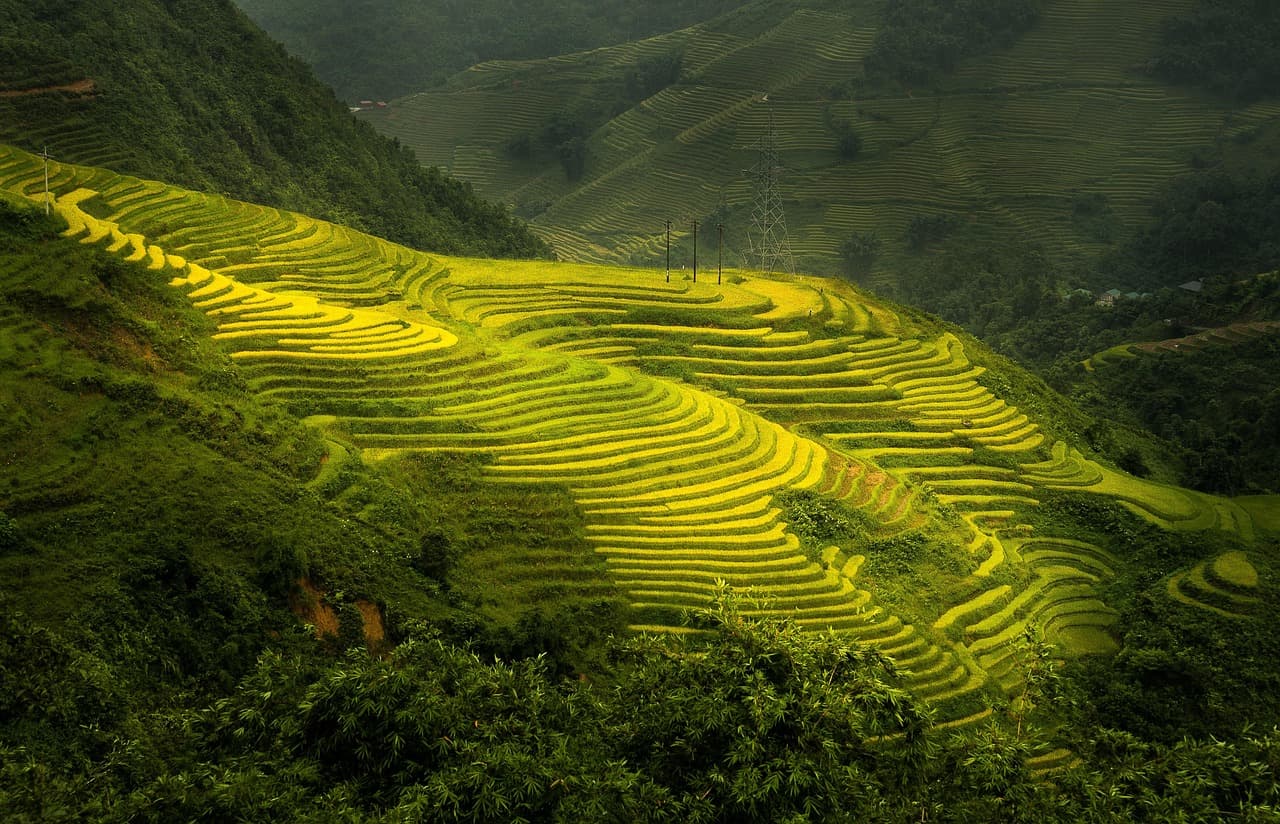
Rice on the terraces below Sapa is cut from late August through October, and that window decides what your trekking day feels like. Book September or October and you get the best mix of dry trails and golden rice. Come in July or August and you walk the same 18 to 24 km through mud.
Altitude spreads the harvest across several weeks. Ban Ho sits about 800 m, Thanh Phu about 1,000 m, and Sapa about 1,600 m, so the lower valley fields ripen on a different schedule from the slopes above town. September and October are the months that combine dry footing with rice still standing in the fields.
July and August are the rainy months. Steep descents and river crossings turn slick, and 4 to 6 hours of walking per day takes longer than the distance suggests. November to February is cool to cold, with bare terraces and cold mornings at Sapa's altitude.
Check typhoon and landslide alerts close to your travel dates; regional storms can close trails and damage homestays. Before you pay a deposit, confirm that Ban Ho homestays are open after storm damage, because rates and reopenings still shift from one season to the next. If your route adds waterfalls or Hoang Lien National Park trails, ask whether the quoted price includes the park entry ticket. Homestays run 150,000 to 350,000 VND per night and meals 80,000 to 150,000 VND, so book your bed once the date is fixed.
The sapa trekking route day by day: Sapa, Su Pan, Ban Ho, Thanh Phu
## The sapa trekking route day by day: Sapa, Su Pan, Ban Ho, Thanh Phu
Day one of this sapa trekking route is the longer descent: you leave Sapa on the road toward Su Pan, then follow the trail down into Ban Ho. Expect 4 to 6 hours of walking, with the gradient running downhill most of the way as the altitude falls from about 1,600 m in Sapa to about 800 m at Ban Ho. Ban Ho sits low among rice terraces, and this is where you sleep, in a homestay that runs 150,000 to 350,000 VND per night. Meals in the village cost 80,000 to 150,000 VND.
Day two climbs out. You walk from Ban Ho to Thanh Phu, which sits at about 1,000 m, then continue back to Sapa. That is another 4 to 6 hours, and the return leg carries most of the day's ascent. Across the two days the route covers 18 to 24 km. Pace yourself through the first hour out of Ban Ho; that is where the climbing starts.
If you add a waterfall stop or a trail inside Hoang Lien National Park, a park entry ticket may apply. Village entry to Ban Ho and Thanh Phu is usually free, and no special government permit is needed. Some operators charge a separate "permit" fee for this route, so ask what it covers before you pay.
Mud is what slows the route down most. After rain the descents turn slick and river crossings run higher, so start early and allow the full 4 to 6 hours rather than pushing the pace. A local Hmong or Dao guide costs 600,000 to 1,200,000 VND per day, and a sapa trekking tour over two days runs 1,800,000 to 3,200,000 VND per person. Confirm Ban Ho homestays are open after storm damage, and check trail conditions before you set out; they change with the season.
Fitness, altitude and trail conditions
## Fitness, altitude and trail conditions
Basic fitness covers this route. The grade is easy to moderate rather than technical, so no climbing experience is needed, but the 18 to 24 km over 2 days, following Sapa, Su Pan, Ban Ho, Thanh Phu and back to Sapa, includes steep descents, river crossings and trails that turn muddy after rain. Plan on 4 to 6 hours of walking per day. That is walking time alone, without lunch stops or time in the villages.
Altitude matters less than most sapa trekking advice suggests, at least in one direction. Sapa sits at about 1,600 m, Ban Ho at about 800 m and Thanh Phu at about 1,000 m, so the route loses height quickly and the walking is mostly downhill for the first stretch. The return leg reverses it: you climb back toward 1,600 m. Save energy for Day 2 rather than spending it all on the descents, and expect humidity to make the 4 to 6 hours feel longer than the distance suggests.
Break in your shoes before you arrive, not on the trail. Bring a rain shell, a reusable water bottle and cash for meals and homestays. Trail conditions on this sapa trekking route change seasonally: September and October give the best mix of dry trails and golden rice, but typhoon and landslide alerts can still affect the route, so check them before you set out.
Solo trekkers should consider joining a group. Muddy descents and river crossings are easier with company, and local Hmong or Dao guides cost 600,000 to 1,200,000 VND per day, or 1,800,000 to 3,200,000 VND per person for a 2-day guided tour. Rates vary, so confirm the price and what it includes before you book.
Homestays, guides and 2-day sapa trekking tour costs
Homestays on the Ban Ho and Thanh Phu route run 150,000 to 350,000 VND per night. Meals cost 80,000 to 150,000 VND. If you book a sapa trekking tour, confirm whether the homestay and meals are included or paid separately.
A local Hmong or Dao guide costs about 600,000 to 1,200,000 VND per day. A 2-day guided tour runs 1,800,000 to 3,200,000 VND per person. That price can include different elements depending on the operator, so ask what the quote covers: guide, homestay, meals, transport, or park entry. If a company quotes a separate permit fee, ask what it covers. No special government permit is needed for Ban Ho or Thanh Phu, and village entry is usually free. A Hoang Lien National Park entry ticket may apply if you add waterfalls or park trails.
Rates vary by operator in 2026, and homestay availability can change after storm damage. Confirm Ban Ho homestays are open before you commit. Also verify current bus or limousine schedules and any Sapa tourist tax. A Hanoi to Sapa sleeper bus costs 300,000 to 500,000 VND, and a limousine costs 400,000 to 700,000 VND. A train to Lao Cai plus shuttle is another option.

Practical tips: permits, cash, etiquette and safety
Ban Ho and Thanh Phu need no government permit, and village entry is usually free. That catches out first-time trekkers who budget for paperwork they never have to file. A Hoang Lien National Park entry ticket may apply if you add waterfalls or park trails to the route. Some operators charge a fee they call a permit, so ask what it covers before you pay, because village entry itself is normally free.
Cash matters more than paperwork on this sapa trekking route. Homestays in both villages run 150,000 to 350,000 VND per night, and meals cost 80,000 to 150,000 VND. A local Hmong or Dao guide charges 600,000 to 1,200,000 VND per day, and a 2-day guided tour is 1,800,000 to 3,200,000 VND per person. There are no ATMs in Ban Ho or Thanh Phu, so withdraw in Sapa town before you set off. A reusable bottle saves you buying plastic water along the trail.
Village etiquette is simple and closely observed. Remove your shoes before entering a homestay, and ask before taking photos, particularly of children and older people. A greeting in Hmong or Dao helps, and your guide can teach you one. If you are walking solo, joining a group in Sapa town is the easier option.
Before you travel, verify any Sapa tourist tax and current bus or limousine schedules. Sleeper buses from Hanoi cost 300,000 to 500,000 VND and limousines 400,000 to 700,000 VND, and the train to Lao Cai plus a shuttle is another option. Rates and services change, so confirm details with your operator rather than a months-old blog post. Check too whether Ban Ho homestays have reopened after storm damage, since trail conditions change seasonally.
Frequently asked questions
No special government permit is needed for either village, and village entry is usually free. A Hoang Lien National Park entry ticket may apply if you add waterfalls or park trails. Some operators charge a permit fee, so ask what it covers.
Basic fitness is enough. The grade is easy to moderate, but you walk 4 to 6 hours a day with steep descents, river crossings and mud after rain. Train on hills beforehand and bring broken-in shoes.
The route is not technical, but conditions change with rain and the descents are slippery. A local Hmong or Dao guide costs 600,000 to 1,200,000 VND per day, or a 2-day guided tour runs 1,800,000 to 3,200,000 VND per person. Solo trekkers should consider joining a group.
Rates run 150,000 to 350,000 VND per night, but confirm that Ban Ho homestays are open after storm damage before booking. Check typhoon and landslide alerts close to your dates, since trail conditions change seasonally.
Travel details change — opening hours, prices, and schedules can vary by season. Please verify current information on official websites before your visit.
Watch: related videos
Sapa trekking to Ban Ho and Thanh Phu: 2-day rice-harvest route, costs and homestays — Video by Chảo láo Lở on Pexels · silent stock clip
Sapa trekking to Ban Ho and Thanh Phu: 2-day rice-harvest route, costs and homestays — Video by Chảo láo Lở on Pexels · silent stock clip
Sources
- vietnamcoracle.com — Primary source
- travelfish.org — From research brief
- rustycompass.com — From research brief
- mrandmrsroundtheworld.com — From research brief
- vietnam.travel — From research brief
Loading reviews…
About the author
Võ Hoài Nam
Nature & Adventure Editor
Hoài Nam edits Vietpeep's national parks, trekking, and adventure coverage from an environmental perspective. He keeps trail conditions, permits, wildlife rules, and low-impact travel choices front and center, so readers can plan a trip that respects the landscape.
All articles by Hoài NamRelated posts
Sapa trekking difficulty: route grades, guide costs and fitness for 2026
Sapa trekking is rarely about altitude: Sapa town sits at about 1,600 m and village treks stay between 1,200 m and 1,800 m. Heat, mud and steep clay descents are what make routes hard. This guide grades valley and remote routes, 2026 guide costs, permits, weather by month and a two-day plan.

Sapa 1-Day Trek to Y Linh Ho and Lao Chai: 2026 Costs, Routes, and Guide Rules
This article details the 1-day guided trekking tour from Sapa to Y Linh Ho and Lao Chai villages in 2026, covering route logistics, pricing, guide requirements, fitness expectations, weather, and practical tips for international travelers seeking an authentic and accessible Sapa trekking experience.

Sapa Trekking 2026: Multi-Day Routes, Permits, and Practical Tips
This article covers Sapa's best multi-day trekking routes for 2026, current permit and guide requirements, realistic fitness needs, updated transport options and prices, and practical advice for international hikers. It's a practical resource for planning treks, booking homestays, and navigating entry rules for overnight village stays.