Hoang Su Phi Trekking 2026: Routes, Costs and Homestays, a Sapa Trekking Alternative
This 2026 guide covers Hoang Su Phi trekking in Ha Giang: how to reach Vinh Quang from Hanoi, best rice seasons, guide and homestay prices, and practical tips on cash, language and permits. Use the three-day itinerary and cost breakdown to plan a quieter alternative to standard Sapa trekking tours.

Trip plan
Day-by-day itinerary
Day 1
Arrive Vinh Quang and orientation walk
Reach Vinh Quang by bus or taxi from Ha Giang City in the morning. Meet a local guide recommended by your homestay, then do a short orientation walk on nearby paths. Stay overnight at a homestay to confirm route conditions and weather.
Related reading
Keep exploring Vietnam
- 1
- 2
- 3
At a glance
- Best time
- September–October (golden harvest); May–June (water terraces)
- How long
- 4–6 hours walking per day; trails cover 10–20 km
- Budget
- Homestay VND 150,000–300,000/night; guide VND 500,000–800,000/day
- Getting there
- Sleeper bus Hanoi–Ha Giang 5–6h; then 2–3h to Vinh Quang
- Language
- Vietnamese; limited English in villages
- Currency
- Vietnamese dong (VND)
Getting there: Hanoi to Hoang Su Phi via Ha Giang City
Getting there: Hanoi to Hoang Su Phi via Ha Giang City
A sleeper bus from Hanoi to Ha Giang City costs VND 250,000–350,000 and takes 5–6 hours. That first leg is the standard route for reaching Hoang Su Phi, a quieter Sapa trekking alternative in Ha Giang province. From Ha Giang City, the second leg goes to Vinh Quang town, the main transport hub for Hoang Su Phi. Most trekkers start from Vinh Quang. No special trekking permit is required for Hoang Su Phi as of 2026, only the standard Vietnam visa.
Book your sleeper bus tickets in advance during the September–October harvest, when seats fill quickly. Buses leave Hanoi in the evening and arrive in Ha Giang City early the next morning, which leaves most of the day for the connection to Vinh Quang. If you are planning a Sapa trekking tour, Hoang Su Phi uses the same sleeper bus network but drops you at a smaller, quieter gateway. A local bus or private taxi from Ha Giang City to Vinh Quang takes 2–3 hours and costs VND 300,000–500,000. Private taxis are easier if you carry trekking gear, but local buses run on set schedules.
Confirm current road access to Vinh Quang before you depart. Road conditions can change in 2026 after storms or construction, and sections near the hills sometimes wash out. Your Hanoi bus operator or a Vinh Quang homestay owner can tell you if the route is open. Do not plan a tight same-day connection if you arrive during heavy rain.
During harvest season, book the Ha Giang City to Vinh Quang leg together with your homestay. Overnight buses arrive early morning, so a same-day connection works in dry weather. Once you reach Vinh Quang, homestay owners can arrange a short transfer to a village trailhead if needed. Daily trek distances range 10–20 km, so starting your walk the afternoon you arrive is unwise. Keep VND cash for taxi drivers and small payments, since ATMs are scarce once you leave Ha Giang City.
When to visit: rice seasons, weather and closures
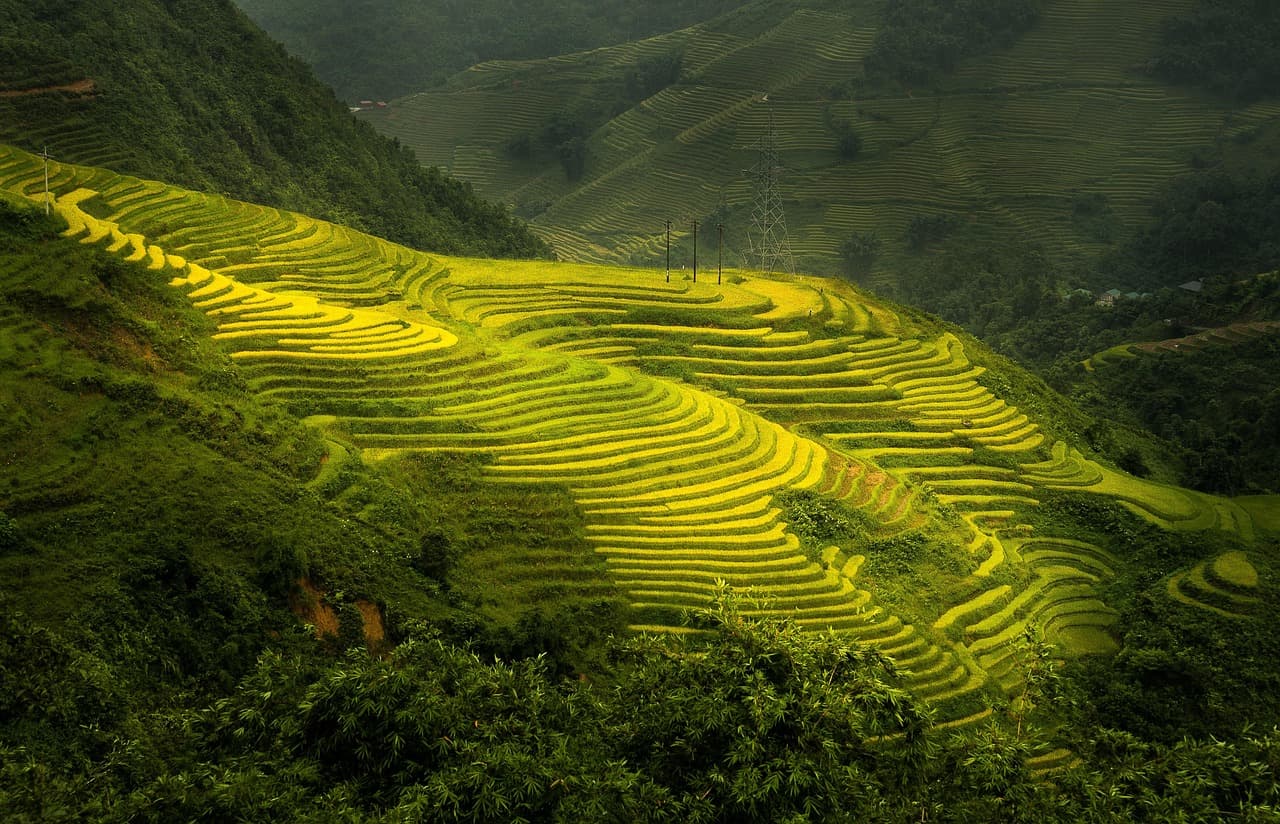
September to October is the golden rice harvest window in Hoang Su Phi, when terraces turn amber and draw photography-focused trekkers. May to June offers water-filled terraces that mirror the sky, a quieter but equally striking time to walk. Both are the recommended trekking seasons for 2026, and the choice comes down to what you want from the landscape.
Temperatures stay between 10 and 25°C year-round, but humidity and fog are common, especially on higher sections of trail. Avoid July to August: heavy rain raises landslide risk and makes river crossings unsafe. December to February brings cold, fog, and slippery mud, so treks become slow, cold, and often disappointing.
No special trekking permit is required for Hoang Su Phi as of 2026; standard Vietnam visa rules apply. Homestays handle local registration for foreign guests. Pack waterproof layers and warm clothing because fog can roll in suddenly even in May or September, and trails run 10 to 20 km per day with steep ascents.
If you want bright, postcard-like fields, pick September to October. If you prefer reflections in still water and fewer other trekkers, go May to June. Check trail conditions before departure: weather damage in 2025 may have changed some village access routes, and local homestay owners can confirm the latest path status.

Sapa trekking alternative: routes, difficulty and hiring a guide
Hoang Su Phi trails run 10–20 km per day with steep ascents, uneven paths and occasional river crossings. Trekkers sizing up a Sapa trekking alternative should plan on 4–6 hours of walking daily at altitudes from 300 m to 1,200 m. The difficulty is moderate, and good fitness is a requirement, not a suggestion. Without a guide, trail markings are sparse and some river crossings require route judgment, especially after heavy rain.
The rhythm differs from a standard Sapa trekking tour. Sapa circuits often use paved steps and easy jeep track into villages like Cat Cat or Lao Chai. Hoang Su Phi trails are narrower, steeper and less maintained, climbing directly through rice terraces and bamboo forest. Plan on steady effort rather than a stroll, and bring boots that can handle mud and polished rock. The 10–20 km daily distance is not optional, because homestay-to-homestay stages are fixed by where villagers can host overnight.
Hiring support is straightforward. Local guides from Nung, Dao or La Chi communities can be arranged at homestays or through small operators for VND 500,000–800,000 per day. This fee usually covers a solo trekker or a small group, so splitting costs among two or three people brings the daily rate well under what most Sapa trekking packages charge. If you want a lighter pack, porters cost VND 300,000–400,000 per day. Guide pricing is volatile, so confirm the exact rate with your homestay or a local operator just before departure.
You can trek without a guide, but do not assume it matches Sapa trekking routes, where signposts and day trippers are common. Hoang Su Phi has fewer marked junctions and longer gaps between villages. Carry cash, download offline maps, and confirm your next homestay before setting out each morning. The guide fee is the one cost most independent trekkers end up paying anyway, often for a route they would not find alone.
Sapa trekking costs in Hoang Su Phi: homestays and food
Sapa trekking costs in Hoang Su Phi: homestays and food
A night in a Hoang Su Phi homestay costs VND 150,000–300,000, and most tariffs include basic local meals. That is the core figure for comparing sapa trekking budgets with a Ha Giang alternative. For that rate you get a bed or floor mattress in a stilt house, shared washing facilities, and home-cooked food: rice, stir-fried greens, tofu or egg, plus meat when the family has it. After a 10–20 km trail day, this is substantial enough, though not restaurant-style dining. No special trekking permit is required for Hoang Su Phi as of 2026, so lodging and food stay the main costs.
If meals are not bundled into the room rate, add VND 50,000–100,000 per meal supplement. Book homestays ahead for September–October, when golden terraces draw the most trekkers and the basic but comfortable rooms fill out. English is limited, so ask a local guide or a Vietnamese speaker to phone and reserve for you; offline translation apps help with check-in and menu requests.
Local guides cost VND 500,000–800,000 per day, and that fee covers solo trekkers or small groups rather than a per-person rate. Splitting the guide across two or three people keeps sapa trekking costs below packaged tour pricing. Porters are VND 300,000–400,000 per day if you want help on steep climbs between 300 and 1,200 m. Confirm both rates with your homestay shortly before departure, because guide fees can shift.
Carry cash from Vinh Quang or Ha Giang City before you enter the district. ATMs are scarce in remote villages, and homestays, guides, porters, and small shops all expect dong. Cash is king in Hoang Su Phi. A stack of small notes in VND 50,000 and VND 100,000 denominations makes settling meal supplements and guide payment straightforward.

Practical tips: permits, language, and border areas
No special trekking permit is required for Hoang Su Phi as of 2026, which means you can start exploring the terraced trails without the paperwork that some Sapa trekking routes demand. The only formal requirement for foreign visitors is a valid Vietnam visa, and your homestay should register you locally with the commune police upon arrival.
English is limited in the villages around Vinh Quang and beyond. Download offline translation apps such as Google Translate with Vietnamese before you leave Hanoi, and learn a few basic phrases: xin chào (hello), cảm ơn (thank you), bao nhiêu tiền (how much). This small effort gets you better directions, cheaper local bus fares, and more invitations for tea. Do not rely on 4G in the upper villages; coverage drops quickly. Basic numbers and the phrase 'tôi bị lạc' (I am lost) help if you get separated from a guide.
Weather changes quickly in this 300–1,200 m altitude band. Pack waterproof gear, sturdy boots, and warm layers even in September–October. Trails become slick after rain, and river crossings can rise by mid-afternoon. Check road access to the villages before departing: 2026 trail conditions may shift after monsoon damage or new construction. This step is as important for Hoang Su Phi as for any Sapa trekking route after monsoon season. A local guide can confirm which paths are open, but final word comes from the homestay or the police post in Ha Giang.
Some border areas near China require temporary border permits for foreigners, separate from the standard visa. Check the latest police regulations in Ha Giang before you set out, especially if your route heads north of Thong Nguyen. Homestays register foreign guests, but the police may want to see your passport and visa first. Carry photocopies of your photo page and visa, and keep cash for any small registration fees.
Three-day Hoang Su Phi trek plan
A three-day independent trek from Vinh Quang works without a special permit as of 2026, and it is a practical way to see Hoang Su Phi's terraced fields. Reach Vinh Quang by local bus or taxi from Ha Giang City in 2–3 hours for VND 300,000–500,000. Trekkers comparing Sapa trekking routes will notice far fewer walkers here: altitudes run from 300–1,200 m, and homestays start at VND 150,000 per night.
On day one, arrive in Vinh Quang, meet a local guide (often Nung, Dao, or La Chi) and do a short orientation walk through a nearby hamlet before sleeping at a homestay. Guide fees run VND 500,000–800,000 per day, and most homestays can arrange one on arrival or the evening before. Day two is the core trek: 10–20 km over steep ascents, uneven paths, and occasional river crossings, with 4–6 hours of walking. The route threads through terraced fields and minority villages, ending at another Nung, Dao, or La Chi homestay. Your guide will adjust the route based on weather and trail conditions, especially after rain.
Day three is lighter: take a short morning walk through one last valley or use local transport back to Vinh Quang, then catch a local bus to Ha Giang City. Costs stay predictable across the three days: homestay from VND 150,000 per night, guide from VND 500,000 per day, optional porter VND 300,000–400,000 per day. Meals add VND 50,000–100,000, though many homestays bundle simple breakfast and dinner. Carry cash; ATMs are scarce in these villages.
Book homestays in advance in the harvest season (September–October) and in May–June when the terraces are water-filled; avoid July–August and December–February. English is limited, so download offline translation and learn a few Vietnamese phrases. Pack waterproof gear, sturdy boots, and warm layers for cool, foggy conditions. Compared with Sapa trekking tours, this route demands more patience with transport and language, but the trade-off is empty trails.

Frequently asked questions
No special trekking permit is required as of 2026. Standard Vietnam visa rules apply, and homestays should register you locally. Some border areas near China may require temporary border permits, so check with police in Ha Giang.
Yes, but expect a quieter, more remote experience. Trails are moderate, 10–20 km and 4–6 hours per day, with steep ascents, uneven paths and occasional river crossings. A local guide helps with navigation and culture.
Visit September–October for the golden harvest. May–June has water-filled terraces that reflect the sky. Avoid July–August for landslides and December–February for fog and slippery paths.
Carry enough for homestay (VND 150,000–300,000/night), guide (VND 500,000–800,000/day), food supplements and transport. ATMs are scarce in remote villages; smaller banknotes help.
Travel details change — opening hours, prices, and schedules can vary by season. Please verify current information on official websites before your visit.
Watch: related videos
Hoang Su Phi Trekking 2026: Routes, Costs and Homestays, a Sapa Trekking Alternative — Video by Ahmet Yüksek ✪ on Pexels · silent stock clip
Hoang Su Phi Trekking 2026: Routes, Costs and Homestays, a Sapa Trekking Alternative — Video by Ahmet Yüksek ✪ on Pexels · silent stock clip
Sources
- vietnamcoracle.com — Primary source
- travelfish.org — From research brief
- lonelyplanet.com — From research brief
- gadventures.com — From research brief
- hagiang.gov.vn — From research brief
Loading reviews…
About the author
Võ Hoài Nam
Nature & Adventure Editor
Hoài Nam edits Vietpeep's national parks, trekking, and adventure coverage from an environmental perspective. He keeps trail conditions, permits, wildlife rules, and low-impact travel choices front and center, so readers can plan a trip that respects the landscape.
All articles by Hoài NamRelated posts

Sapa Trekking Tours 2026: Operator Costs, Routes, and Safety
How to choose a licensed Sapa trekking operator in 2026, with current cost bands for day treks, homestay tours, and Fansipan climbs, plus fitness, altitude, permit, and booking checks. Use this guide to avoid street touts, verify guides and fees, and match a route to your fitness.
Sapa trekking difficulty: route grades, guide costs and fitness for 2026
Sapa trekking is rarely about altitude: Sapa town sits at about 1,600 m and village treks stay between 1,200 m and 1,800 m. Heat, mud and steep clay descents are what make routes hard. This guide grades valley and remote routes, 2026 guide costs, permits, weather by month and a two-day plan.

Sapa Trekking in Spring 2026: Weather, Trails, Costs, and Festival Dates
This spring 2026 Sapa trekking guide covers March to May weather, village routes that need no permit, Fansipan entry rules, guide and homestay costs, Hanoi transport, and spring festival timing, with a 3-day itinerary and current prices.