Sapa Trekking in Spring 2026: Weather, Trails, Costs, and Festival Dates
This spring 2026 Sapa trekking guide covers March to May weather, village routes that need no permit, Fansipan entry rules, guide and homestay costs, Hanoi transport, and spring festival timing, with a 3-day itinerary and current prices.

Trip plan
Day-by-day itinerary
Day 1
Arrive Sapa and easy village circuit
Take an overnight sleeper bus from Hanoi (VND 500,000, 6 hours) and arrive in Sapa early morning. Spend the afternoon on an easy village circuit with a local guide (VND 500,000-1,000,000 per day). Overnight in a village homestay (VND 250,000-400,000).
Related reading
Keep exploring Vietnam
- 1
- 2
- 3
At a glance
- Best time
- March to May; fog in March, trails dry by April
- How long
- A typical trekking day is 4-6 hours with 400m elevation gain
- Budget
- Guide VND 500k-1M/day, homestay VND 250k-400k/night, sleeper bus VND 500k
- Getting there
- Sleeper bus from Hanoi VND 500k, 6h; train to Lao Cai then transfer
- Language
- Vietnamese
- Currency
- Vietnamese dong (VND)
Weather and Trail Conditions in Spring 2026
From March through May, daytime temperatures for Sapa trekking sit between 15°C and 22°C, with low humidity and fewer visitors than the October-November rush. Tet falls in mid-February 2026, before this spring window, so by early March the main town and trailheads are calmer. March, April, and May suit hikers who want cooler air without autumn crowds.
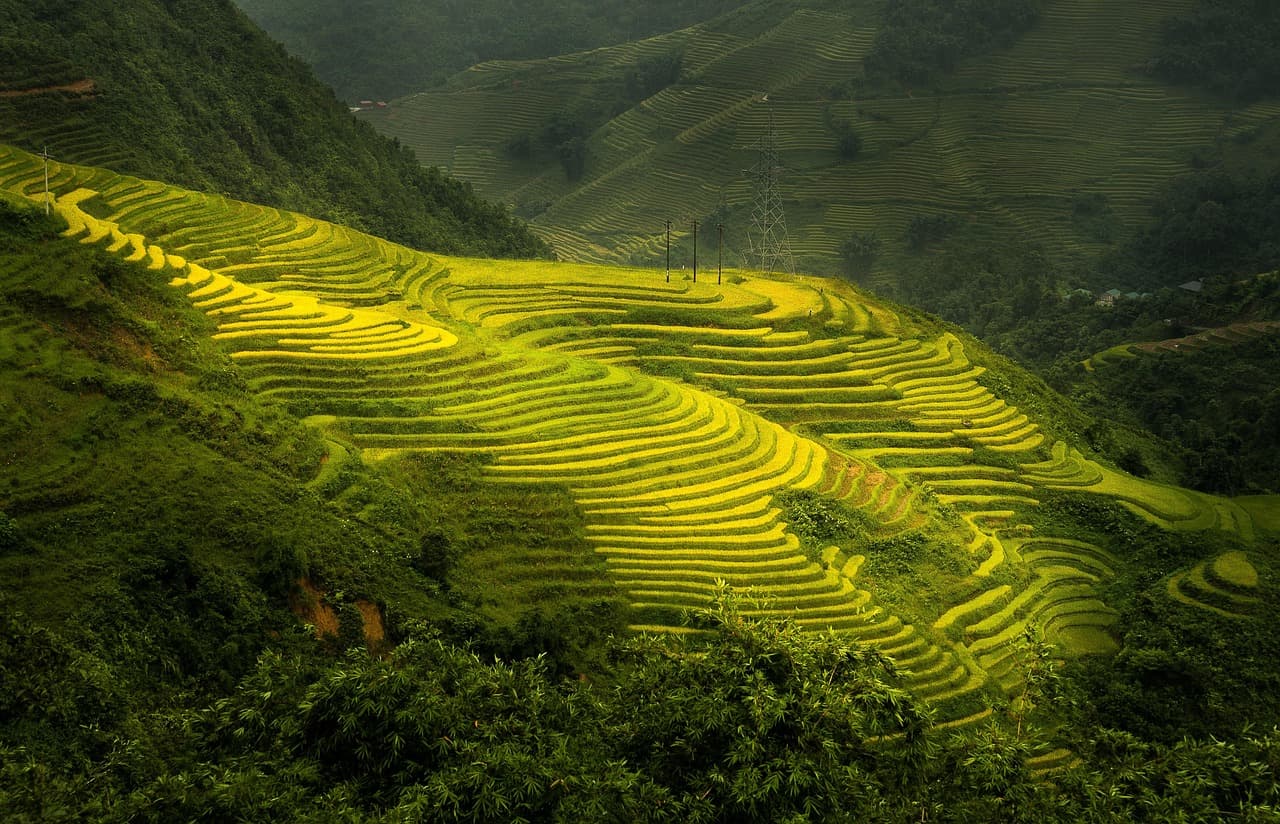
March is the foggiest month in the Sapa valley. Expect low cloud around the valley floor and reduced visibility on higher sections of village circuits in the first two to three weeks. Trails usually dry by April, once late-winter rain has drained and the soil has firmed up. By the second half of April, most footpaths are dry enough for ordinary hiking boots or trail shoes, and the rice terraces begin turning green. By May, the warmest days still top out around 22°C, and afternoon showers become more common than in April.
Spring festival dates shift with the lunar calendar, so Gau Tao and the Sapa Love Market do not have fixed Gregorian dates for 2026. Confirm current dates on the Lao Cai tourism site before committing to a particular weekend. A festival weekend can fill village homestays and make local guides scarce, so checking dates early helps with planning your route and overnight stops.
Pack rain gear and layers even when the forecast looks dry. Temperatures drop quickly after 4pm, and April showers arrive with little warning. For a typical village trek of 4-6 hours with around 400 meters of elevation gain, a lightweight rain shell, a warm mid-layer, and a spare pair of socks prevent the most common spring problem: wet, cold feet on the final descent. A quick-dry base layer also helps.
Sapa Trekking Routes Without a Guide
Independent trekkers often stop at village homestays; rates vary by season and the individual homestay, so confirm the current nightly price when booking. You can hire a local Hmong or Dao guide if you want route context, but guide rates also change with demand; confirm the current daily rate with Sapa-based operators before you go. With those details settled, a two-day self-guided loop is easy to budget.

Sapa Trekking Guide Costs, Permits, and Booking
A local Sapa trekking guide generally charges a daily rate that covers route knowledge, village introductions, and logistics help, but not your overnight stay. Guide rates change with demand and season, so confirm the current daily rate with Sapa-based operators or the Lao Cai tourism website before booking. Homestay accommodation is billed separately, and rates also vary; ask your host for the current nightly price when planning a multi-day route. Always ask whether the guide rate includes the guide's own meals on overnight trips, because local homestays typically add that cost to your bill if you do not clarify in advance.
Recent first-hand reports from Vietnam Coracle, Nomadasaurus, and Travelfish compare guide and homestay costs; check them before paying anything. Prices can shift with demand, so confirm the current daily guide rate in writing before you arrive.
Getting to Sapa from Hanoi
A Hanoi to Sapa sleeper bus is a direct, simple way to reach the town where most village walks begin. Operators run the route with multiple departures, but schedules and fares change with demand and season, so confirm the current price and travel time with the operator. Spring daytime temperatures of 15-22°C make the ride comfortable, but March fog can slow the final mountain stretch.

Spring Festivals and Market Dates
Gau Tao, a Hmong spring festival, and the Sapa Love Market, a nighttime gathering, both have dates that change each year and do not follow the solar calendar. Before you book flights or a Hanoi-Sapa sleeper bus, check the Lao Cai tourism site for 2026 dates and confirm current transport schedules and fares with the operator. Do not rely on old blog posts; 2025 dates are not a safe proxy for 2026. The Lao Cai tourism site usually posts official festival dates in Vietnamese and English; if the English page is stale, check the Vietnamese version or ask your homestay.
Spring generally draws fewer tourists than autumn, but festival weekends are the exception. If your Sapa trekking days coincide with Gau Tao or a Love Market night, expect fuller homestays and more demand for local guides. Book village stays early, especially for Friday and Saturday nights. Homestay and guide rates in Sapa vary by season and demand, so confirm current prices directly with a guide or homestay; rates on festival weekends can shift.
What to Pack and Fitness Essentials
March trails in Sapa stay slick well after the fog clears, so start your packing list with waterproof hiking boots that have good grip and have been broken in before you arrive. Daytime temperatures run 15-22°C, which means you need a shell for rain and a light mid-layer, not a heavy jacket. Pack a quick-dry base layer, a thin fleece or wool mid-layer, and a waterproof shell you can strip off when the sun breaks through. Trails are wettest in March and noticeably drier by April, but spring showers can arrive without much warning.
A typical village circuit is not technical. You will walk for 4-6 hours a day, with 400m elevation gain on routes that follow mud paths, rice terraces, and small stream crossings. The effort is easy to moderate, so a baseline of regular walking or hiking is enough. You do not need climbing skills, and a single trekking pole helps on slippery descents. If you can handle a full day of city walking with hills, you are likely fine.
Spring in Sapa is humid in the morning and cool after rain, so layers beat a single warm coat. Bring a packable rain jacket with taped seams, and carry a dry bag or pack liner for electronics and a change of socks. Temperatures in the 15-22°C range can feel warmer on climbs and cold when you stop for lunch, so keep an insulating layer accessible, not buried at the bottom of your pack.
Give new boots at least two weeks of regular walks before you arrive, especially if you are trekking in March, when red clay mud coats every path. April routes are drier but still have shaded, wet patches near bamboo groves. Boots with deep lugs prevent the most common Sapa injury, a twisted ankle on a slippery stone stair.

Frequently asked questions
No permit is needed for village circuits. Fansipan requires park entry and usually a guide.
Local guides charge VND 500,000-1,000,000 per day (about USD 20-40). Homestays cost VND 250,000-400,000 per night.
Daytime temperatures are 15-22°C with low humidity. March is foggy, and trails dry by April.
A sleeper bus costs about VND 500,000 and takes 6 hours. You can also take a train to Lao Cai, then continue by road to Sapa.
Travel details change — opening hours, prices, and schedules can vary by season. Please verify current information on official websites before your visit.
Watch: related videos
Sapa Trekking in Spring 2026: Weather, Trails, Costs, and Festival Dates — Video by Ahmet Yüksek ✪ on Pexels · silent stock clip
Sapa Trekking in Spring 2026: Weather, Trails, Costs, and Festival Dates — Video by Ahmet Yüksek ✪ on Pexels · silent stock clip
Sources
- vietnam-coracle.com — Primary source
- nomadasaurus.com — From research brief
- travelfish.org — From research brief
- reddit.com — From research brief
- laocaitourism.com — From research brief
Loading reviews…
About the author
Võ Hoài Nam
Nature & Adventure Editor
Hoài Nam edits Vietpeep's national parks, trekking, and adventure coverage from an environmental perspective. He keeps trail conditions, permits, wildlife rules, and low-impact travel choices front and center, so readers can plan a trip that respects the landscape.
All articles by Hoài NamRelated posts
Sapa trekking difficulty: route grades, guide costs and fitness for 2026
Sapa trekking is rarely about altitude: Sapa town sits at about 1,600 m and village treks stay between 1,200 m and 1,800 m. Heat, mud and steep clay descents are what make routes hard. This guide grades valley and remote routes, 2026 guide costs, permits, weather by month and a two-day plan.

Sapa Trekking in 2026: Guide Costs, Permits, and Village Route Planning
This 2026 Sapa trekking guide compares group, private, and multi-day tour prices, explains current permit rules for village trails and Fansipan, and lays out route difficulty, weather windows, and how to avoid street-tout scams. Use it to pick a guide, budget realistically, and plan a trek matched to your fitness.

Sapa Remote Trekking: Hidden Villages and Off-the-Beaten-Path Trails (2026 Guide)
This guide details Sapa’s lesser-known trekking routes for 2026, covering remote villages like Sin Chai, Seo My Ty, and Nam Cang. It includes up-to-date info on guide requirements, transport, costs, accommodation, weather, and practical tips for experienced trekkers seeking authentic adventure beyond the tourist crowds.