Sapa Trekking vs Ha Giang Loop: 2026 Season, Permits and Cost Comparison
This guide compares Sapa trekking and the Ha Giang Loop for 2026, covering the best months, permitting rules, guide rates, and homestay prices. It helps you decide whether to walk through Hmong and Red Dao villages or ride the Ma Pi Leng Pass on a motorbike without overpaying.
Related reading
Keep exploring Vietnam
- 1
- 2
- 3
At a glance
- Best time
- Sapa: March to May and September to November. Ha Giang: October to April.
- How long
- Ha Giang easy-rider tours usually run 3 days. Sapa village treks vary from a day to several days.
- Budget
- Sapa guided trek: $25-35 per day plus $10-15 homestays. Ha Giang easy-rider: $150-200 total for 3 days.
- Getting there
- Both are commonly reached by road from Hanoi; confirm current transfer options with your operator.
- Language
- Vietnamese; English is used by many tour guides and homestay hosts.
- Currency
- Vietnamese dong (VND); tours are often quoted in US dollars.
Sapa trekking vs the Ha Giang loop, briefly
Sapa sits at 1,600m, and sapa trekking here means walking between rice-terrace villages run by Hmong, Giay, and Red Dao families. Village trails remain walkable without a formal permit, though some routes through the Muong Hoa Valley require a compulsory local guide in 2026. A typical day is spent on the trail, and the night is spent in a family homestay. Homestays cost $10 to $15 per night; local guides charge $25 to $35 per day.
Ha Giang is not a walking route. The 350km loop is a motorbike circuit, and its most famous viewpoint is Ma Pi Leng Pass, where the road cuts across a cliff face. You ride each day and stop at overlooks on your own schedule. Self-driving foreigners need a valid international motorcycle license and will meet police checkpoints; an easy-rider tour solves that by providing a guide, bike, fuel, and homestays for $150 to $200 total over three days.
Both are highland trips, but one works on foot and the other from a motorbike saddle. Choose sapa trekking if you want several hours of daily walking and cultural intimacy with your hosts. Choose Ha Giang if you prefer big views from a saddle and spontaneity. Sapa's central villages are touristy, so ask operators to take you into remote valleys. Ha Giang's mountain roads are narrow and foggy, so pick a reliable tour company.
For Sapa, the best months are March to May and September to November. For Ha Giang, ride from October to April to avoid the heaviest downpours. Some Ha Giang districts have floated fees for 2026, so confirm enforcement rules with your operator before you book. Visa and travel insurance are mandatory on both trips.
Season windows for Sapa trekking and Ha Giang rides
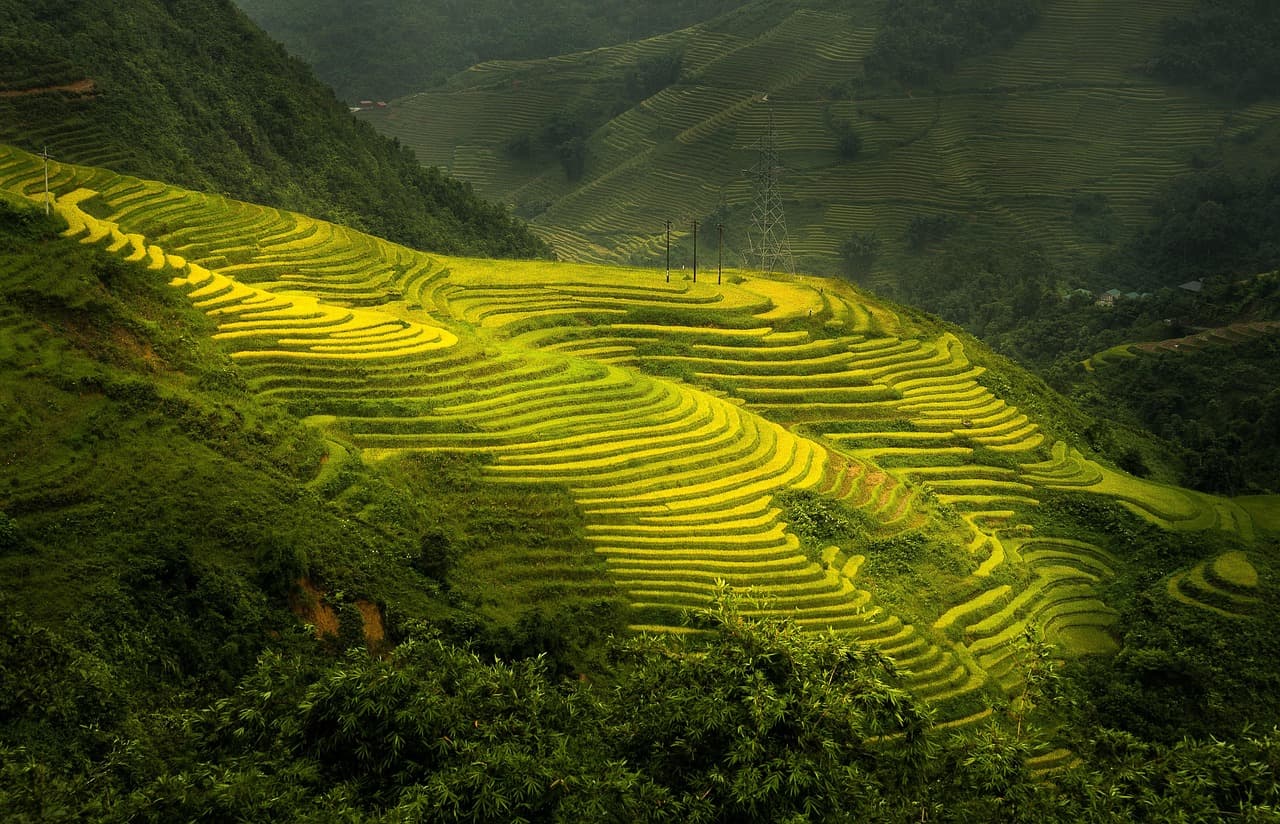
Sapa trekking works best from March to May and September to November. In the Muong Hoa Valley, those months have drier trails, and the terraces show their two main seasonal looks: young green rice in spring and gold rice before the autumn harvest. At 1,600m, Sapa stays cooler than the lowlands, and nights turn cold even in May or September, so bring a fleece and a waterproof shell.
The Ha Giang loop has a different window. The 350km motorbike circuit is best ridden from October to April. From May to September, summer downpours saturate the slopes, fog sits low over the passes, and the narrow hairpins become a hazard. October and November give the clearest skies; December to February stays dry but colder at altitude; March and April warm up and form the second strong riding window.
If your travel dates are between October and November, both options are open, and that is the busy period for homestays and guides. Book a Sapa trekking trip in advance, and confirm with tour operators that your planned routes are available. Some Ha Giang districts have floated permit fees for 2026, so check the current rules with the company you book. A valid visa and travel insurance are mandatory for both trips.

Cost of Sapa trekking and Ha Giang easy-rider tours
Official Sapa guide rates run $25-35 per day, and homestays in the villages cost $10-15 per night. For Sapa trekking, those two costs cover the essentials. Add about $10-15 per day for meals, and the daily outlay stays modest. Local guides are compulsory on certain routes through Muong Hoa Valley, so the $25-35 daily rate is not optional if you plan to walk those trails.
The Ha Giang Loop packages things differently. A guided 3-day easy-rider tour runs $150-200 total, and that one payment includes the guide, the bike, fuel, and your homestays for the two nights. You will not pay extra for bike rental or a separate guide fee. In that sense, a 3-day loop tour can work out cheaper than three days of Sapa trekking, because the homestay cost is folded into the total. But you have to like riding on a motorbike. The easy-rider option is the fastest way to handle the loop's narrow, foggy passes without worrying about police checkpoints or fuel stops.
Self-driving Ha Giang removes the guide fee from that total, but it demands a valid international motorcycle license. Police checkpoints do happen, and you will sort your own fuel and homestays. Some Ha Giang districts have floated fees for 2026, so ask your operator to confirm the current rules before booking. That district fee, if introduced, would apply to everyone passing through.
The lowest daily spend on either trip comes from staying with local guides, sleeping in homestays, and joining a group tour. A Sapa trekking tour with a compulsory guide still leaves you paying for meals separately, while an easy-rider package bundles the bike and bed. Both approaches keep daily costs manageable if you avoid expensive extras. For hiking, book Sapa trekking through a village homestay operator; for riding, choose an easy-rider tour with a reliable safety record.
Permits and rules for Sapa trekking and the Ha Giang loop
Permits and rules for Sapa trekking and the Ha Giang loop
No formal permit is needed for Sapa trekking, and the Ha Giang loop has no area permit either. What can change your plan is the guide requirement in parts of Muong Hoa Valley and the license checks on Ha Giang roads. In Sapa, you can walk independently through many villages, but some routes in Muong Hoa Valley require a local guide. Official guide rates run $25-35 per day, and homestays along the way cost $10-15 per night. If you join a Sapa trekking tour, the operator handles that rule for you.
The Ha Giang loop is a 350km motorbike circuit, not a walking track, so the rules are about riding. No area permit applies, but police checkpoints are part of the trip. Foreign self-drivers must carry a valid international motorcycle license. Without one, you risk fines and your insurance may not cover an accident. An easy-rider tour sidesteps the license question. For $150-200 total, a 3-day tour includes a guide, bike, fuel, and homestays, and the operator handles police stops and paperwork.
Ha Giang's rules are not fixed. Some districts have floated fees for 2026, though nothing is confirmed yet. Reconfirm with an operator before you book, because district policies and checkpoint procedures shift. The same caution applies to Sapa: guide requirements vary by valley, so ask your homestay host or a local trekking company about the route you plan to walk. Sapa's central villages are touristy; pick a remote valley if you want quieter trails and a clearer picture of the guide rules that apply.
Visa and travel insurance are mandatory for both destinations. For Sapa trekking, insurance matters because trail conditions shift with weather and the nearest clinic can be hours away. On the Ha Giang loop, carry your visa and insurance documents at all times. Checkpoints may ask to see them. Sort out these basics before you fly, and the remaining choices are which valley to walk and which pass to ride.
Choosing between Sapa trekking and the Ha Giang loop
Sapa trekking suits travelers who want to walk between villages each day; the Ha Giang loop suits those who would rather ride 350km of mountain road from a motorbike saddle. The choice comes down to what you want from the daylight hours: walking conversations with Hmong, Giay, and Red Dao families in the cool 1,600m air, or valley-to-valley vistas from the saddle.
Sapa trekking costs are straightforward. A local guide runs $25-35 per day, and homestays add $10-15 per night. You can walk some routes without a permit, but trails through Muong Hoa Valley require a hired guide, so plan for that daily rate. The best walking windows are March to May and September to November, when rice terraces are green or golden. Ha Giang is a different beast: the full circuit is 350km, and most visitors join a 3-day easy-rider tour for $150-200 total, covering guide, bike, fuel, and homestays. The dry season runs October to April, which keeps mountain roads more predictable.
Crowds and road conditions shape the experience. Sapa's central villages are touristy, so ask your guide to take you through remote valleys if you want quieter trails. Ha Giang's roads are narrow and often foggy; first-time riders should book with a reliable tour company instead of self-driving. Foreign self-drivers need a valid international motorcycle license and will face police checkpoints, so the easy-rider option removes real hassle. Some Ha Giang districts have floated fees for 2026, so confirm current rules with operators before you set out.
Choose sapa trekking if you want daily movement, cool hill air, and a homestay with a Hmong, Giay, or Red Dao family. Choose Ha Giang if big-mountain scenery from the saddle matters more than daily mileage on foot. Both require a valid visa and travel insurance, and both reward travelers who book with operators who know the current season's conditions.

Booking a Sapa trekking tour or a Ha Giang easy-rider
On any given morning, the most reliable route information for Sapa trekking comes from a local cooperative such as Sapa Sisters. The Hmong women guides organize multi-day village treks through Muong Hoa Valley with homestays, and they know which routes are open and who needs a licensed guide on that specific day. Rates are around $25-35 per day for guiding and $10-15 per night for a homestay. Ask outright whether the homestay quote includes meals, because many bookings are bed-only.
For the Ha Giang Loop, do not attempt to organize the motorbike yourself unless you hold a valid international motorcycle license and have ridden on steep mountain roads. Book through a company that supplies an easy-rider guide and the bike. The standard product is a 3-day loop at $150-200 per person total, which covers the guide, motorbike, fuel, and homestays. You ride on the back, and the guide handles the narrow passes, fog, and police checkpoints.
Ask each operator the same three questions before paying: which routes are open, what the 2026 district fee situation is, and whether homestays include meals. Some Ha Giang districts have floated tourist fees for 2026, and local operators will know whether any enforcement has started. Sapa's Muong Hoa Valley routes require a local guide on several paths, and the rules change with weather and trail maintenance.
Group bookings can lower what each person pays, so compare quotes from two or three operators. Confirm whether your group size changes the rate and what the price covers beyond the guide and bed: entrance tickets, meals, insurance, and any contingency for a weather delay. The operator who gives you a written breakdown is usually the one to trust.
Frequently asked questions
You do not need a formal area permit for Sapa village treks, but some routes through Muong Hoa Valley require a local guide. Confirm your route with the operator before you set out.
Yes, if you have a valid international motorcycle license and are comfortable with narrow, foggy mountain roads and police checkpoints. Many travelers choose an easy-rider tour instead to avoid the risk.
For a guided Sapa trek, plan on $25-35 per day plus $10-15 per night for a homestay. For a Ha Giang easy-rider tour, plan on $150-200 total for three days, covering the guide, bike, fuel and homestays.
Travel details change — opening hours, prices, and schedules can vary by season. Please verify current information on official websites before your visit.
Watch: related videos
Sapa Trekking vs Ha Giang Loop: 2026 Season, Permits and Cost Comparison — Video by MapKoi Travel on Pexels · silent stock clip
Sapa Trekking vs Ha Giang Loop: 2026 Season, Permits and Cost Comparison — Video by MapKoi Travel on Pexels · silent stock clip
Sources
- vietnamcoracle.com — Primary source
- thebettervietnam.com — From research brief
- vietnam.travel — From research brief
- hoodride.com — From research brief
- sapasisters.com — From research brief
Loading reviews…
About the author
Võ Hoài Nam
Nature & Adventure Editor
Hoài Nam edits Vietpeep's national parks, trekking, and adventure coverage from an environmental perspective. He keeps trail conditions, permits, wildlife rules, and low-impact travel choices front and center, so readers can plan a trip that respects the landscape.
All articles by Hoài NamRelated posts

Ha Giang Loop Easy Rider vs Self-Drive: 2026 Costs, Legality and How to Choose
This practical guide compares Ha Giang Loop Easy Rider and self-drive options for 2026: rental and package costs, licensing and fine risk, riding difficulty, mountain weather, and a simple decision framework. Use it before booking to avoid impound fines, insurance gaps, and wasted money on the wrong motorbike choice.

Ha Giang Loop Practical Guide 2026: Costs, Permits, and Safety for International Travelers
Planning to ride the Ha Giang Loop in 2026? This guide covers essential details for international visitors, including when to go, how to get there, permit requirements, typical costs, and up-to-date safety tips. Get clear answers on what to expect, how to prepare, and what’s changed for 2026.

Sapa Trekking in 2026: Guide Costs, Permits, and Village Route Planning
This 2026 Sapa trekking guide compares group, private, and multi-day tour prices, explains current permit rules for village trails and Fansipan, and lays out route difficulty, weather windows, and how to avoid street-tout scams. Use it to pick a guide, budget realistically, and plan a trek matched to your fitness.